

As of 2021, there are around 4.9 billion internet users worldwide, an increase of 400 million from 2020. Even though we say it all the time, the way people shop and make purchases has actually changed along with it. For this reason, you can’t just rely on offline marketing to increase sales; you also need to reach audiences online, where they are already spending time.
Connecting with your audience at the proper time and place has always been the goal of marketing. This calls for you to reach out to them today online, where they are already spending time.
Let’s talk about digital marketing, which is any kind of online advertising.
Want to know more about it? Read ahead.
Table of Contents
What is Digital Marketing?
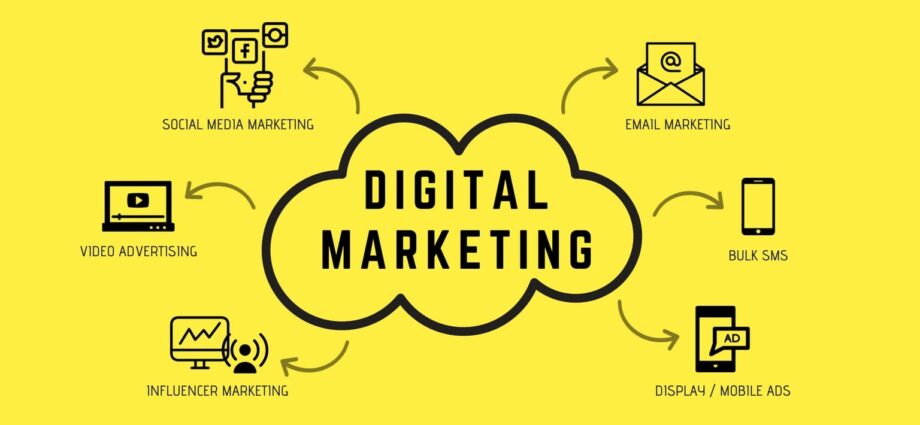
All marketing activities that take place online are referred to as digital marketing, often known as online marketing. Businesses use digital channels to engage with present and potential customers, including search engines, social media, email, and other websites. This also involves messaging via text or other types of multimedia.
Although there are a few subtle differences, an experienced inbound marketer may claim that inbound and digital marketing are essentially the same. Through my interactions with marketers and business owners in the U.S., U.K., Asia, Australia, and New Zealand, I’ve also learned a lot about how those minor variations are perceived in other countries.
What Does a Company Mean by “Digital Marketing”?
Digital marketing is essential for your brand exposure and business at this point. Every other brand seems to have a website, and those that don’t at least have a social media presence or a digital advertising plan. Consumers now anticipate and rely on digital content and marketing as a way to learn about brands. Because there are so many options with digital marketing, you may get inventive and test out different marketing strategies on a tight budget.
In general, using a variety of digital strategies and channels to engage with clients online, where they spend the majority of their time, is what is meant by the term “digital marketing.” The most effective digital marketers understand how each digital marketing campaign supports their main objectives. Additionally, marketers can support a broader campaign through the available free and paid channels, based on the objectives of their marketing plan.
What Makes Digital Marketing So Crucial?
Digital marketing enables you to target the customers most likely to purchase your goods or services and reach a wider audience than you could with conventional techniques. Additionally, it allows you to gauge progress on a daily basis and make adjustments as necessary, and it is frequently more affordable than traditional advertising.
A few of the main advantages of digital marketing are:
Only the prospects who are most likely to buy your product or service should receive your attention.
It is more affordable than outbound marketing strategies.
- By leveling the playing field within your sector, digital marketing enables you to compete with more established brands.
- Digital advertising may be measured.
- A digital marketing plan may be modified and adjusted more easily.
- Your conversion rate and the caliber of your leads can both be increased through digital marketing.
- Utilizing digital marketing, you can interact with audiences at every stage.
Digital Marketing Types
- Optimization for search engines (SEO)
- Content Promotion
- Use of social media
- Cost Per Click (PPC)
- Affiliate Promotion
- Marketing Automation for Native Advertising
- Email Promotion
- Inbound Marketing and Online PR
- Advertised Content
- Internet Advertising (SEM)
- Marketing via Instant Messaging
What is the Role of a Digital Marketer?
Through all available digital platforms, including both free and paid ones, a company’s digital marketers are responsible for promoting brand awareness and lead generation. Social media, the company’s own website, search engine rankings, email, display advertising, and the company blog are some of these channels.
To accurately gauge performance, the digital marketer concentrates on the key performance indicators (KPIs) for each channel. For instance, a digital marketer in charge of SEO would gauge the organic traffic to their website.
In small businesses, one person could be in charge of many of the aforementioned digital channels and strategies, however in larger businesses, a specialist is often assigned to one or two brand channels.
Which is it: Inbound Marketing or Digital Marketing?
Digital marketing tools are used as part of the inbound marketing methodology to draw in customers online and keep them interested and satisfied. On the other hand, digital marketing is merely an all-encompassing word for internet marketing strategies of any kind, whether they are categorized as inbound or outbound. Although digital marketing is frequently contrasted with inbound marketing, it doesn’t distinguish between “inbound” and “outbound” strategies. While inbound marketing is more of a strategy, it serves as an umbrella word for all marketing that involves internet communication.
Digital outbound strategies aim to get a marketing message in front of as many internet users as possible, regardless of whether they’ll find it useful or interesting. Digital outbound strategies aim to get a marketing message in front of as many internet users as possible, regardless of whether they’ll find it useful or interesting. For instance, the gaudy banner ads you see on websites slam a product or promotion down the throats of those who aren’t necessarily ready for it.
Online content is used by marketers who use digital inbound marketing strategies to draw in their target audience by offering them useful resources. A blog is one of the most basic yet effective inbound digital marketing tools since it enables your website to take advantage of the keywords your potential clients use to search.
Do all Firms Benefit from Digital Marketing?
Any business in any field can benefit from digital marketing. Regardless of the products or services your business offers, digital marketing always entails developing buyer personas to determine the needs of your audience and producing worthwhile online content. That is not to argue, though, that all organisations should use the same approach when implementing a digital marketing strategy.
Digital B2B Marketing
If your organisation is business-to-business (B2B), the focus of your digital marketing initiatives will probably be online lead generation, with the ultimate objective being for a lead to speak with a salesperson. Your marketing strategy may aim to utilise your website and support digital channels to draw in and convert the highest calibre leads for your salespeople.
Digital B2C Marketing
Depending on the pricing point of your products, if your firm is business-to-consumer (B2C), it’s likely that the aim of your digital marketing activities is to draw visitors to your website and convert them into customers without ever having to speak to a salesperson.
Building an accelerated buyer’s journey from when a visitor comes on your website to when they make a purchase is more likely than focusing on “leads” in the traditional sense. As a result, you might need to employ greater calls-to-action to encourage purchases because your product features may be further down the marketing funnel than they would be for a B2B company.
Conclusion
Any opportunity where you may establish a connection with your audience is a chance to turn a lead into a customer or acquire a lead. You may reach potential customers through a variety of channels with digital marketing, which greatly increases the number of options for doing so. It’s a crucial strategy for marketing your company, service, or product online, whether it be through social media platforms, websites, text messages, or any other online channel.
