

While remote work concept has been quite popular, Coronavirus outbreak has made it default for most businesses across the globe. The transition has happened overnight, and it remains to be seen if it changes the way we work in the future as well. While only the future will tell about that, here’s a look at the most notable work from home stats that you should be knowing. So, let’s begin with a comprehensive remote working statistics report, but before that look lets look at top remote working software –
Table of Contents
Remote work statistics: overview
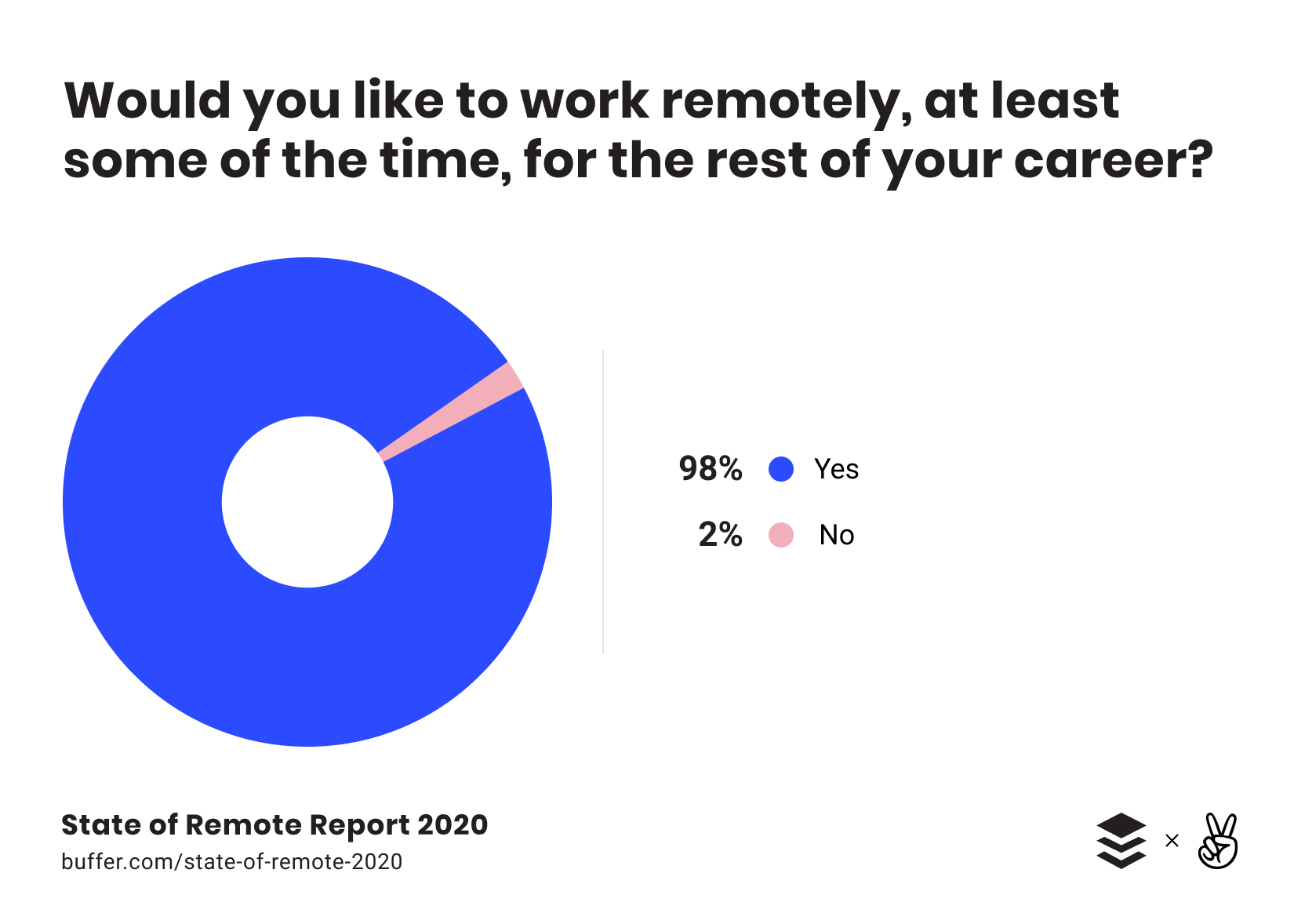
1) 98%
of the respondents would want to work from home for at least, some amount of time in their professional career (Buffer’s The 2020 State of Remote Work)
2) 97%
of the respondents would recommend working from home as a concept to others (Buffer’s The 2020 State of Remote Work)
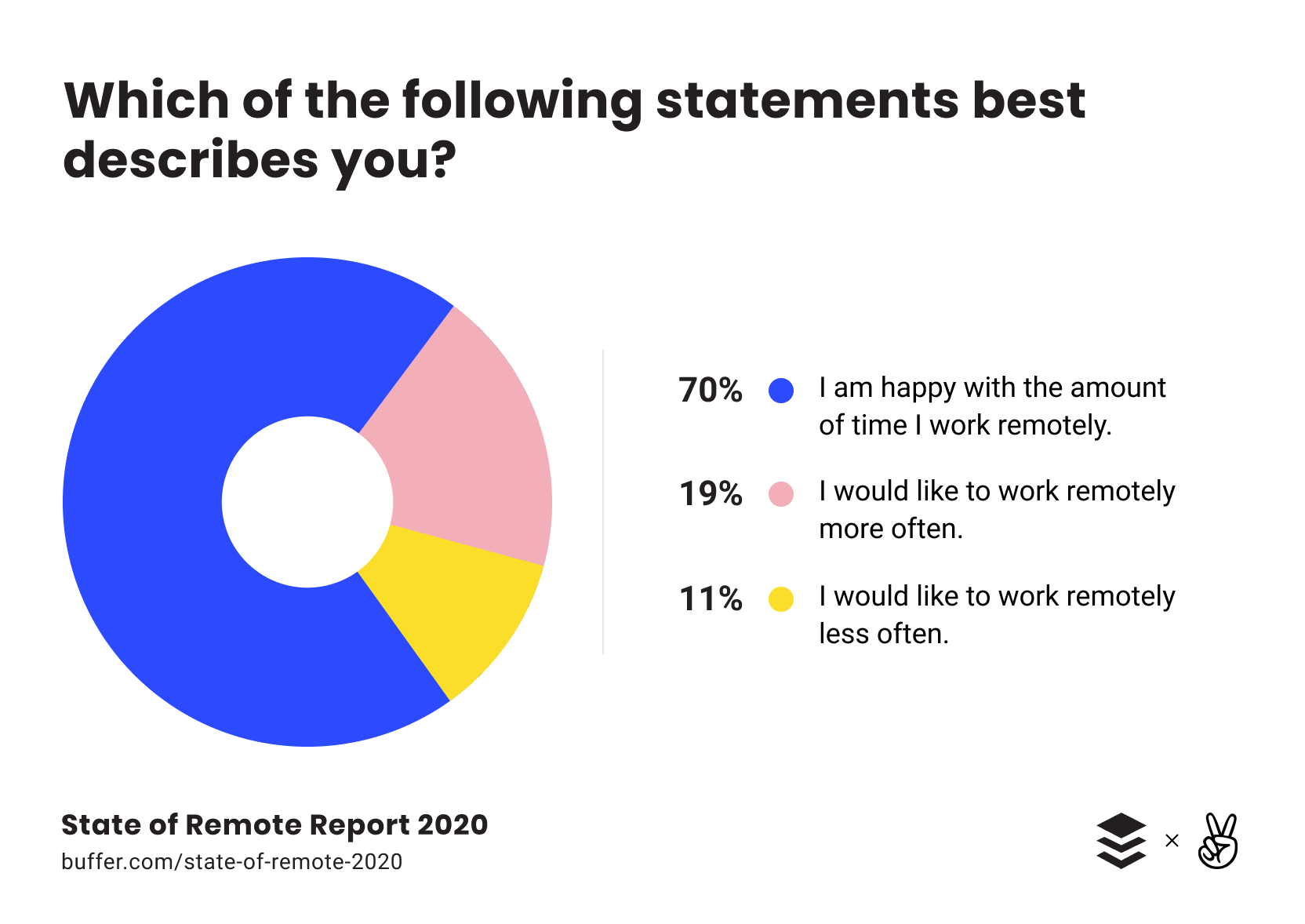
3) 70%
people out of 3,500 respondents are satisfied with the amount of time they spent on remote working (Buffer’s The 2020 State of Remote Work)
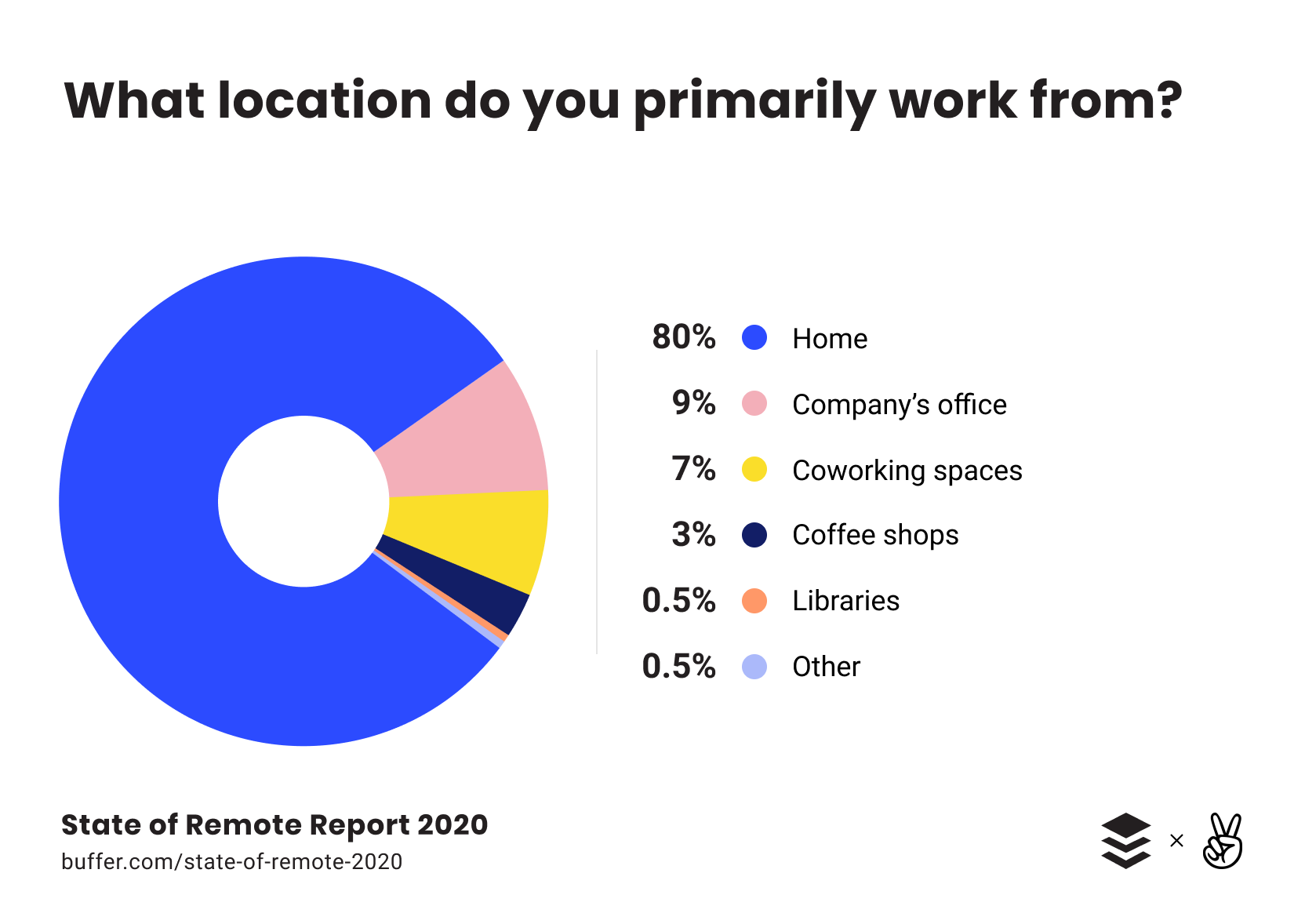
4) 80%
of the surveyed respondents work out of their home while working remotely (Buffer’s The 2020 State of Remote Work)
5) 9%
Interestingly, those people who don’t work remotely all the time, they like to work from their company’s office (Buffer’s The 2020 State of Remote Work)
6) 30%
Only that percentage of surveyed remote workers say that the entire company works remotely (Buffer’s The 2020 State of Remote Work)
7) Over 4/5
of people said that they’ll turn down an offer if it doesn’t offer flexible working (The Annual IWG Global Workplace Survey 2019)
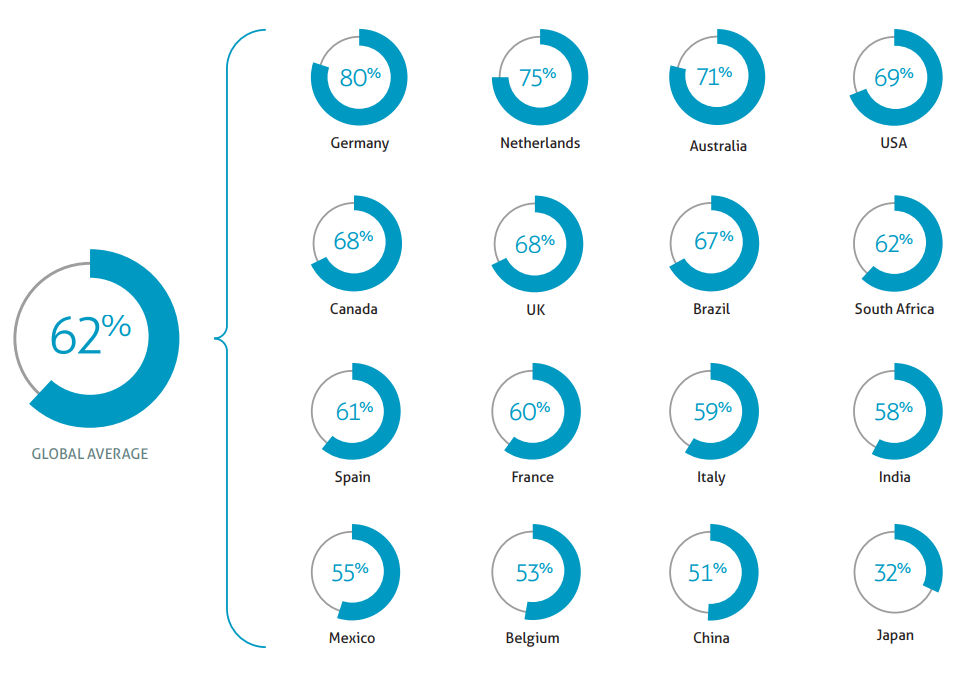
8) 62%
of the businesses globally have flexible working policies (The Annual IWG Global Workplace Survey 2019)
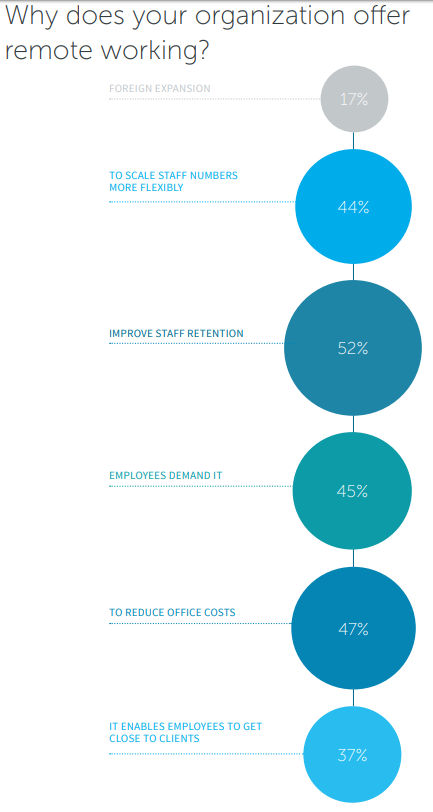
9) 52%
of the companies offer remote working to improve staff retention (Condeco’s The Modern Workplace Report 19/20)
10) 49%
of the companies say that an optimal combination of remote and office work is for employees to spend three days in the office and two days remotely (Condeco’s The Modern Workplace Report 19/20)
Remote work statistics: impact of COVID-19
11) 50%
of the people think that the work culture will be realigned in favor of remote work due to the coronavirus pandemic. (OneLogin’s 2020 COVID-19 State of Remote Work Survey Report)
12) 62%
of the people were impacted by a security breach since they started working from home, though only 38 percent of them went on the change their password (OneLogin’s 2020 COVID-19 State of Remote Work Survey Report)
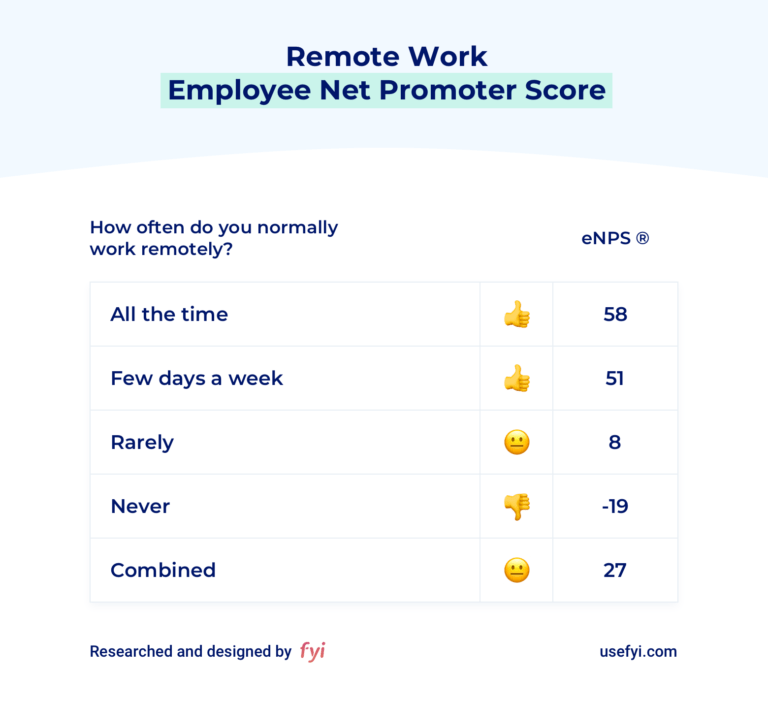
13) -19 eNPS
is given by the people who have never worked remotely yet had to transition to WFH amidst COVID-19. In contrast, people who work from home at least a few days in a week gave Employee Net Promoter Score of 51 (How coronavirus has impacted remote work, FYI)
Remote work statistics: what exactly people working from home do
14) 35%
of the remote workers are individual contributors (Owl Labs 2019 State of Remote Work)
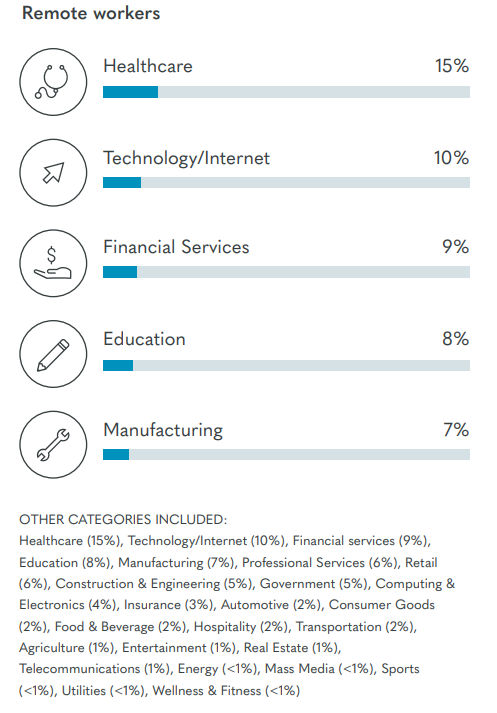
15) 15%
of the survey respondents (in the US) work in the healthcare industry (Owl Labs 2019 State of Remote Work)
16) 18%
people who are working remotely are in the facilities / operations / IT department (Owl Labs 2019 State of Remote Work)
Remote work statistics: preferences and salary
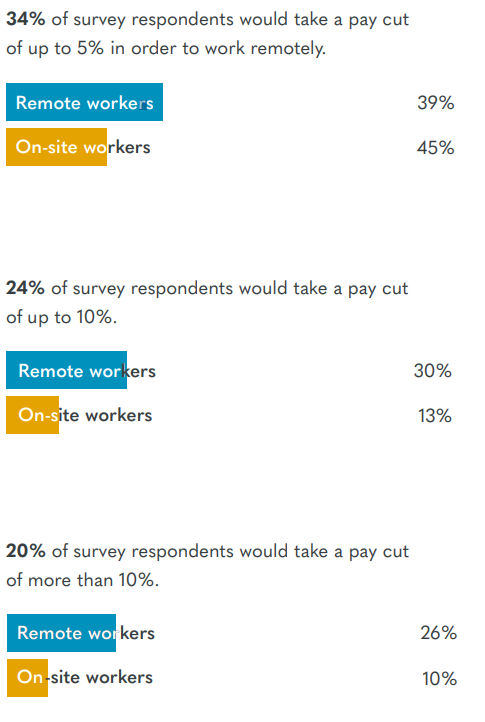
17) 39%
of the people can take a pay cut of up to 5 percent in order to work remotely (Owl Labs 2019 State of Remote Work)
18) 71%
of the people would choose their company depending upon whether it allows for remote work (Owl Labs 2019 State of Remote Work)
19) 55%
people would likely look for another job if their company doesn’t let them work remotely (Owl Labs 2019 State of Remote Work)
20) 61%
of the survey respondents would expect a pay increase if can’t work from home (Owl Labs 2019 State of Remote Work)
Remote work statistics: tools being used
21) Slack
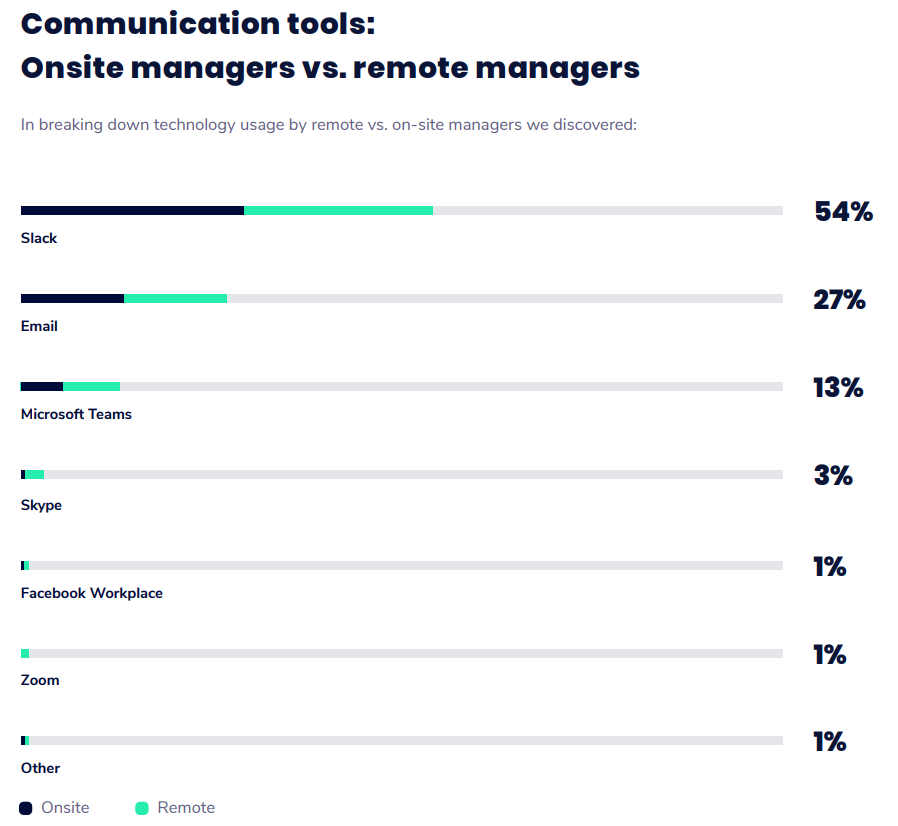
is the most popular tool for people to manage communications, followed by email and Microsoft Teams (SoapBox The State of One-on-ones 2019)
22) 68%
of the survey respondents using Slack use it in the customer success department (SoapBox The State of One-on-ones 2019)
Remote work statistics: benefits
23) 91%
of the people say that remote work enables them to have a better work-life balance (Owl Labs 2019 State of Remote Work)

24) 32%
of the survey respondents like the flexibility of working from home (Buffer’s The 2020 State of Remote Work)
25) 82%
of the people who are full-time remote workers are happy. In fact, as per the survey, people who don’t work remotely all the time are also happy with the amount of remote work they do (Buffer’s The 2020 State of Remote Work)
26) 26%
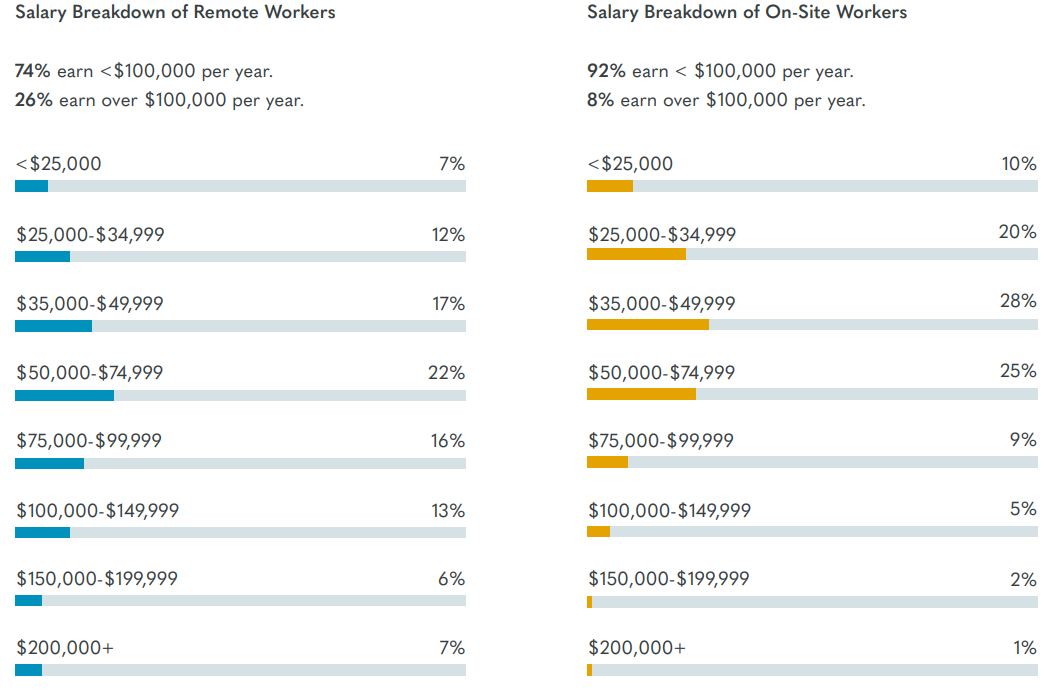
of the remote workers earn $100,000+ per year, which is 2.2x times more frequently than on-site workers earning more than $100,000 (Owl Labs 2019 State of Remote Work)
27) 81%
of the survey respondents agree that remote work makes them feel less stressed (Owl Labs 2019 State of Remote Work)
28) 84%
people agree that working remotely make them feel more trusted at their workplace (Owl Labs 2019 State of Remote Work)
29) 74%
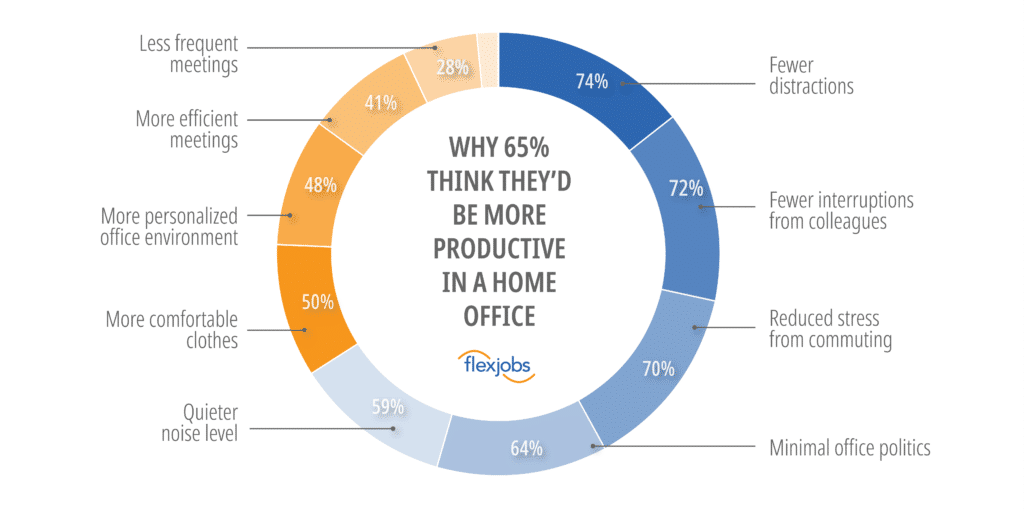
of the people who believe they’re more productive while working from home say that it’s because there are fewer distractions (FlexJobs 2019 Annual Survey)
Remote work statistics: challenges
30) 20%
of the people feel that collaboration and communication pose a big challenge while working remotely (Buffer’s The 2020 State of Remote Work)
31) 20%
respondents also feel lonely while working from home (Buffer’s The 2020 State of Remote Work)
32) 53%
of the people don’t recommend working from home despite working remotely 100 percent of the time, which is perhaps because of the challenges mentioned above (Buffer’s The 2020 State of Remote Work)
33) 80%
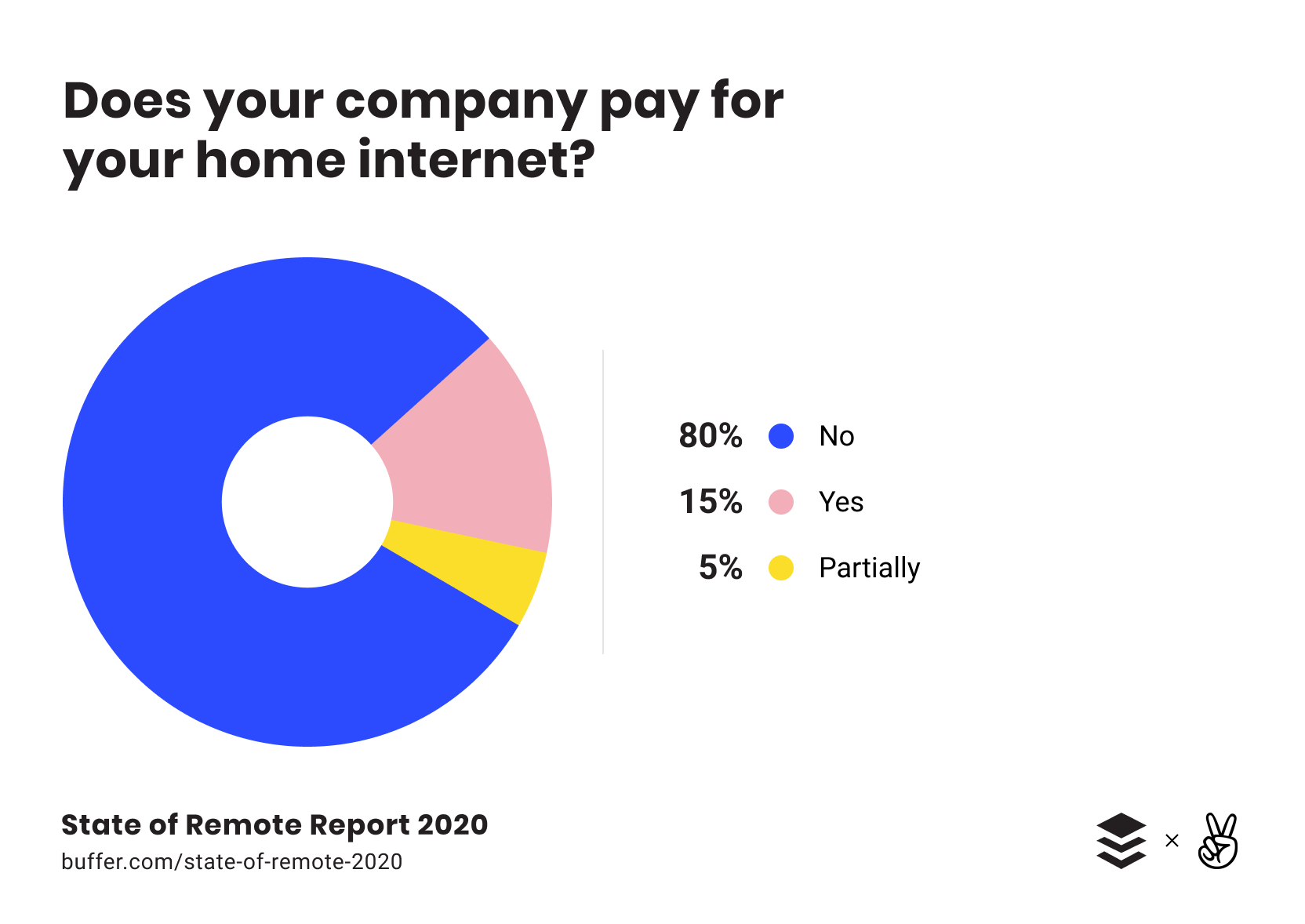
of the people who were surveyed mention that their company doesn’t pay for the internet, which is quite crucial for remote work (Buffer’s The 2020 State of Remote Work)
34) 72%
survey respondents have to pay for co-working space out of their pocket (Buffer’s The 2020 State of Remote Work)
35) 52%
people who work remotely feel that setting up a meeting is a challenge for them (Owl Labs 2019 State of Remote Work)
Remote work statistics: future
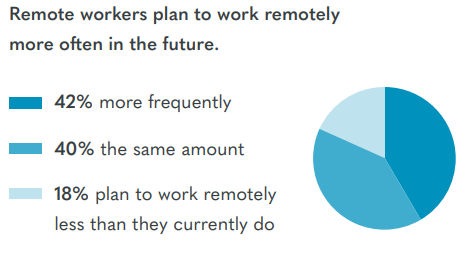
36) 42%
of the survey respondents want to work more frequently from their home in the next five years (Owl Labs 2019 State of Remote Work)
37) 73%
of the departments in the companies will have remote workers by 2028 (Upwork Future Workforce Report 2019)
38) $4.5trillion
That’s the amount that companies in the US could be saving with flexible working by 2030 (IWG)
39) $1.4trillion
The businesses in China could be saving $1.4trillion by opting for flexible working in 2030 (IWG)
Remote work statistics: others
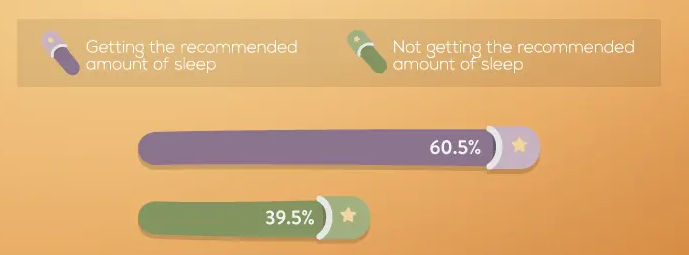
40) 60.5%
of the remote workers say that they get the recommended amount of sleep (March 2020, Amerisleep Remote Workers and Rest report)
41) 70%
of the survey respondents who didn’t get recommended seven hours or more sleep are likely to be dissatisfied with their job. (March 2020, Amerisleep Remote Workers and Rest report)
42) 61.8%
of the remote employees clean their house during their downtime (March 2020, Amerisleep Remote Workers and Rest report)
43) 65%
of the businesses say that flexible working helps them in reducing their capital expenditure, manage risk and consolidate their portfolio (IWG)
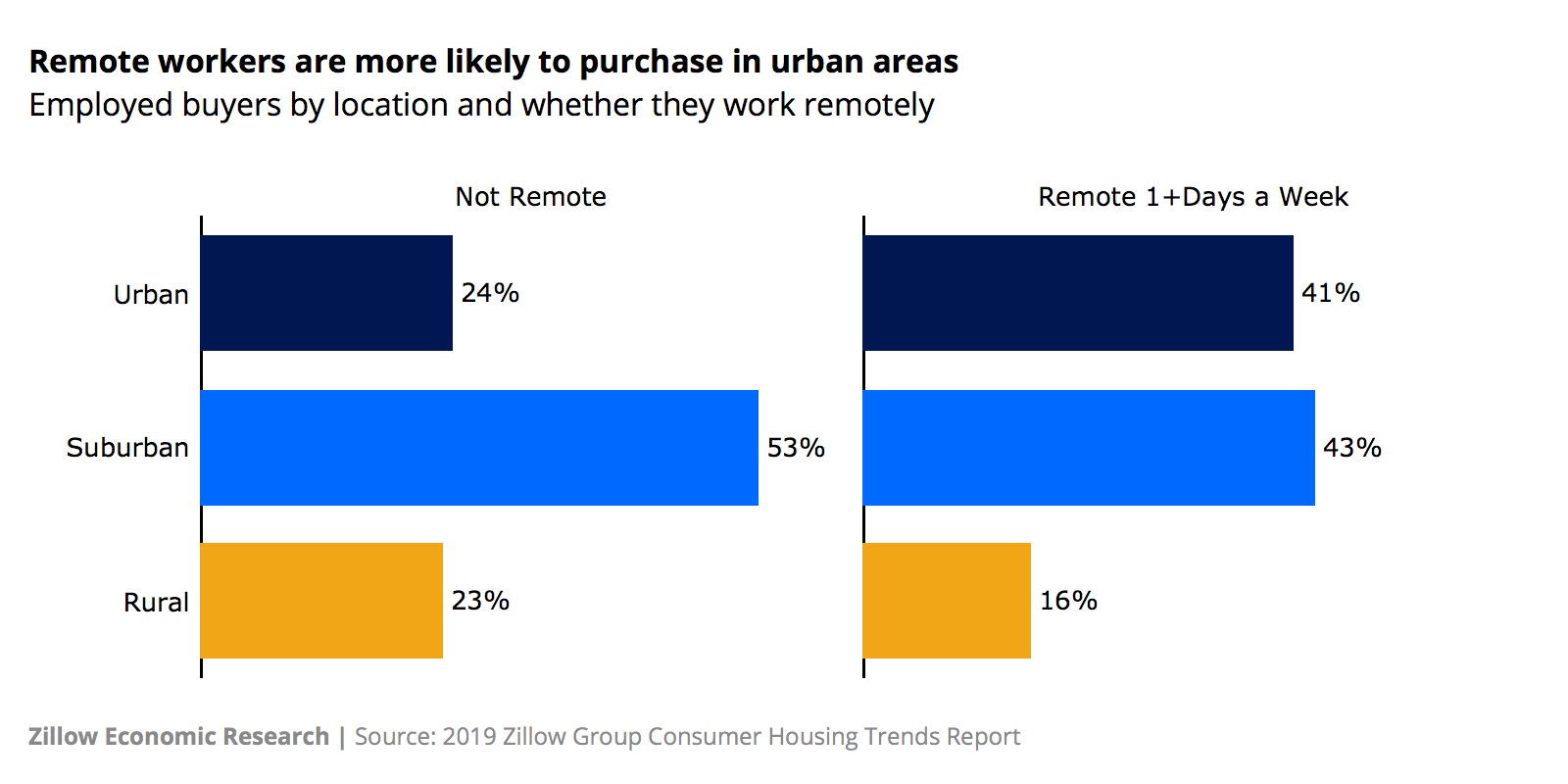
44) 43%
of the remote workers want to purchase a home in a semi-urban area, followed by 41 percent people who prefer urban locality (2019 Zillow Group Consumer Housing Trends Report)
45) 28%
of the people shifted their home when they started remote work (2019 Zillow Group Consumer Housing Trends Report)
We’re sure that some of the remote work statistics 2020 would have surely taken you by surprise, and might even have compelled you to think about it seriously. In case, you are wondering which software should your remote team be using, then read our list of best SaaS software for remote work.
