

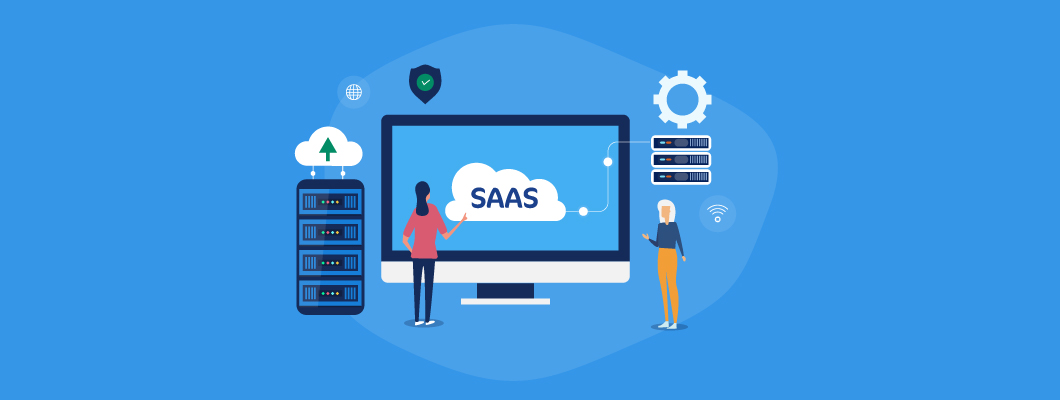
SaaS, as we know, is an acronym used to access ready-made Software available on the Cloud, configurable to one’s unique needs. You have to merely subscribe to the package, the variables being the number of users and the modules you wish to use. Maintenance and regular updates with the latest knowledge base, methodologies, and technologies are regularly performed. It is generally hosted on the service provider’s site, ensuring continuity of service and prevention against malware and hacking attacks. Integration between different applications is also simpler.
SaaS Software can be accessed from any location and device since it is based on the Cloud. Like all other domains, several SaaS-based applications are available in the Manufacturing space to assist in efficiency and reducing costs and act as an innovative and transformative force in the Manufacturing realm. Users of SaaS have reported the following benefits in manufacturing.
Table of Contents
Benefits of SaaS for the Manufacturing Industry
- Reduced Costs of operationsFlexibility – As the operation grows, scaling up is often an issue. Employing SaaS is like a walk in the park.
- Interoperability –SaaS-based Applications facilitate multiple programs to communicate with each other and exchange data in real time through API (Application Programming Interface)s. Typically CCMS, ERP, CRM, and Quality Management Software must talk to one another.
- A Mobile Workforce – accessible to them anywhere and at any time on a 24/7 basis.
- Effective Collaboration between various departments.
- Adaptable Solutions
- Innovation plays a critical role in remaining competitive by transforming into a digitized Industry 4.0 environment. SaaS is playing a significant role in enabling this journey.
The Domains in Manufacturing
SaaS-based applications are available in the following domains.
CMMS- Computerized Maintenance Management System. The following features are essential in a CCMS:
- Preventive Maintenance is a vital component of Manufacturing, and every machine must be maintained on time to prevent breakdowns. It is like your car, and if you do not send it for regular servicing, it will break down at awkward moments on the road.
- Equipment history: Details of the breakdowns of every machine have to be maintained. If a machine breaks down too often, it may be time for a massive overhauling or retirement. This will only be known if the history of its performance is maintained. It will also include the speed and productivity of each machine.
- Inventory and procurement of spare parts: Essential inventory of spare parts and tools must be maintained, and fresh orders are triggered the moment they dip below the minimum level.
- Asset Inventory: Assets often need to be found or stolen. Using modern RFID Technology, these can be tracked to their locations, and the security staff can be alerted if an asset is being taken away.
The best examples of SaaS-CMMS Software are: MaintainX, MaintiMizer, and The Asset Guardian (TAG)
- ERP solutions
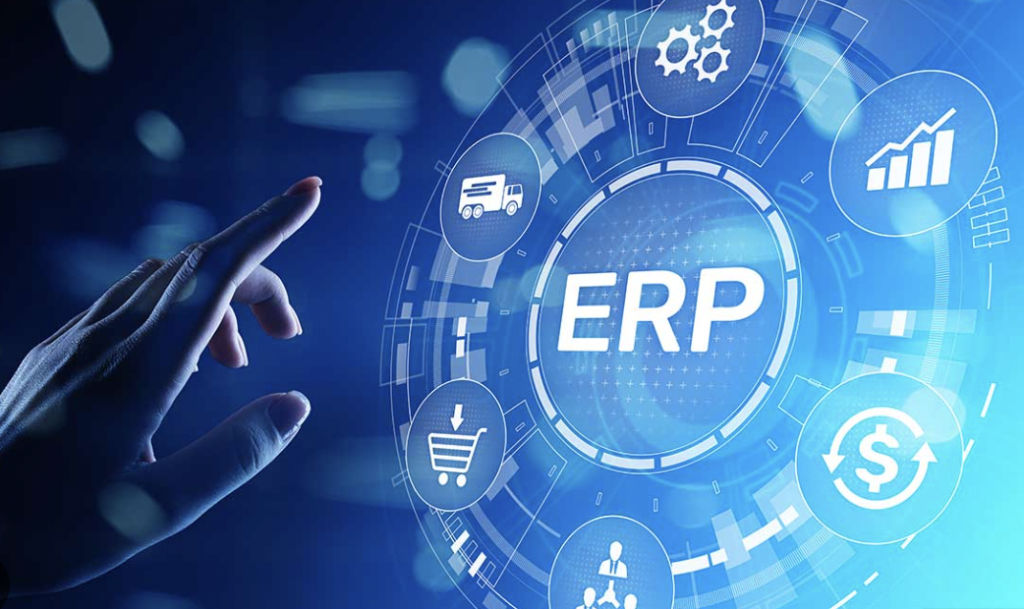
ERP (Enterprise Requirement Planning) is an integrated software that takes care of an enterprise’s entire information and planning needs. For the last ten years, even small-scale industries have adopted ERPs on the Cloud to generate business benefits, and manufacturing is no exception.
What are the areas in manufacturing where ERPs can be used profitably?
The Manufacturing process should be calibrated with the Bill-Of-Materials and Bill-Of-Operations. Bill-of-Materials (or BoM) contains a list of raw and packing materials required to manufacture a unit of a finished product. The shop floor is expected to ensure adherence to the defined BoM scrupulously. Deviations could be there, but each batch’s wastages need to be calculated so that proper costing is done and corrective actions are taken. For example, a liquid can spill out of a vessel; packing materials may be torn or damaged, and so on.
The Bill of Operations (BoO) describes the steps to manufacture a product and is depicted from the starting point to the end. There are two significant modes of production – batch and continuous. In a batch mode, there are several work centers where specialized operations are carried out, and the intermediaries are passed onto the next stage in production in batches. In a continuous mode, on the other hand, the process is continuous, and they flow through an automated conveyor belt. Each has its unique needs, and the BoP will differ for both.
1. Work-in-Progress Inventory: Raw materials are converted to finished goods. Since it passes through several stages, it is imperative to determine the stocks at each production level. It is required for both month-end costings as well as calculation of wastages.
2. Product Costing: While for certain products, costs are worked out at the end of the week or month, it is statutorily binding to determine costs for each batch regarding food products and pharmaceuticals. It is an excellent practice to do Batch-wise costing in other industries also.
3. Maintain Batch-wise details of production: Batch-wise details need to be maintained for various products. Once again, it is a statutory requirement for pharmaceuticals and food items but can prove helpful for other products if flooded with market complaints for particular batches. Responsibilities can be fixed, and complaints can be traced to the raw materials or production processes employed that day.
4. Production scheduling for Planning: Planning and scheduling are performed for every line or machine in the system so that the estimated production units can be calculated, raw materials organized, and sales duly informed.
Some of the expensive solutions include SAP Business ByDesign, Oracle NetSuite, SysPro, and Microsoft Dynamics 365. For those with lower budgets, Odoo is one of the best solutions. It is an Open-Source software with the codes provided along with the facility to host.
Project Planning
For setting up new manufacturing lines or plants, or introducing a new product, defining the initiative as a Project is often required. Accordingly, a detailed Project Planning and Monitoring SaaS is required.
A Project Management Plan is not a simple GANTT Chart with activities, cost lines, and starting and ending dates entered in a Prima Vera or an MS-Project sheet. On the other hand, it is a detailed document that defines how the project will be executed, monitored, and controlled and the general approach to be adopted.
The Project Manager creates the Project Management Plan and has the following components.
- Scope Management Plan. The Project Scope sets your project’s boundaries and defines the goals, deadlines, and deliverables.
- The Cost Management Plan defines the budget and the processes employed to derive budgets, book costs, obtain sanctions, report costs, accounting methods, and the reporting frequency.
- Schedule Management Plan is a document that details how a project’s schedule will be created, managed, and monitored. It defines the activities at granular levels along with expected timelines.
- Quality Management Plan – a document to define the methods to be adopted and the threshold limits to measure quality parameters.
- Resource Management Plan – a document to define the resources used for each activity of the project
- Risk Management Plan – a document to define the risks inherent in a project.
- Procurement Management Plan – will be used to define the procurements to be made by the project along with pricing.
- Stakeholder Engagement Plan – a comprehensive plan for engaging and communicating with the stakeholders.
- Requirements Management Plan – a plan to capture, analyze, manage, and address all the requirements the stakeholders and business executives define.
- Change management Plan – to define the process to approve or reject changes requested during the project. Any changes to the baselines (original plans) defined at the onset must be processed through defined procedures.
WorkOtter is an example of a SaaS PM available on the Cloud for small industries. The options for both large and small industries include Confluence, Monday, Wrike, Zoho Projects, Trello, etc.
MS Project is an expensive package used mainly by experienced Project Managers working for large industries.
- Digital Transformation and Industry 4.0: Digital Work Instructions Software makes it possible to digitize the entire operational process of the manufacturing processes to enable smart manufacturing. This includes connecting ordinary devices like a thermometer or a scanning device equipped with a chip to the network. These can be used to monitor the production process and the environmental parameters, predict breakdowns, or alert the engineer when a part is not behaving optimally.
- CRM Software: Although strictly not falling under the Manufacturing category, CRM helps manage relationships with customers, especially in B-2-B situations. Customers can communicate their product complaints through the platform. CRM Software builds a collaborative platform for the same. Salesforce, Hubspot, Zoho, and Monday.com are some of the options. Salesforce is recommended only for large industries.
- Quality Management Software: This helps in managing the quality of products and services through a collection of data on a real-time basis. The arena is the most famous QMS available on Cloud.
Conclusion
The ultimate aim of SaaS Software is to improve transparency, efficiency, visibility, and flexibility. Without comprehensive automation, this will remain a distant dream. Hence, it is imperative to act swiftly. Developing Software through in-house or external teams is always time-consuming. SaaS enables you to be nimble-footed and act swiftly to attain your goals without much delay. It is an essential component of your journey toward a fully digitized environment.
