

SaaS changes constantly, so staying at the forefront of technology can be challenging. According to a Gartner study, The SaaS business is predicted to expand by 20.7 percent, reaching $591.8 billion by 2023. Businesses continue to implement SaaS solutions, and new developments are being developed that will influence how the industry will develop in the coming years. SaaS business. Being aware of these changes is vital to keep up with the competition and to ensure that you are successful. This guide will highlight the biggest SaaS developments to watch in 2023. It will ensure that you are up to date regardless of whether you’re a SaaS provider or an enterprise seeking to implement SaaS solutions. Let’s get going.
Table of Contents
Why has SaaS become so popular?
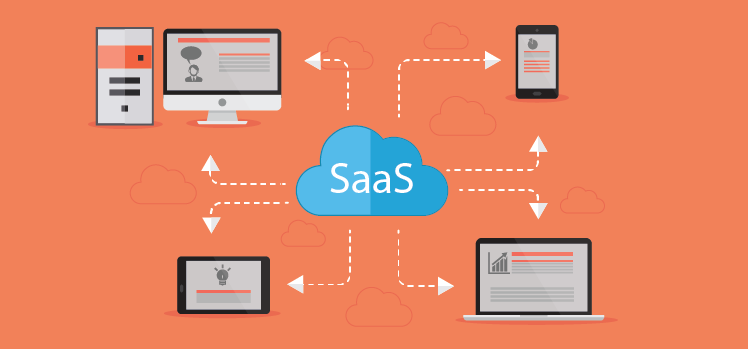
The software-as-a-service (SaaS) model has skyrocketed in popularity recently as it offers cutting-edge solutions in various industries. As the competition for SaaS offerings increases, so do customers’ expectations. The latest study conducted by Price Intelligently indicates that SaaS products in 2015 could compete with an average number of 2.6 competitors. Five years later, that increase was 9.7. Many businesses are now embracing advanced technologies, between AI to low-code programming and further to get an edge. In this piece, we’ll take an in-depth take look at the newest trending technologies within SaaS and discuss what is in store for the future of this model of service. Let’s have a look.
Top 5 SaaS Industry Trends & Market Trends for 2023
In this section, we will identify the current trends and discuss how they impact businesses that operate in this SaaS market. For some trends, we refer to statistics numbers we trust and believe to be reliable.
1. SaaS Security as a Priority
The year 2022 saw several security breaches and data breaches that raised huge security risks in the coming year. The issues affect business and industry worldwide, as many companies embrace new techniques and methods to create security. It is expected that this will dominate the SaaS market until 2023 since cloud computing is subject to numerous security threats and risks that must be taken care of. SaaS security research shows that SaaS configuration issues have been identified as one of the major problems for cloud companies in security from the beginning of 2019. Sixty-three percent of those polled said they believed that SaaS configuration issues led to a security issue in the previous year. They cited the lack of transparency into modifications to the SaaS security settings and excessive departmental access for these settings as the main reasons for the main factors.
This is why the study advises businesses to use automated tools to address problems with configuration errors as soon as they happen. However, it’s not only this. Automation could provide a fantastic solution to security personnel who are tasked by the task of maintaining SaaS security.
But only 25\% of organizations employ this kind of technology. Most rely on manual efforts to determine security levels and correct mistakes. This leaves them vulnerable as manual tests are typically performed monthly, and configuration issues can be ignored for weeks before being discovered.
SaaS Security Posture Management (SSPM) is a viable option to fix the issue. SSPM tools offer automated, continuous surveillance of SaaS applications to reduce security and configuration issues and remain compliant.
2. Machine Learning
Machine Learning (ML), an aspect of AI, can be used within SaaS to improve the responsiveness of reports on customer service and other applications that use AI, like AI-powered chatbots that run live chatbots. Additionally, it will automate the process of onboarding SaaS.
Since ML is based around a self-contained operating model, advancements will enable platforms and software that allow enterprises to automate substantial portions of internal functions that are not customer service and experience alone.
The fresh infusion of ML innovations will enable services based on SaaS to self-improve by delivering an operational and intelligent service that will propel many industries ahead. Machine learning is among the fastest-growing areas of the software. That’s why it’s the most talked about SaaS 2023 issue.
3. Vertical SaaS
Since the emergence of the SaaS sector, many software companies could be utilized across all industries. These companies worked for many years. The new buzzword transforming the SaaS market is Vertical SaaS, a type targeted at specific industries. The SaaS solutions could be extremely customized tools or tailored for a specific niche market. This cloud computing service caters to the biotech and pharmaceutical industries. This is why the software was designed to provide capabilities that could be sold efficiently to businesses in this industry.
Because of their uniqueness, Vertical SaaS solutions generally allow for extensive customization and are highly adaptable to the latest trends in industrial technology. The most significant benefit of Vertical SaaS is that it will limit competition and boost your sales.
4. Data-as-a-Service (DaaS)
Over the past few years, large and small businesses have used data in their most critical strategic choices. The growth in data, coupled with the changing business environment left by the outbreak, made data more of a requirement than a decision. But, storing and collecting information in-house is becoming less efficient and insecure. This is the point at which Data-as-a-Service (DaaS) enters the picture and is positioned as a top SaaS trend of 2023. DaaS is a term that can be used to refer to cloud-based software used to manage data, like storage, data collection, integration, analytics, and others. This way, businesses can cut down on the time needed to make critical operational and strategic choices to improve the accuracy and value of their data throughout the process. Additionally, it drastically reduces the cost and time involved in installing processes and tools for data across the company since cloud-based applications are much simpler to install than on-premise versions. Like all disciplines based on SaaS, DaaS offers users secure 24/7 access to their data, regardless of location or device.
It proved particularly useful in COVID-19 when organizations struggled to work together in virtual situations. This has positively affected the worldwide DaaS market, predicted to expand to $56.85 billion between 2023 and 2027, increasing at a CAGR of 36.92 percent. Since the market is becoming more competitive in 2023, DaaS applications will keep creating new features to make data utilization safer and more effective for businesses across all industries. DaaS global market report mentions blockchain technology as data-as-a-service is one of the major markets to watch in the coming years. This is coupled with the increasing demand to use predictive analytics. Datapine allows users to easily access multiple BI tools, such as visualization, predictive analytics fueled with artificial intelligence, live access to data, reports sharing, and much more.
Although this may sound as good as it seems, DaaS providers will also encounter challenges that must be resolved to provide high-quality products. In this regard, we could identify security at the top of the list. Since DaaS involves users transferring sensitive information, employing encryption technology to secure the data is essential. Experts suggest that companies like Microsoft, IBM, Facebook, and Google are the key participants in the DaaS sector. In 2023, we anticipate the market to expand exponentially, creating opportunities for small-sized companies.
5. SaaS Market Consolidation
It’s no secret it is true that it is no secret that the SaaS market is becoming more competitive than ever. The big firms in the market provide additional options and features for their clients to remain ahead of the curve and increase their client base. However, creating such features is usually too costly and is not worth the time and effort. To solve the issue, major companies in the field have been acquiring smaller firms to give their customers the complete package of products and keep them ahead of their competitors.
In the same way, smaller businesses have turned to consolidation as a method to expand their reach to a larger public and become more successful. Since the market is becoming more overcrowded, the possibilities for growth on its own are becoming less likely, so using the name and success of the larger companies is typically the best route to pursue. There will be a lot of consolidation among companies within the SaaS market in 2023. The consolidations will occur between larger and smaller players instead of between businesses that can gain from one another. In 2021, CRM major Salesforce acquired the well-known workplace application Slack at $27.7 billion.
The acquisition is a win-win for both companies because Salesforce offers better customer communications capabilities, and Slack is an advantage over the biggest rival, Microsoft Teams.
Conclusion
The primary reason behind the expansion is the pandemic and the increased number of employees transferred to remote working. However, SaaS is expected to evolve when employees return to the office. Managers have realized the benefits of cloud computing and have plans to keep the cloud.
In addition, the experts predict that by 2020, 75\% of businesses will utilize all or nearly every application as SaaS. If you’re thinking about digitalizing your company and want to know the advantages and disadvantages, and benefits, this article can convince you. Call us to aid you in hiring the right software development team for your venture.
