

Imagine you are still learning about project management methods. It can be difficult to tell the difference between Scrum and Kanban boards or why Agile is better than Waterfall. With so many terms being used, you might think it does not matter your project management methodology.
Profit from the unique advantages these methods can provide. Use the flowchart below to get a quick idea of the best project management method for you and your team. Or, continue reading and comparing Agile vs. Scrum and Kanban. Let’s get going.
Table of Contents
What is Agile Project Management?

Agile is an organized and incremental approach to managing projects and development. It is aware of the volatility involved in the development process and offers the ability for teams to self-organize can adapt to changing conditions without losing track of the process.
Nowadays, being agile isn’t an advantage in competitiveness. Developing a product inside a box over several months or years is impossible. It’s, therefore, more crucial than ever to ensure it’s correct.
Disadvantages of Agile Project Management
The degree of flexibility offered in Agile generally is beneficial; it has some drawbacks. Setting a reliable delivery date may be difficult. Documentation may be overlooked, or the product may vary from the original plan. Below are a few negatives of Agile:
- Planning is Less Specific: Establishing an exact time for delivery can require a lot of work. Since Agile relies on a time-boxed delivery system and because project managers frequently re-prioritize their tasks, certain items initially scheduled for delivery need to be accomplished in the shortest amount of time. Additionally, additional sprints could be scheduled at any point during the project, extending the total timeline.
- The Team Must Have Knowledge: The Agile team is typically small, so the team members must be knowledgeable in different fields. Additionally, they must comprehend and be comfortable with the selected Agile approach.
- Developers’ Commitment to Time: Agile is the most efficient when the team of developers is fully dedicated to the work. Participation and cooperation are essential throughout the Agile method, which is much longer than a conventional method. This also means that team members must agree to the project’s duration.
- Documentation Can Be Ignored It is important to consider that the Agile Manifesto prefers working software to extensive documentation. As such, certain team members might consider it more crucial to concentrate on documents. Although a comprehensive document does not guarantee project success, Agile teams should find an appropriate proportion between documenting and discussing.
- The Final Product May Be Quite Different: The beginning Agile project could contain a vague outline, and the end item may look very different from what you initially thought. Since Agile is so adaptable, new iterations could be implemented based on changing customers’ feedback. This can result in a completely different product.
What is Scrum Project Management?
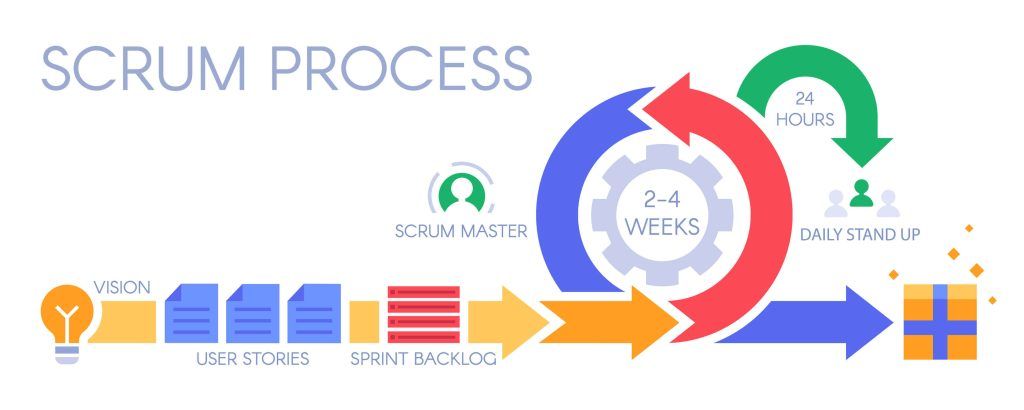
Scrum is an element of Agile and is among the most well-known frameworks for processes to implement Agile. Scrum is an agile software development method that uses incremental processes within an overall framework that uses multi-functional teams to accomplish goals and adapt to change. Scrum is designed to create tiny pieces of software faster in fixed-length iterations, referred to as sprints. These run between one and two weeks. The team can deliver software on a consistent frequency. When the team has completed every sprint, the stakeholders and team members get together to discuss the next steps.
Scrum has a list of rules for roles, duties, and regular meetings that remain the same. In particular, Scrum calls for four rituals defining each sprint: sprint planning daily stand-ups, sprint demonstration, and a sprint retrospective. The team uses visual elements such as Burndown charts or task boards in each session to track progress and get feedback in increments. This type of project management will result in better customer response and lower development costs.
It also results in higher work satisfaction and immediately gratifying results. Scrum is not a straight-line method but a fluid one considering many moving parts, team members, goals, and teams.
Disadvantages of Scrum Project Management
Although Scrum provides some tangible advantages, it has several drawbacks. Scrum demands a lot of commitment and experience from the team. Additionally, the projects are at high risk of expanding scope. These are some of the drawbacks of Scrum:
- The Risk of Scope Creep: There are instances where Scrum projects may suffer from scope creep due to needing a clear deadline. Without a deadline, the stakeholders could be enticed to demand additional functions.
- The Team Requires Commitment & Experience: In addition to having clearly defined roles and responsibilities, the team needs to be conversant with Scrum concepts to achieve success. Since there are no specific roles for this Scrum Team (everyone does everything), this needs team members who know technology. They must also be committed to attending weekly Scrum sessions and remain on the team throughout the project.
- A Bad Scrum Master Will Cause Havoc: Scrum Master differs significantly from the project manager. The Scrum Master doesn’t have control over their team. They must respect the team they are in charge of and do not have the authority to give them instructions on what to do. If they try to control the team, it will fail. Scrum Master tries to control his team; the project will likely not succeed.
- Poorly Defined Tasks can Prevent Accurate Results: Project schedules and costs will be correct if projects are clearly defined. It is much easier to plan if the goals for starting are defined, and sprints could last longer than the originally planned time.
What is Kanban Project Management?
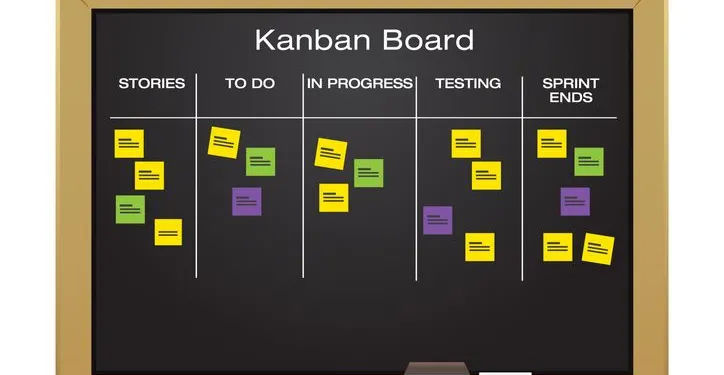
Kanban is Japanese, meaning “visual sign” or “card.” The Kanban framework is a visual used to introduce Agile, which outlines what you need to be produced, when and the amount of it. It is a way to make small, gradual adjustments to your existing system and doesn’t require a particular setup or method (meaning that you can apply Kanban with other workflows).
Kanban combines the Toyota Production System and Lean Manufacturing-inspired Kanban. In the 40s, Toyota improved its engineering procedure by modeling it on how stores stock shelves. Engineer Taiichi Ohno realized that supermarkets only stock enough items to satisfy demands, optimizing the store and buyer process.
The inventory would be replenished only if there was enough space in the aisle (a visual signal). The store improved its inventory management efficiency because inventory was in line with the demand.
Disadvantages of Kanban Project Management
The many disadvantages of Kanban are due to improper or incorrect handling or handling Kanban board. A simple or outdated board could lead to things that could be improved. This article will provide more information on the drawbacks of Kanban:
- Boards That are Not Reliable can Cause Issues: The team must keep the Kanban board in good order. In the absence of this, they’ll work with inaccurate information. When work is finished using an outdated board, getting it to where it should be may be time-consuming.
- Team Members are Inclined to Complicate the Board: They need to be more compliant with the board. The Kanban board needs to be simple and simple to comprehend. But, certain group members might learn “new tricks” they can implement on their boards. Adding whistles and bells to the Kanban board hides the crucial details.
- Insufficient Timing: One of the most common complaints about Kanban is knowing when tasks can be finished. The columns of Kanban’s Kanban board are only identified by phases (to accomplish, in progress, or complete), and there aren’t dates for each stage, so it is important to understand how to time the task phase will be.
Conclusion
The Kanban advantages and disadvantages have been discussed. Kanban benefits and drawbacks; however, we must also consider the fundamental Scrum method’s advantages, drawbacks, and disadvantages; now it’s time to end. Examining the two Agile methodologies for software development, It should be obvious which one to implement and at what point.
If your business is struggling and requires a major transformation to an efficient and efficient method, Scrum is more appropriate. Agile Kanban should be the option if you have processes that need to be enhanced in time without re-inventing your entire process. Both methods have benefits and drawbacks.
If you work with a method that is not an Agile software development method, Scrum is a good opportunity for your employees. Making the switch to Scrum is an effective process taking into consideration the benefits that come with Scrum as opposed to Kanban. This will eliminate your previous practices and transform your work to make them more efficient.
