

A project typically involves the assistance of various departments; all these departments divide work portions and work on them differently. Although, at one point, they need to get together and integrate every ounce of work they once divided among themselves.
Dividing a project is easy; however, integrating it might be challenging as it involves strategy and management. That is why project managers all over the world use PIM (Project Integration Management), a technique through which different departments come together and combine their work ideas and executions in order to achieve a set target within realistic deadlines and a fixed budget.
So what exactly is PIM (Project Integration Management), and how should one make the most out of it? You will get to know all this in the following sections.
Table of Contents
What is Project Integration Management (PIM)?
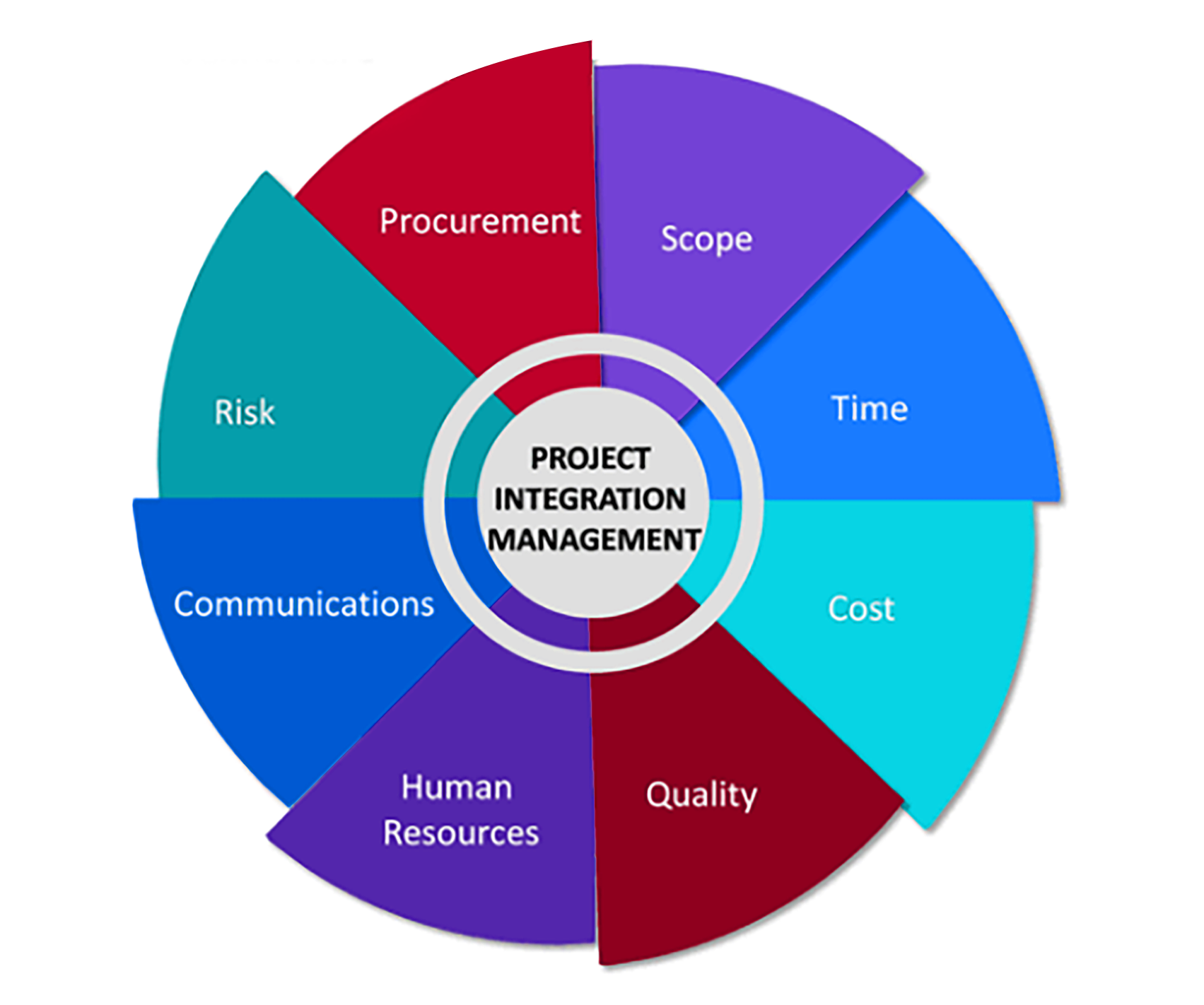
When all major and minor elements of a project collaborate, it is called project integration management.
In definitive terms, Project Integration Management (PIM) is a management strategy adopted by project managers to coordinate different departments working on the same project together. This strategy ensures cohesion among various departments, which in turn ensures proper project structure and execution.
This planning strategy includes a lot of work like:
- Managing conflicts
- Collaborating different tasks
- Coordinating resources and stakeholders
- Evaluating resources
- Holding trade-offs where you might have to choose one aspect of the project at the cost of the other (For instance, if your project is running behind, you might have to choose between completing it on the deadline by adding more workforce and resources and going over the budget, or sticking to the budget and failing to deliver the project on time)
- Decision making
- Finding a key element that holds every aspect of the project together etc.
The following are the primary ways which could help your Project Integration Management (PIM) successfully task run to completion.
- Thoroughly plan every aspect of your project.
- Communication is the key. Keep communicating with your team as much as possible to avert any confusion, tardiness, and internal conflicts.
- Organize every part of your project beforehand
- Carefully manage the relationships between employees, teams, and the organization as a whole.
- Take charge, be the leader, let your leadership instincts kick in and save the day.
- Indulge in critical thinking
- Priorly research about the risks that come along with your project and give your best to avoid them.
- Schedule every day of your project until the deadline in order to avoid any kind of delays.
- Sketch a budget structure for your entire project
- Analyze the data involved
Steps of Project Integration Management (PIM)
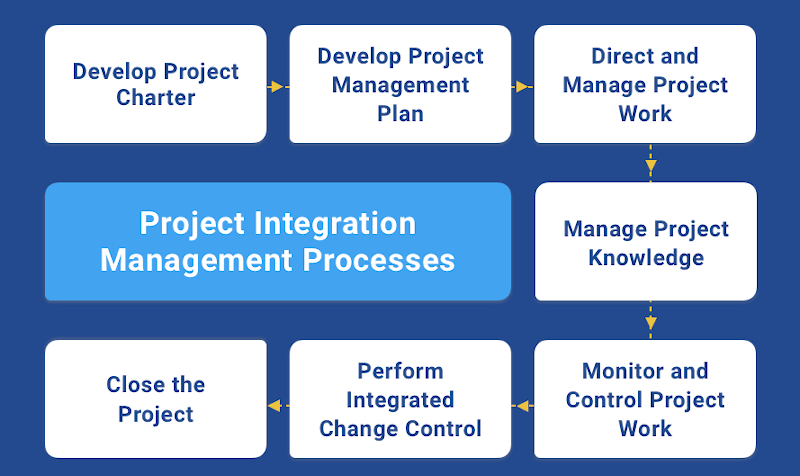
Project Integration Management (PIM) is a comprehensive method that contains elaborate strategies. Let us delve a little deeper into the details of this process. Project Integration Management (PIM) is an elaborate seven-step process, this process may be long, but it’s foolproof.
So let us see the seven-step cycle of Project Integration Management (PIM)
Step 1: Design a Project Charter
A project charter is a formal document that clears that a particular team has full clearance from the executives to work on the project.
Apart from that, a charter is a fundamentally written structure regarding how the project should turn out to be. In other words, it contains information like:
- Objectives of the project
- Reasons behind project execution
- Main stakeholders
- Constraints of the project
- An overview of the project
- Risks that the project comes with
- Benefits that the project would extend
This is a very essential piece of document that ensures zero discrepancies in the project execution. Moreover, it is the go-to document that project managers use when conflicts and disagreements arise regarding the project’s goals and execution.
Step 2: Devise a Project Management Plan
Suppose you have sealed the deal with a big organization, and you are now officially in charge of the new big project.
But how will you divide tasks, record progress, set deadlines and integrate them all later? That is the important question, and the answer is a full-blown project management plan.
- An ideal project management plan begins with a project scope statement that defines a project’s size, impact, and scope.
- Project management plans are a way to transform stakeholders’ expectations and the team’s abstract ideas into concrete deliverables.
Therefore one should be very certain and open when it comes to devising a project management plan. All you need to do is follow the steps mentioned below in order to develop a perfect project management plan.
- Firstly you need to be thorough with your goals and objectives. So the first step towards setting up a project management plan is to identify the goals of your project, sort them as per priority and then apply correct deliverables to achieve these goals. Also, before finalizing the deadline for the entire project, it would be best to deduce how much time each deliverable will take.
- Next, you need to assess your project for risks, because to be honest, every project is enveloped within a risk factor. Thus you need to conduct a full-fledged risk assessment to be aware of what may come as a hindering element in the future.
- Lastly, you need to organize a kickoff meeting where you call in all the members of your team and divide tasks and responsibilities.
Step 3: Managing and Directing the Project Work
This is the phase where the actual execution of the project begins. Here the project manager directs work and responsibilities to the team and educates them on how the work should be done.
To put it simply, it is the phase where the actual work takes place. Hiring employees, part-time workers, architects, graphic artists, etc. fall under this phase of Project Integration Management (PIM).
Step 4: Overseeing Project Management Knowledge
It is extremely essential to record progress and knowledge that was gained during the cycle of the entire project execution.
Documenting the entire knowledge associated with the project is imperative for hassle-free execution of the project. A project knowledge involves:
- Information about the tools used in the project
- Any external help that used during the project execution
- Knowledge about the deadlines of the project
Note: A knowledge management solution is a tool that records and organizes all the knowledge learned during a project at an accessible source.
Step 5: Monitoring and Controlling Project Work
Apart from directing and managing work, it is a project manager’s responsibility to keep an eye on the team’s performance.
It is essential to make regular checks on the team and ensure whether their progress aligns with the progress objectives that were set previously.
Checking progress is essential because projects with missed deadlines cast a poor impression and never really pass as successful. Therefore, in order to ensure the success of your project, monitor your team regularly and ensure that they meet all the goals specified in the project charter.
Step 6: Performing Integrated Change Control
Change Control is an essential aspect of any project. Changes are a part of a project, your project could be subjected to any change during its entire span, and as a project manager, you will have to find ways to settle with it.
It could be a new employee, a new tool, or a new team. A project manager should be able to quickly adapt to changes and lead the team without any issues.
Step 7: Finalizing the Project
Finally, you can close the project once it has passed through all the previously mentioned six phases.
This phase involves a retrospection of a project where project managers declare the project as a success or failure, depending on various factors.
Conclusion
These are the 7 steps of Project Integration Management. Clearly, if these steps are followed, integrating project management into any process would be a seamless experience. Find out more about Project Management Tools on SaaSworthy, and check out various features they have to offer.
