

Conversational AI has rapidly evolved into a must-have tool for businesses in 2024, transforming the way they interact with customers and manage internal processes. By leveraging natural language processing (NLP) and machine learning, these platforms provide more personalized, efficient, and scalable customer service. They also help businesses automate workflows, streamline operations, and enable unique, interactive experiences that resonate with users. As more companies embrace this technology to stay competitive, the demand for high-performing conversational AI platforms continues to grow.
Here’s a look at the top 10 conversational AI platforms of 2024, ranked by popularity, and how they’re making an impact across various industries
Table of Contents
Google Dialogflow
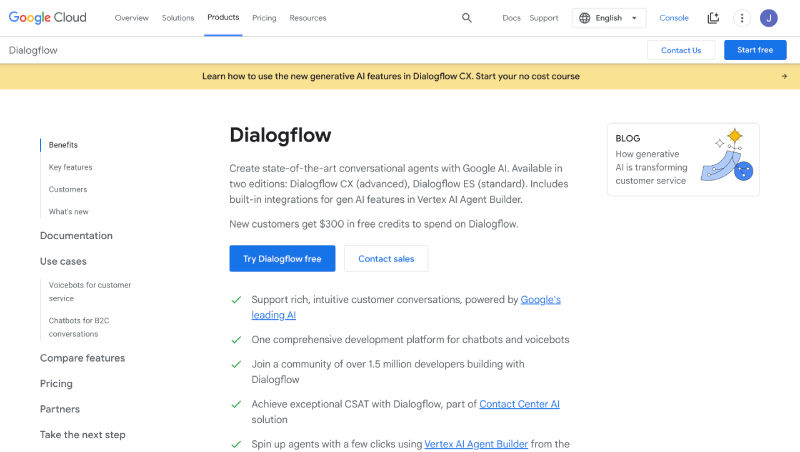
Google Dialogflow is a popular choice due to its robust set of features and ease of use. Leveraging Google’s technology, Dialogflow enables businesses to build chatbots and voice assistants that support over 20 languages. Its user-friendly interface and integration with Google services make it a go-to option for those looking to develop versatile conversational agents.
Key Features:
- Supports over 20 languages
- Multi-platform integration
- Voice and text interaction capabilities
- User-friendly interface
Pros:
- Backed by Google’s technology
- Easy to use with a visual interface
- Good integration options with Google services
Cons:
- Limited in advanced features compared to some competitors
- Costs can escalate with high usage
Best For:
- Businesses looking for a versatile and easy-to-use chatbot solution
Pricing:
- Free tier available; paid plans start at $0.002 per request
Amazon Lex
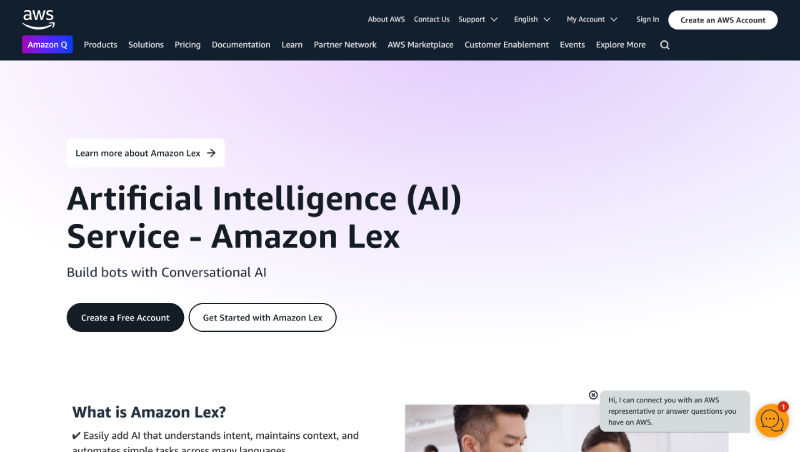
Amazon Lex stands out for its powerful natural language understanding and automatic speech recognition capabilities. Integrated seamlessly with AWS services, Lex allows developers to create sophisticated chatbots and voice assistants. Its scalability and integration with the AWS ecosystem make it a preferred choice for many businesses.
Key Features:
- Natural language understanding
- Automatic speech recognition
- Integration with AWS services
- Supports voice and text
Pros:
- Seamless integration with AWS ecosystem
- High accuracy in speech recognition
- Scalable and flexible
Cons:
- The steeper learning curve for non-developers
- Costs can add up with high-traffic
Best For:
- Companies already using AWS services or requiring advanced voice capabilities
Pricing:
- Pay-as-you-go model; prices start at $0.004 per text request and $0.0065 per speech request
IBM Watson Assistant
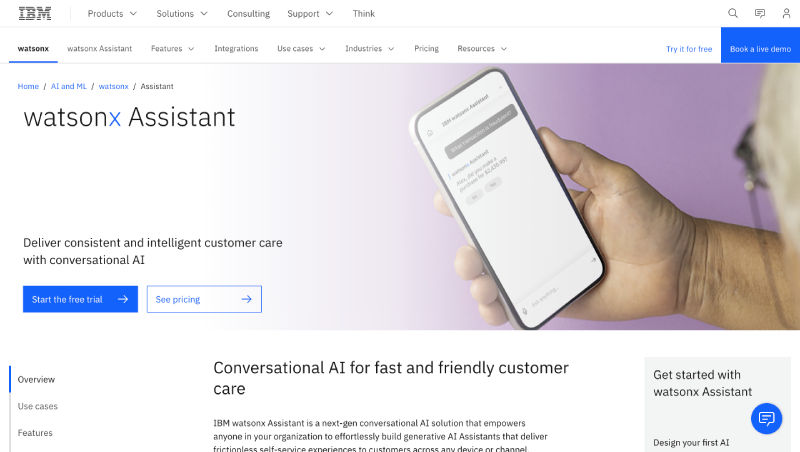
IBM Watson Assistant is renowned for its advanced natural language processing and extensive customization options. It enables developers to craft highly engaging conversational experiences and integrates seamlessly with a wide range of platforms. Its powerful analytics and reporting tools make it a strong choice for enterprise-level applications.
Key Features:
- Advanced natural language processing
- Extensive customization options
- Integration with various platforms
- Powerful analytics and reporting tools
Pros:
- Robust NLP capabilities
- Highly customizable
- Scalable for large enterprises
Cons:
- Can be costly
- Requires technical expertise for setup
Best For:
- Large organizations seeking highly customizable and scalable solutions
Pricing:
- Starts at $0 for Lite plan; paid plans begin at $140/month
Read more: 8 Best AI Search Engines to Explore in 2024
Microsoft Bot Framework
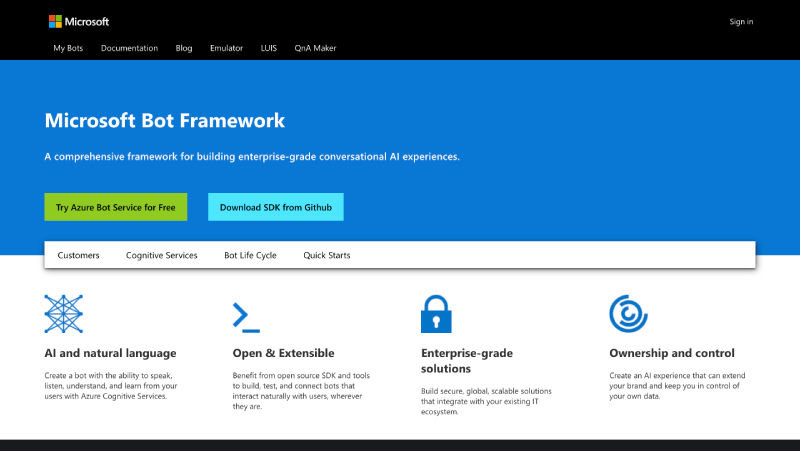
The Microsoft Bot Framework offers a comprehensive platform for developing and deploying chatbots across various channels. Its strong support for integration with Microsoft services, such as Teams and Azure, makes it a powerful tool for enterprises. The framework’s flexibility and extensive channel support are key features.
Key Features:
- Multi-channel deployment
- Integration with Microsoft services (e.g., Azure)
- Support for a wide range of channels like Teams, Slack, and web apps
- Advanced analytics and monitoring tools
Pros:
- Extensive integration capabilities
- Strong support for enterprise-level features
- Flexibility in bot development and deployment
Cons:
- Complex setup process
- Requires significant technical expertise
Best For:
- Businesses needing to deploy bots across multiple channels and integrate with Microsoft tools
Pricing:
- Free tier available; additional costs depend on Azure usage and features
Rasa
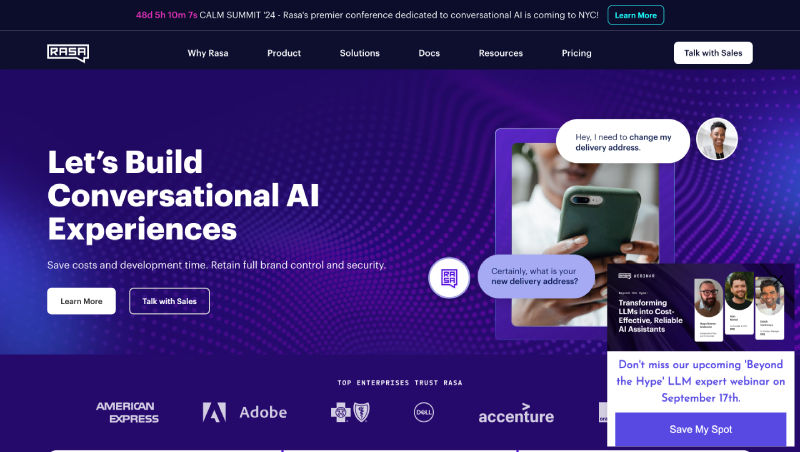
Rasa is an open-source framework that provides developers with flexibility and control over their conversational AI solutions. It is particularly favored for its machine-learning capabilities, which allow chatbots to understand and respond to complex user queries. Rasa is ideal for those seeking a highly customizable solution with no vendor lock-in.
Key Features:
- Open-source framework
- Flexible and customizable
- Advanced machine learning capabilities
- On-premises deployment option
Pros:
- Complete control over bot functionality
- No vendor lock-in
- Strong community support
Cons:
- Requires more technical expertise to implement
- No out-of-the-box solutions
Best For:
- Developers and organizations seeking a highly customizable, open-source solution
Pricing:
- Free for open-source; enterprise plans available with custom pricing
Kore.ai
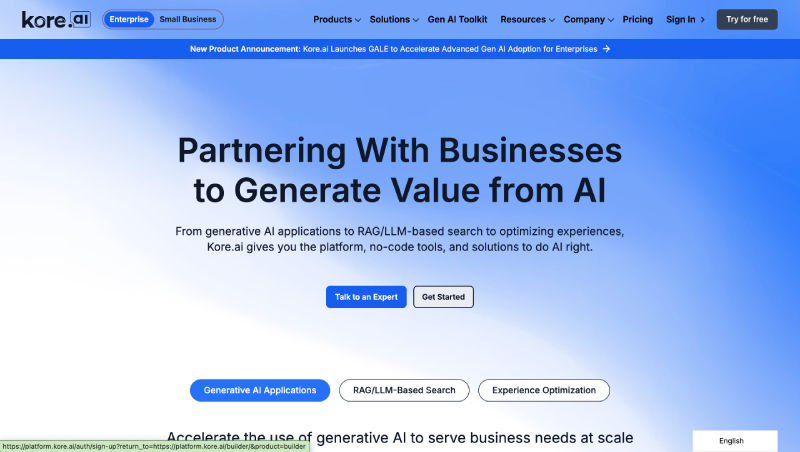
Kore.ai is designed for enterprise-level deployments, offering a robust platform for building AI-powered virtual assistants. Its features include natural language understanding, sentiment analysis, and multi-channel support. Kore.ai’s enterprise-grade capabilities make it suitable for large organizations needing advanced virtual assistant functionalities.
Key Features:
- Enterprise-grade virtual assistants
- Natural language understanding
- Sentiment analysis
- Multi-channel support
Pros:
- Robust features for large enterprises
- Good support for sentiment analysis and contextual understanding
- Comprehensive analytics tools
Cons:
- It can be expensive for smaller businesses
- Setup and customization can be complex
Best For:
- Large enterprises needing advanced virtual assistant capabilities
Pricing:
- Custom pricing based on enterprise needs
Haptik
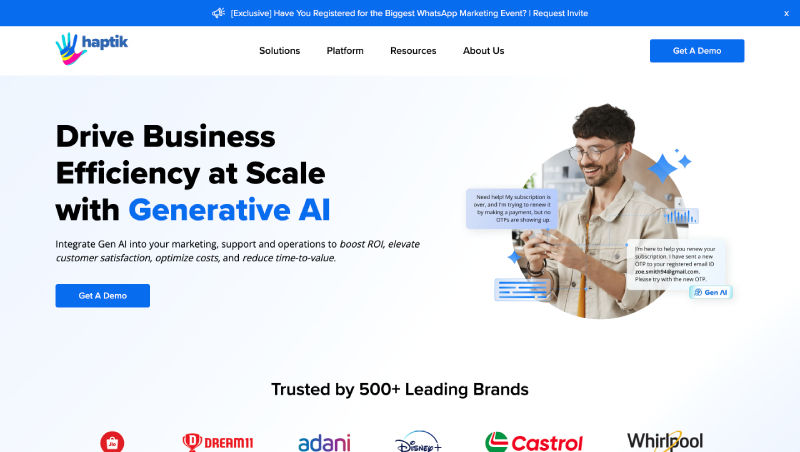
Haptik is known for its user-friendly interface and no-code platform, which simplifies the chatbot development process. It offers multi-channel support and a range of pre-built templates for quick deployment. Haptik’s ease of use makes it a great choice for businesses looking to implement conversational AI without extensive technical resources quickly.
Key Features:
- User-friendly interface
- No-code platform for easy development
- Multi-channel support
- Pre-built templates for quick deployment
Pros:
- Simplifies chatbot development with a no-code approach
- Good for quick setup and deployment
- Supports a wide range of channels
Cons:
- Limited customization options compared to some other platforms
- Might not scale as well for very large enterprises
Best For:
- Small to medium businesses looking for an easy-to-use, no-code chatbot solution
Pricing:
- Free tier available; paid plans start at $99/month
Cognigy.AI
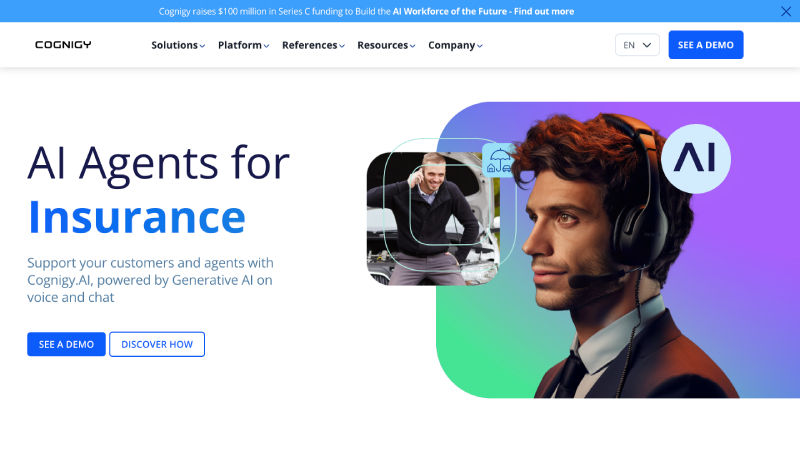
Cognigy.AI is tailored for contact center automation, helping businesses deliver personalized customer interactions. It excels in resolving queries, handling transactions, and automating workflows. Its focus on contact center automation makes it an ideal choice for companies looking to enhance their customer service operations.
Key Features:
- Contact center automation
- Personalized customer interactions
- Advanced workflow automation
- Multi-channel support
Pros:
- Excellent for automating contact center operations
- Strong capabilities in handling complex queries and transactions
- Good integration options
Cons:
- Can be pricey for smaller organizations
- May require some technical expertise to setup
Best For:
- Businesses looking to automate customer service and contact center operations
Pricing:
- Custom pricing based on business needs
Ada
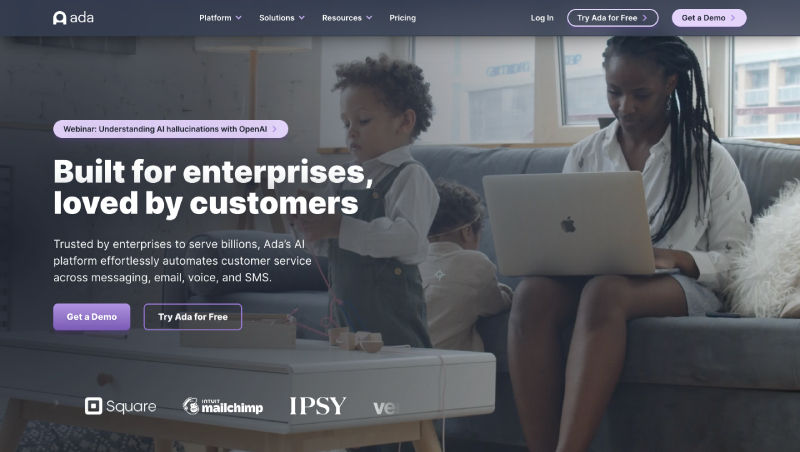
Ada focuses on automating customer service with its no-code platform, enabling businesses to quickly set up and customize chatbots. Its ease of use and integration with CRM systems make it a popular choice for automating routine customer interactions across multiple channels.
Key Features:
- AI-driven customer service automation
- No-code platform
- Easy integration with CRM systems
- Multi-channel support
Pros:
- Simplifies customer service automation with a no-code approach
- Quick setup and integration
- Effective for handling common customer queries
Cons:
- Limited customization compared to more advanced platforms
- Not as suitable for complex interactions
Best For:
- Businesses needing a straightforward, no-code solution for automating customer service
Pricing:
- Free trial available; paid plans start at $399/month
Yellow.ai
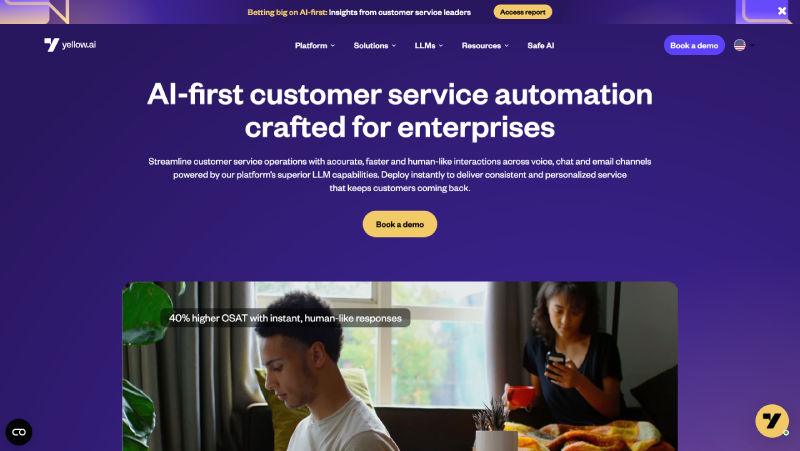
Yellow.ai is a frontrunner in conversational AI, offering advanced chatbots that leverage AI and natural language processing for personalized interactions. It supports multiple languages and channels and integrates well with major messaging platforms. Yellow.ai’s focus on delivering personalized experiences makes it suitable for businesses with diverse customer interaction needs.
Key Features:
- Multi-language support
- Multi-channel integration
- Personalization and contextual understanding
- Integration with major messaging platforms
Pros:
- High level of customization
- Supports a wide range of languages
- Easy integration with existing systems
Cons:
- It can be expensive for small businesses
- The initial setup may be complex
Best For:
- Enterprises needing advanced, multi-channel chatbot solutions
Pricing:
- Custom pricing based on business needs; typically starts around $500/month
Best Conversational AI Platforms for 2024
| S. No. | Name | URL | Best For |
| 1 | Google Dialogflow | dialogflow.com | Businesses looking for a versatile and easy-to-use chatbot solution |
| 2 | Amazon Lex | aws.amazon.com/lex | Companies already using AWS services or requiring advanced voice capabilities |
| 3 | IBM Watson Assistant | ibm.com/watson/assistant | Large organizations seeking highly customizable and scalable solutions |
| 4 | Microsoft Bot Framework | botframework.com | Businesses needing to deploy bots across multiple channels and integrate with Microsoft tools |
| 5 | Rasa | rasa.com | Developers and organizations seeking a highly customizable, open-source solution |
| 6 | Kore.ai | kore.ai | Large enterprises needing advanced virtual assistant capabilities |
| 7 | Haptik | haptik.ai | Small to medium businesses looking for an easy-to-use, no-code chatbot solution |
| 8 | Cognigy.AI | cognigy.com | Businesses looking to automate customer service and contact center operations |
| 9 | Ada | ada.support | Businesses needing a straightforward, no-code solution for automating customer service |
| 10 | Yellow.ai | yellow.ai | Enterprises needing advanced, multi-channel chatbot solutions |
FAQs about Conversational AI Platforms
1. What is the best conversational AI platform?
The “best” conversational AI platform can vary depending on your specific needs and use cases. However, based on popularity, versatility, and user feedback, Google Dialogflow is often considered one of the top choices due to its powerful features, ease of use, and extensive integration capabilities. Amazon Lex and IBM Watson Assistant are also highly regarded for their robust capabilities and scalability, making them suitable for enterprise-level applications.
2. What are conversational AI platforms?
Conversational AI platforms are technologies that enable the creation and deployment of conversational agents, such as chatbots and virtual assistants. These platforms use artificial intelligence, natural language processing (NLP), and machine learning to understand and respond to human language in a natural, conversational manner. They facilitate interactions between users and systems through text or voice, helping businesses automate customer service, enhance user experiences, and streamline operations.
3. Is ChatGPT a conversational AI?
Yes, ChatGPT is a conversational AI. It is a language model developed by OpenAI that uses advanced natural language processing techniques to understand and generate human-like text. ChatGPT can engage in conversations, answer questions, and assist with various tasks based on the text input it receives, making it a powerful example of conversational AI.
4. Which is the best AI platform?
The “best” AI platform depends on the context and specific requirements. For general AI capabilities, platforms like Google Cloud AI, Microsoft Azure AI, and IBM Watson are often considered top choices due to their extensive range of services, scalability, and integration options. For specialized needs, such as conversational AI, Google Dialogflow, Amazon Lex, and IBM Watson Assistant are highly rated. Each platform has its strengths and ideal use cases, so the best choice will depend on your particular needs and goals.
