


Covid-19 changed everything we knew about customer engagement. Most rulebooks that we had in the pre-Covid era are redundant now. In 2020, user behavior patterns changed significantly, marketers adopted omnichannel marketing campaigns, and brand experiences became more personalized.
As businesses bounce back in the aftermath of the pandemic, the focus has been on digital user engagement. In 2021 and beyond, marketers will look to utilize customer data to effectively engage the new age “digital-first” customers.
The marketing automation platform, WebEngage, recently released a report titled “The Customer Engagement Trends Report 2021” that talks about omnichannel user engagement for consumer businesses. It analyzes business and consumer trends from 2020 across 9 industries and 7 channels, highlighting actionable insights for creating a digital-first strategy.
To help you get a better understanding of this report, we at SaaSWorthy will share the key insights from this report.
Table of Contents
How will the report benefit you?
The insights and lessons from this report will help you –
- Understand how Covid-19 impacted businesses as well as consumers.
- Evaluate the industry landscape by analyzing industry-wise performance data and metrics.
- Share insights on the best practices to help improve user engagement.
- Talk about specific use cases for various channels.
- Discuss examples of actual campaigns run by some of the world’s leading brands.
This report will therefore be especially beneficial if you run a consumer brand.
The impact of the pandemic
The Covid-19 pandemic presented a situation that businesses had never navigated before. It disrupted supply chains and lowered consumer spending across the globe. To keep users engaged, brands adopted a customer-first strategy. It created a paradigm shift and triggered a massive adoption of digital solutions.
As per the report –
- E-commerce was responsible for 17% of global retail trade compared to 14% in 2019.
- The average share of digital customer interactions increased to 58% by July 2020 as compared to 36% in December 2019.
- The percentage of digital products and services was at 55% in July 2020 compared to 35% in December 2019.
A common theme, therefore, has been an increase in digital engagement across different industries.
The impact on businesses
Due to the pandemic, the digital adoption timelines for businesses were fast-tracked from years to months. For brands, empathy emerged as a prominent communication theme with a focus being put on humanized communication and customer-centricity.
The following were the 3 big winners during the pandemic –
- Ed-Tech
- Gaming
- OTT
The following were the most affected during the pandemic –
- Hospitality
- OTA
- Offline Retail
This is how the businesses reacted –
- Hyperlocal growth was a common trend across industries. Local grocery outlets and mom-and-pop stores saw a growth of 40-50%.
- There was a rise of new categories as brands responded to consumer demands. Products like masks, sanitizers, vegetable cleaners, UV disinfection systems, PPE kits, etc. saw a meteoric rise in demand.
- There was aggressive adoption of digital solutions as well as expansion of online operations during the pandemic.
- We also witnessed the emergence of direct-to-consumer (D2C) channels because of supply chain disruption. Businesses were successful in building a direct consumer connection by serving them digitally using an app or website.
The impact on consumers

As for the consumers, the following key trends were observed –
- During the pandemic, consumer purchase patterns mostly revolved around essential commodities. There was a significant reduction in discretionary spending.
- Consumers preferred their local stores for fulfilling their essential needs.
- There was an increase in demand for digital products and services with people in the majority of countries choosing to buy online.
- In travel, there was a sharp decline in activity that resulted in as much as $935 billion loss.
- The pandemic resulted in consumers showing higher interest in adopting healthier lifestyles.
Current consumer engagement trends
The report covers consumer trends across 9 industries and 7 channels. After analyzing data throughout the course of 2020 across multiple geographies and industries, the team at WebEngage looked at around a billion data points.
After analyzing these data points, the following common trend was observed across most industries –
Digital communication has risen steadily in terms of volume and engagement.
Channel adoption trends across industries
- E-Commerce – In e-commerce, mobile push and web push notifications together add up to 90.65% of all communication messages sent. Emails, however, only constitute 6.11% of all communication messages.
- Ed-Tech – In ed-tech, mobile push and web push notifications together add up to 59.44% of all communication messages sent. Emails constitute 35.75% of all messages sent.
- Healthcare – In healthcare, mobile push and web push notifications together add up to 89.1% while emails constitute 0.04% of all communication messages sent.
- Media & entertainment – In media & entertainment, mobile push and web push notifications together add up to 76.34% of all communication messages sent. Emails constitute 7.48% of all messages sent.
- Travel & hospitality – In travel & hospitality, mobile push and web push notifications together add up to 91.1% of all communication messages sent. Emails constitute 4.65% of all messages sent.
- Financial services – For financial services, mobile push and web push notifications together add up to 80.64% of all communication messages sent. Emails constitute 13.27% of all messages sent.
Channel adoption trends across geographies
- MENA – For the MENA region, mobile push and web push notifications together add up to 66.64% of all communication messages sent. Emails constitute 28.1% of all messages sent.
- Europe – For Europe, mobile push and web push notifications together add up to 11.4% of all communication messages sent. Emails constitute 80.35% of all messages sent.
- South America – For South America, emails constitute 92.78% of all messages sent while SMS constitutes 3.14% of all communication messages sent.
- North America – For North America, mobile push and web push notifications together add up to 25.14% of all communication messages sent. Emails constitute 53.87% of all messages sent.
- Asia – For Asia, mobile push and web push notifications together add up to 79.59% of all communication messages sent. Emails constitute 15.59% of all messages sent.
Best time to send out designated communication across geographies
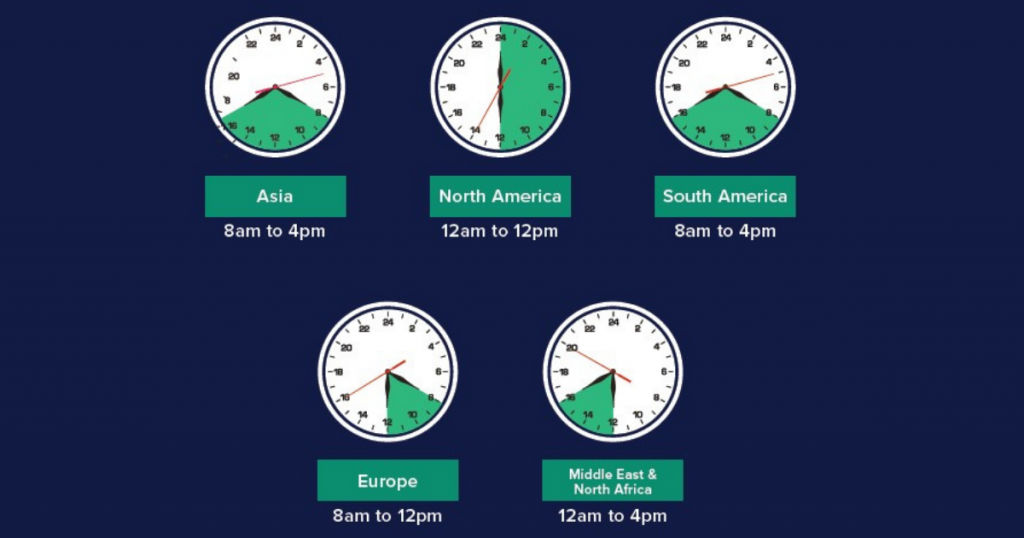
For a successful omnichannel approach, it’s important to know the right time to send out designated communication. Every region has unique trends that determine channel effectiveness. Below are the best times of the day to post communication for each region.
Why choose ‘Dynamic Lifecycle Campaigns’ over ‘Standalone Campaigns’?
Best practices for improving customer engagement
After analyzing the key trends and metrics, the Customer Engagement Trends Report 2021 shares a few best practices for improving customer engagement in 2021 and beyond.
- Educate consumers – As per Google, videos with keywords “step by step” and “for beginners” have seen a 65% spike in search volume. This points to the fact that consumers are actively seeking more information. So offering educational content for your customers can be the right strategy.
- Set up digital engagement – Customers are spending more time online as a result of the pandemic, and this trend will continue in 2021. So brands should look at maintaining regular digital communication to stay relevant and visible in front of their customers. Going silent may be damaging in the long run.
- Focus on retention – According to Forrester, spending on user retention and loyalty will climb by 30% by 2021. With acquisition costs up nearly 50%, it’s more important than ever for brands to focus on retention through intelligent engagement. User retention is a low-cost growth strategy that can give brands long-term benefits.
- Try A/B testing in campaigns – A/B testing campaigns can help you increase marketing conversions by 300%. Create many campaigns with various copies and visuals and run them all at the same time to see how effective they are. Select the winning option and watch your conversions skyrocket.
- Provide hyper-personalized experiences – As much as 65% of early adopters and trendsetters desire personalized suggestions from brands. Deliver a hyper-personalized consumer experience with one-to-one, contextual engagement across numerous touchpoints.
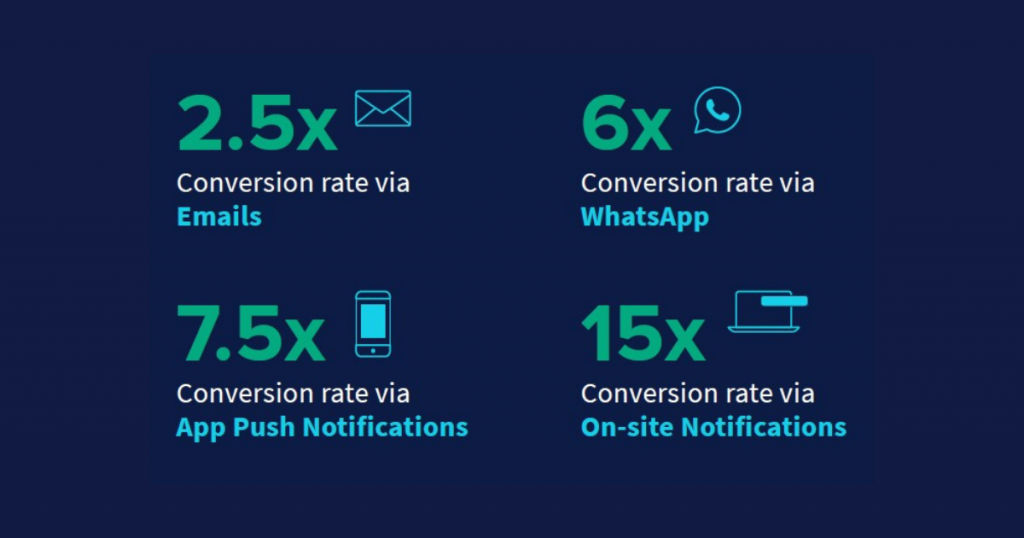
- Use dynamic omnichannel campaigns – Customer retention improves by 91% when businesses use an omnichannel engagement approach. Make the most of dynamic lifecycle campaigns by adopting an omnichannel strategy for your brand.
Conclusion
The Covid-19 pandemic has resulted in boosting digital adoption rates for both consumers and businesses. Consumers now expect humanized and personalized experiences from their favorite brands. Brands should therefore focus on delivering an empathetic customer experience across multiple touchpoints.
Going ahead, marketers should focus on prioritizing customer data intelligently to engage the new age ‘digital-first’ customers.
In case you want to read the entire report, you can find it here. To read more such insightful articles, check out SaaSworthy Blog.
