

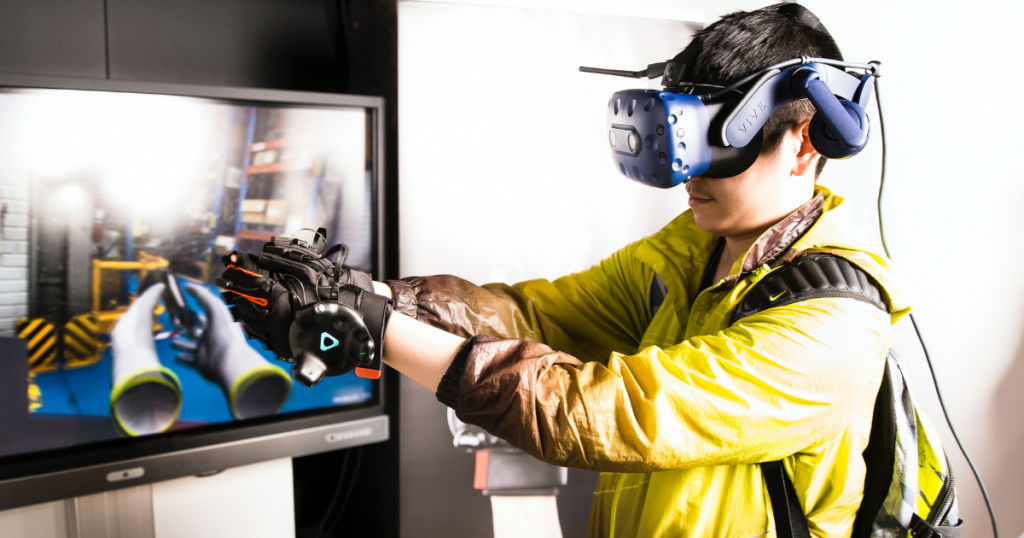
We are in a digital age where physical and virtual worlds are converging. The pandemic has only accelerated this convergence since we are spending most of our time in front of screens. Extended reality (XR) is one such avenue that’s offering us new ways to interact with products, services, or people.
XR is expected to grow to an estimated market size of $209 billion by 2022, up from $27 billion in 2018.
In this article, let’s dig deeper to figure out what is meant by extended reality. We’ll also touch upon how can businesses benefit from it.
Table of Contents
What is extended reality?
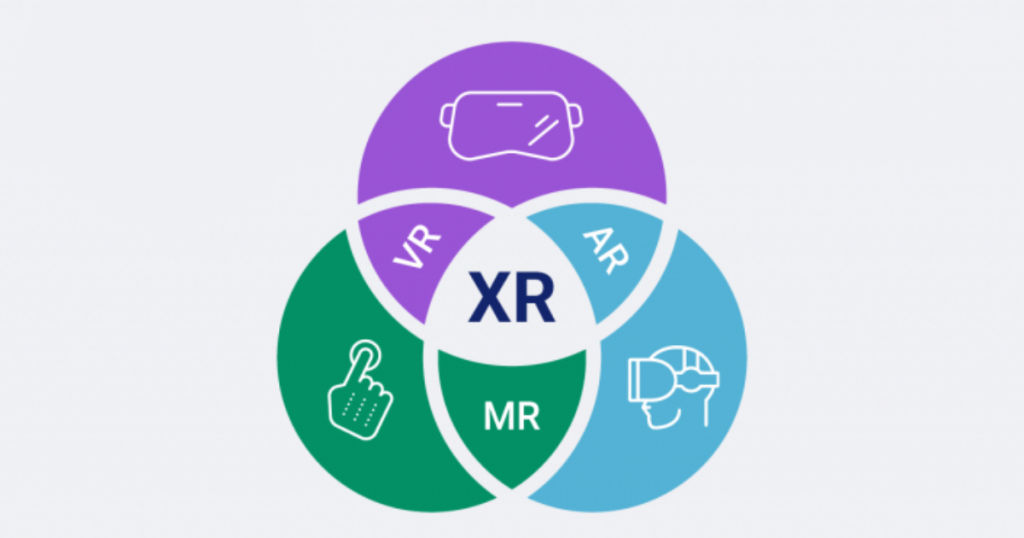
Extended reality (XR) is an umbrella term used to refer to a combination of virtual reality (VR), augmented reality (AR), and mixed reality (MR). All these buzz terms refer to a combination of different types of technologies. This also means that each of these offers a different level of immersion and interactivity.
The ‘X’ in ‘XR’ could be considered a variable that may be replaced by either ‘V’, ‘A’, or ‘M’. Therefore, XR could be defined as the combination of any of these immersive technologies.
XR, thus, describes the entire spectrum of reality and everything in between. It reduces the difference between the digital and the real world. XR diminishes the virtuality/reality divide.
What is augmented reality?
Augmented reality (AR) is a computer-based technology that superimposes digital images into the real world. It works on the computer vision of real-world surfaces and objects detected using object recognition, face recognition, movement tracking, and more.
It then overlaps the system-generated data like graphics, sounds, images, and texts on the visuals detected before. In doing so, AR enhances the interaction between the real and digital world. A great example of AR is Pokémon Go that overlays digital creatures into the real world.
What is virtual reality?
Virtual reality (VR) is a technology that uses headset-like devices and software to replace the real-world view with a digitally-created view. The full-coverage headsets completely block out the user’s surroundings while the LCD or OLED panels inside the headset display a computer-generated virtual environment.
VR enables people to have fully immersive virtual experiences. This along with realistic sounds, 360-degree visuals, and motion-capture equipment can allow for interactive encounters in simulated environments.
What is mixed reality?
Mixed reality (MR), also known as hybrid reality, is a combination of AR and VR. It blends real-world and digital elements. Although MR is a technology used for mixing the physical and virtual world, the highlight of MR is the realistic interaction between users and digital objects. A great example of MR is Microsoft HoloLens, a headset that allows users to place digital objects and interact with them.
Advantages of extended reality

Companies that adopt XR get valuable benefits like –
1. XR helps deliver unusual experiences. Visualizing a radically different reality enables companies to provide their users with the possibility to visit places of interest without having to leave their homes.
2. XR provides users with a more realistic view of the subject matter and allows efficient information uptake.
3. XR has a particular application in employee training. Those working in high-risk conditions like military, healthcare, or space can train safely from their conventional classrooms.
4. XR allows seamless data access and removes barriers to smoothly access remote data.
Industry-specific use cases
The following industries can benefit massively from XR –
1. The retail sector can massively benefit from XR since it can enable customers to experience a product before its actual acquisition. This creates an opportunity for potential clients to try products remotely and reduce eCommerce returns.
2. XR can benefit education and training to support employee training initiatives. Take the example of NASA or Boeing who use XR to train their workers on repair and maintenance.
3. Marketing is another industry that can benefit from XR. Companies can entice customers with immersive marketing techniques like trying products and services in a virtual environment.
4. XR can also benefit the real estate industry. It can allow agents to send home or property buyers on virtual tours, giving them the luxury of exploring real estate properties without having to physically visit a location.
5. The most obvious use case of XR is in the entertainment industry. XR technology can help discover more ways to engage the audience through interactive media.
The future of extended reality

The future of XR will not only include visuals and audio but will include haptics as well. Haptic involves technologies that are based on our sense of touch. Just like in many game controllers and modern smartphones, the devices give haptic feedback when interacted with. In the future, we are going to see a higher number of haptic devices like haptic gloves, haptic controllers, haptic suits, and haptic boots, etc. augmenting XR.
The XR technology is also expected to support gesture recognition in the future.
Conclusion
The extended reality tech is consistently having breakthroughs and finding new ways to enhance users’ experiences. With applications in numerous industries, XR can help augment and increase productivity. When it comes to SaaS, there are already many businesses that offer AR, VR, and MR-based services.
To know more about such SaaS products and companies, visit us at www.SaaSworthy.com
