

The cloud is a popular issue for small businesses, large corporations, and everything in between, but it is still a big notion that covers a lot of internet ground. Understanding the distinctions and benefits of the various cloud services is crucial when you start to think about moving your company to the cloud, whether for application or infrastructure deployment.
Table of Contents
SaaS vs. PaaS vs. IaaS
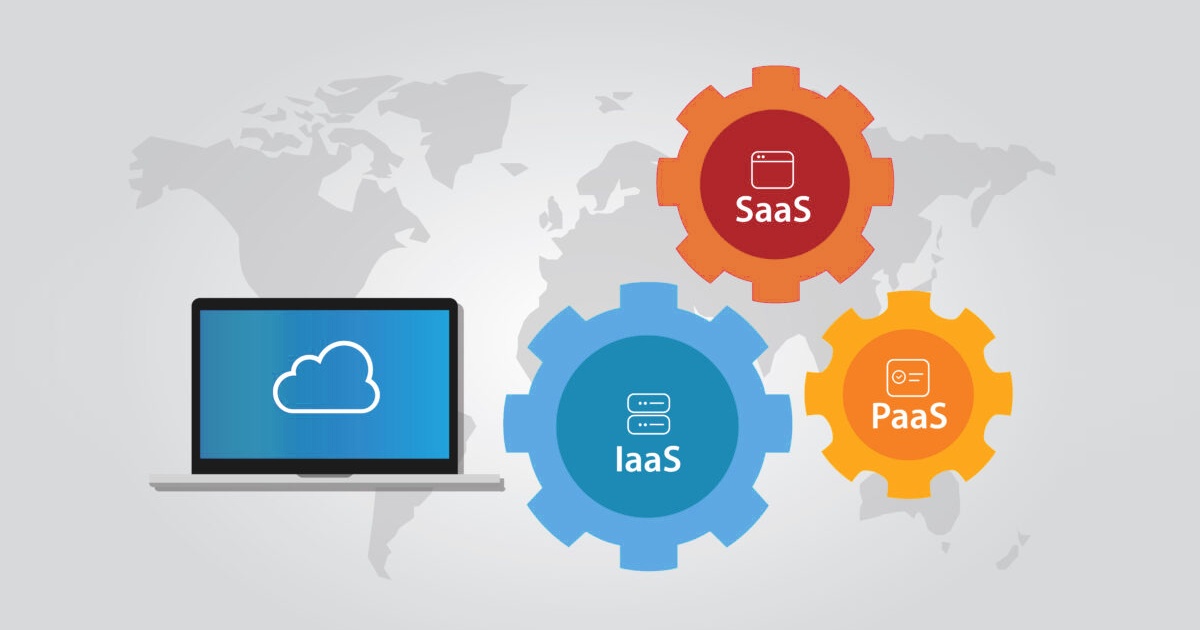
Despite the fact that as-a-service types are expanding daily, these are the typical three cloud service models to contrast.
In today’s article, we are going to go through all three and tell you the main differences between them so that you can make the best decision for your company. So let’s begin!
Software as a Service (SaaS)
The most popular choice for companies in the cloud market is software as a service, usually referred to as cloud application services. SaaS makes advantage of the internet to provide its users with apps that are controlled by a third-party provider. The bulk of SaaS applications is browser-based, meaning they don’t need to be downloaded or installed on the client-side.
Delivering SaaS
SaaS does not require IT professionals to download and install software onto each individual machine as a result of its web distribution methodology. With SaaS, vendors take care of all potential technical problems, including data, middleware, servers, and storage, which streamlines corporate maintenance and support.
SaaS Benefits
By drastically lowering the time and money spent on laborious operations like installing, administering, and upgrading software, SaaS offers various benefits to people and businesses. The technical staff now has plenty of time to focus on organizational concerns and more urgent challenges.
Characteristics of SaaS
You may tell when SaaS is being used in a number of different ways:
- controlled from a single location
- located on a distant server
- Internet-based accessibility
- Updates to hardware or software are not the users’ responsibility.
Examples of SaaS
Popular examples of SaaS include:
- Google Workspace (formerly GSuite)
- Dropbox
- Salesforce
- Cisco
- WebExSAP
- Concur
- GoToMeeting
Platform as a Service (PaaS)
Platform as a Service (PaaS), another name for cloud platform services, offers cloud components to specific software while being primarily utilized for applications. Developers who use PaaS receive a framework on which to construct specialized applications. While the developers can continue to handle the apps, all servers, storage, and networking can be managed by the business or a third-party supplier.
Delivery of PaaS
PaaS has a similar distribution strategy to SaaS, with the exception that it offers a platform for developing software rather than distributing it over the internet. Since this platform is offered over the internet, developers are free to focus on creating the product rather than having to worry about infrastructure, storage, software upgrades, or operating systems.
Businesses can design and develop apps that are integrated into the PaaS using specialized software components thanks to PaaS. These programs, which are sometimes referred to as middleware, exhibit cloud features such as scalability and high availability.
PaaS Benefits
Regardless of the size of your business, employing PaaS has a number of benefits, such as:
- Simple, affordable app creation and deployment
- Scalable
- Highly accessible
- App customization allows developers to avoid the hassle of software maintenance.
- The necessity for coding is drastically reduced
- Business policy automation
- transition to the hybrid model is simple
Characteristics of PaaS
- PaaS is a type of cloud service due to a number of factors, including:
- Based on virtualization technology, making it simple to scale up or down resources as your company needs change.
- Offers a range of services to help with the creation, testing, and distribution of apps.
- Available to many people using a single development program
- Integrates databases and web services
Examples of PaaS
Popular examples of PaaS include:
- AWS Elastic
- Beanstalk
- Windows Azure
- Heroku
- Force.com
- Google App Engine
- OpenShift
Infrastructure as a Service (IaaS)
Compute resources that are highly automated and scalable makeup cloud infrastructure services, also known as Infrastructure as a Service (IaaS). For accessing and managing computers, networking, storage, and other services, IaaS is entirely self-service. Instead of needing to acquire gear entirely, IaaS enables organizations to purchase resources as needed and on-demand.
Delivering IaaS
Through the use of virtualization technologies, IaaS provides cloud computing infrastructure, including servers, networks, operating systems, and storage. IaaS clients have total control over the entire Infrastructure thanks to the fact that these cloud servers are often made available to the company through a dashboard or an API. Without the need for all of it to be physically maintained or managed, IaaS offers the same technologies and capabilities as a typical data center. IaaS customers may continue to access their servers. IaaS clients are in charge of managing elements, including applications, runtime, OSes, middleware, and data, as opposed to SaaS or PaaS users. The servers, hard drives, networking, virtualization, and storage, however, are managed by IaaS providers. Even beyond the virtualization layer, some companies provide additional services like message queuing or databases.
IaaS Benefits
IaaS has a number of benefits, including:
- The most adaptable cloud computing architecture
- Deployment of servers, networking, storage, and processing power is simple and automated.
- Purchases of hardware may be dependent on consumption.
- Customers have full control over their Infrastructure.
- Resources can be bought as required.
- extremely scalable
Characteristics of IaaS
The following traits characterize IaaS:
- As a service, resources are offered.
- Cost changes with consumption
- Highly scalable services
- On a single piece of hardware, multiple users
- Infrastructure remains entirely within the authority of the organization.
How to come to a Final Decision?
It is critical for your company to comprehend the variations between each cloud model because each one offers unique features and functionalities. There is a cloud service for you whether you require complete control over your entire infrastructure without having to physically manage it, cloud-based software for storage alternatives, an easy platform that enables you to construct bespoke applications, or all three.
The future of business and technology is cloud migration, regardless of your choice.
