

Content is king. This statement holds true in more ways than one. If you are a company or a brand, communication across various channels with your target audience is what can make or break your firm. As a firm, you need a content marketing strategy. A good one can give you focus, and you should be able to tweak it as per your wishes. So, here’s how you write a content marketing strategy!
Table of Contents
SaaSworthy’s Content Marketing Strategy Template
- Outline
- Goals
- List Out Product
- Outline Your Audience
- Map Persona’s Needs to Your Product/Service
- Identify Your Audience’s Sources of Information
- Competition Analysis
- Content Inventory
- Evaluating Existing Content
- Find Out The Content That Works
- Find Our What Needs To Be Fixed
- What Do You Delete
- What Do You Add To The Mix
- Sorting Effective and Prospective Content Marketing Assets By Theme
- List The Types of Content You Will Deal With
- Snapshot Content Team and Workflow
- Estimate Content Capacity
- Mapping Editorial Calendar
- Creating a Content Promotion Workflow
- Epilogue
- Executive Summary
Start With The Outline
It can seem daunting to think of an entire content marketing strategy all at once. You need to decide how detailed or how high level it has to be. An outline can help you look at things holistically, so you can save time from doing the unnecessary. A good content marketing strategy answers three basic questions.
- Why are you making content?
- What content do you need?
- How do we get said content to reach our goals?
An outline can help us structure our research and ideation to answer these basic questions.
List Down What You Want To Accomplish
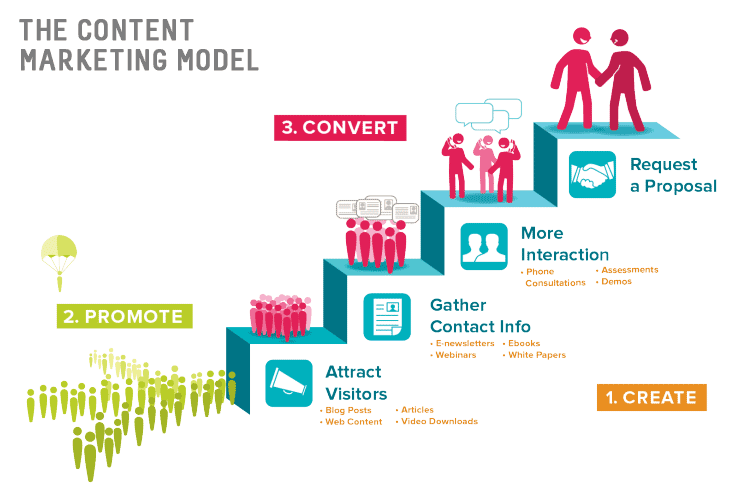
This is where you will list out your content marketing goals. What are you aiming for? If this is specific, it is helpful because later on, you can compare your content to your goals to see if they align. Use the SMART method for goals. SMART stands for Specific, Measurable, Achievable, Realistic, and TImely. For example, one goal could be to become a thought leader on lawnmowers. This could be broken down into –
Objective 1 – Generating 1 million dollars in revenue from online training courses by December 2022.
Objective 2 – Rank on Google’s first page when people search for “lawnmowers”, by December 2022.
Objective 3 – Have a list of at least 5000 unique double opt-in email subscribers by September 2022.
You need to figure out your overall marketing goals and find out how content marketing can support them. Some firms group content marketing into a separate team or outsource the efforts. It may be prudent to get some advice from non-content marketing people in your company. Asking other teams and departments for content input is an amazing way to foster a culture of content in your company. Upon writing down your goals, you can ask yourself and your team how good content can help you accomplish said goals, and how can you measure whether your content is aligned with your goals. At this point, you may outline your content KPIs (Key Performance Indicators).
What Are You Selling?

List out what you are selling together with the features, the different product tiers, and the sales cycle. Once you know what you’re selling, it is easier to frame the content to sell it. You might be the product creator, marketer, all in one, and this might not be something you need to write down. However, listing down what you’re selling doesn’t hurt!
Outline Your Audience

Who is going to consume your content? Performing personal research is very important. Flesh out your buyer personas using a template if possible. If you already have a customer base, group them into different personas.
Map The Persona’s Needs To Your Product/Service
Once you have identified your audience, you need to figure out how you can help them.
This question is at the center of content marketing and your entire content marketing plan will benefit if you write this. Map your persona’s pain points, desires, and objectives to the solutions that you are selling. It can be a simple table with brief descriptions or something that you might want to write down in the form of a story. This step is very important because the rest of your strategy will be about curating and promoting the content that solves the problems that your product solves.
Identify Your Audience’s Sources of Information
Try to identify the sources of information that your audience trusts. They may be getting their information from celebrity thought leaders who have followings around their personal brands, or they may be buckets of awesome content like Quora, somewhere your audience can find interesting information. Identifying where your audience is going for information will give you a more holistic view of the content marketplace.
Study The Competition’s Content Marketing Efforts For Inspiration
Knowing what kind of content your audience wants and what kind of content your competition is giving them, will help you find out what other people and brands are offering your personas. In terms of content marketing, competition works a little differently. Your competitors are not the ones competing for consumer dollars. In terms of content marketing, your competition is the people and organizations that are vying for your audience’s attention.
Ask some basic questions like who is competing for your persona’s business, and who is competing for their attention. Find out how you can make your brand stand out. It is beneficial to think of ways your content can uniquely appeal to your buyer personas. Once you know this, you can curate content that stands out rather than blends in.
Take Inventory of Your Content

Get a list of all your both onsite and offsite content marketing assets. In addition to this, get a list of all the keywords you rank for in search engines, blog posts, email lists, web pages, and social media accounts. This is a very important step with a great deal of work but a content audit is absolutely necessary before we move ahead further with a content marketing strategy.
Evaluate Your Existing Content
After listing your content marketing assets, weigh them against the objectives covered at the start of this plan. The main question we are trying to solve here is which pieces of content are in tune with our objectives. Which pieces of content need reorientation with our objectives. Tools like Google Analytics can help you measure traffic and conversions.
Find Out The Content That Works
You need to draw out a content matrix and find the high-performing content that aligns with your end objectives and brand. List the assets that are already performing well.
Find Out What Needs To Be Fixed
List out the content pieces that could turn into high-value assets, if worked on and improved. These are pieces with potential that could use some basic fixes.
What Do You Omit?
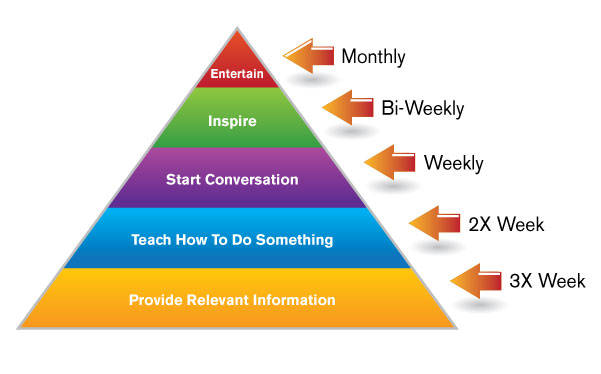
There may be some dead weight – some content pieces that are just not performing. Don’t be afraid to get rid of them after a thorough evaluation.
What to Add To The Mix?
This is the stage for some creative thinking. After poring over and combing through your content, do you get any new ideas? How can you use your assets to drive business objectives? What has your brand overlooked and what have you wanted to try for a while? This is the most creative stage of the content marketing strategy.
Sorting Effective and Prospective Content Marketing Assets By Theme
You need to identify some major content themes so you can map out a content production and promotion schedule. Look for content that sticks, categories, and topics that resonate with your readers. Look for the relationship between buyer personas and topics. You can get the broad umbrella topics that your best-performing content groups are under. You can then plan new content around these themes.
List The Types of Content You Will Deal With
This entails making a plan for producing content. This means optimizing, updating, and fine-tuning the content identified earlier, or creating the content listed in the earlier steps. This work will involve long-form SEO-driven blog posts, eBooks, interviews, infographics, explainer videos, email courses, and more.
Snapshot Content Team and Workflow
It is prudent to have an idea of who is working on the content, and how much content is going to get created. The aim is to get an idea of the team and the workflow. The team might include in-house content creators and contractors, and the workflow is a breakdown of the content creation process.
Estimate Content Capacity
You have to calculate how much content can be created in the next span of time. If this work is outsourced to a team, content production might stick to a reliable timeline. However, if the team is just getting used to content marketing, this can be a bit tough. Find a level of content production that your team can deal with. If you have a lot of unfinished tasks by month-end, you can adjust your goals. If you surpass your goals, you can increase production or invest in superior content. You need to have an idea of how much content you can make.
Mapping Editorial Calendar
You need to plot the content marketing assets across an editorial calendar. This means your blogs, emails, eBooks, podcasts, etc have to be spread over a given period of time, be it a month or a quarter or any other denomination. Don’t forget social media posting, and do include guest blogs as well.
Create a Content Promotion Workflow
You need to know how you want to drive attention to the content you put out. How can you drive traffic to your content? There are quite a few content promotion plans and tactics that can help you at this stage.
Epilogue
Round up your content strategy by painting a picture of what it might be if you implement it. You can include experiments here too. Briefly wrap up the strategy by correlating it to the previously listed business objectives.
Executive Summary
This is the final step and has to answer some important questions regarding what you are aiming to accomplish, what is the state of content, what needs to change, and how that change might happen.
Final Thoughts
This can be an effective content marketing strategy if executed right. While there are multiple channels to execute this effectively, we would suggest auditing your content needs and jotting down your exact requirement. Additionally, if you need assistance with your content marketing strategy, you can always reach out to us at – [email protected]! We would be happy to help. For more such amazing content, visit SaaSworthy Blog here!
