

Personalized marketing or one-to-one marketing is a type of analytical marketing in which companies use data to deliver personalized advertisements or brand messages targeted to an individual prospect. It makes these advertisements and products feel unique to every consumer to the extent that it may even creep out some consumers.
The goal of personalized marketing is to target a particular set of audiences based on different needs and interests. Unlike traditional marketing which relies on targeting all kinds of customers in one go.
To help understand personalized marketing better we are going to cover benefits, challenges, strategies, and more.
Table of Contents
Benefits of Personalized Marketing

Personalized marketing has numerous advantages for both businesses and consumers. When strategies are successfully implemented, the following attributes become available.
- Increases brand loyalty
The majority of customers are willing to share their behavioral information if that leads to ease in shopping and reduces the price of products. A company that dedicates time and resources to execute personalized marketing will benefit from both competition and an increase in brand loyalty.
- Better customer experience
The purpose of personalized marketing is to engage customers by communicating with each user on an individual basis. With all of this customer data available, customers expect brands to protect any sensitive information and their privacy and in return provide more personalized experiences. 66\% of consumers prefer to buy from brands that deliver relevant advertisements and customized shopping experiences.
- Consistency across channels
Consumers interact with brands through a variety of channels, including email, social media, websites, play store, and so on, sometimes all in the same day. As a result, regardless of the channel, they were on, customers can pick up the conversation where they left off.
- Better return on investment
Compared to traditional marketing, personalized marketing is a more cost-efficient strategy. When you send out a general ad, a fraction of people who see it will have no use for the product. Your ROI (return on investment) is limited. Personalized recommendations, on the other hand, can encourage customers to spend more money. Almost half of the shoppers polled made an impulse purchase based on a brand’s recommendations, and 85\% were satisfied with their purchase. According to data, customized marketing emails can boost campaign revenue from millennial customers by nearly 300 percent. Furthermore, personalization has the potential to reduce customer acquisition costs by up to 50\%.
Challenges of Personalized Marketing

According to a survey of marketing influencers, nearly 66\% identified data-driven personalization as one of the most difficult digital strategies to implement.
- Gathering data without bothering consumers
You must be able to accurately identify how each individual will react to a certain product or scenario, to create a fully tailored customer experience. That means you’ll need to collect data about your contacts (which will be stored in a CRM), which can be difficult.
Analytics monitors people’s movements. Although the code you place on your site has no effect on the customer experience, some customers feel uncomfortable when they see advertisements for products they have recently viewed or talked about. It makes them feel their privacy is at risk.
On other hand, Customer surveys and forms are more transparent, and many customers prefer them, but they take time to complete. And the more questions on a form, the less likely a participant is to complete it.
It’s difficult to strike a balance between transparency and convenience.
- Resource allocation and time
Companies must have the staff, funds, and time to develop an effective personalized marketing strategy. Automation can help reduce the time and labor costs associated with personalization, but the overall strategy must still come from people. Most businesses fail to establish a dedicated team and allocate the necessary resources to drive personalized marketing at scale, which is a fatal error.
Personalized marketing requires planning, targeting, and tracking. Although technology can handle the key details or practical aspects of data aggregation, you must still determine what data is important to you and how to use it. You must understand your customers’ willingness to share their personal details, when to collect it, and when to send personalized notifications.
- Right technology
One of the most serious issues with personalized marketing is that it is based on outdated technology that is no longer relevant in today’s world. The technological landscape is rapidly evolving. If you aren’t constantly improving your technical skills and employing sophisticated algorithms, your personalized marketing efforts may appear out-of-date or, worse, irrelevant.
Many marketers are unable to locate a smart personalization engine that meets today’s requirements.
- Single customer view
By piecing together their customer data into a single unified customer profile, marketers are able to establish a better picture of what the customer is truly like when looking for common threads across channels. However, research indicates that marketers do have difficulty connecting data to individual customer profiles.
- Smart segmentation
Smart segmentation across channels improves the performance of marketers. The fact of the day is most marketers have a hard time moving beyond basic segmentation strategies. It is estimated that around 87\% of brands agree their segmentation strategy is based on broad segments and simple clustering.
How to create a Successful Personalized Marketing Strategy
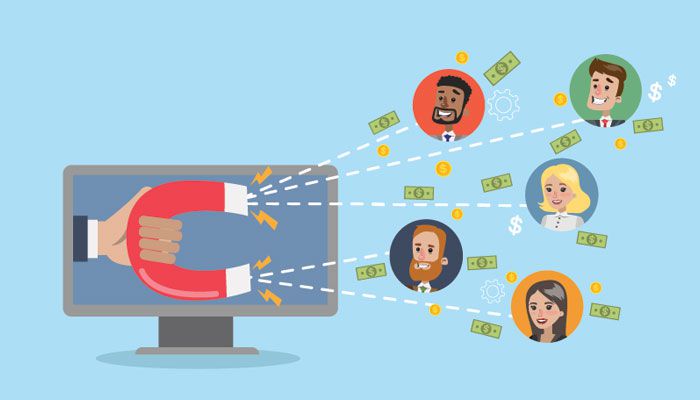
The following factors should be considered when launching a successful personalized marketing strategy:
- Creating a team to lead the effort
A team of skilled professionals is required to structure and monitor a personalization strategy, including people who know the technology, experts in developing use cases, customer outreach professionals to handle questions, and strategic campaign designers who have experience with personalization.
Coordination with a senior leading the team is required to ensure that the efforts of everyone are aligned with corporate goals, and you must have a plan in place to produce high-quality content with an appealing design.
- Collecting and identifying data
User data is one of the most valuable aspects of today’s marketing world.
That’s why the first step in developing a successful personalization strategy is to collect data on a regular basis in order to understand your users’ needs at all times.
Marketers now should invest in smart and sophisticated algorithms capable of analyzing mountains of structured and unstructured data relating to your customers’ behavioral patterns, likes and dislikes, and so on.
The aim of this process is to collect diverse data in order to learn more about your customers on a deeper, more intimate level, allowing you to tailor your content to their specific needs and challenges.
Customers, as previously stated, want personalized experiences, but many are also concerned about having their personal information exposed to the public. Remember to consider what data is most effective to track, and focus on the data that will allow you to provide the best possible experience to your customers.
- Interacting with customers
After data collection comes the phase to interact with customers on their personal preferences and interests. During this stage, your primary goal should be to look out for the best channels for connecting with your customers and prospects based on their preferences.
Investigate customer behavior across multiple channels, such as email and social media, as well as websites and apps.
The goal is to determine which channels/platforms have the most sway with the customer.
Examine your channel options and choose a channel mix that will appeal to your users.
Determine which channels are best suited to your communication goals while taking into account your users’ preferences.
Personalization can be beneficial to a variety of platforms. You can send automated emails, remarketing advertisements, and even landing pages. It all comes down to where your customers spend their time. Make use of your data to determine the best placements.
- Build customer relationships
Customers expect businesses to tailor their shopping experience to their preferences. Personalized marketing makes customers happier, increases brand loyalty, and boosts profits.
Final Thoughts
Consumers now demand more personalization throughout the purchasing journey than ever before. If your personalized marketing strategy isn’t properly tailored to each individual, they won’t feel engaged and connected and will be less likely to buy from you. There is no such thing as a one-for-all strategy when it comes to personalized marketing. The personalization journey of each and every company will differ according to situations and scenarios depending on the user type, product type, and many other variables. If you are looking at reading more on marketing strategies, read our article on performance marketing!
