

Knowing what could go wrong will assist you as a project manager ensure the success of your team members. For instance, what if you don’t account for the time and resources needed to construct a new app that project stakeholders suggest? The project runs the risk of disintegrating before it even gets off the ground when the software goes to the development team.
You may set appropriate project objectives and direct the team’s progress when you are aware of the potential hazards associated with each project. The seven most typical project dangers that you could run into when conducting risk assessments are described in the guidance below.
Table of Contents
Top 7 Common Project Risks
Poor Performance
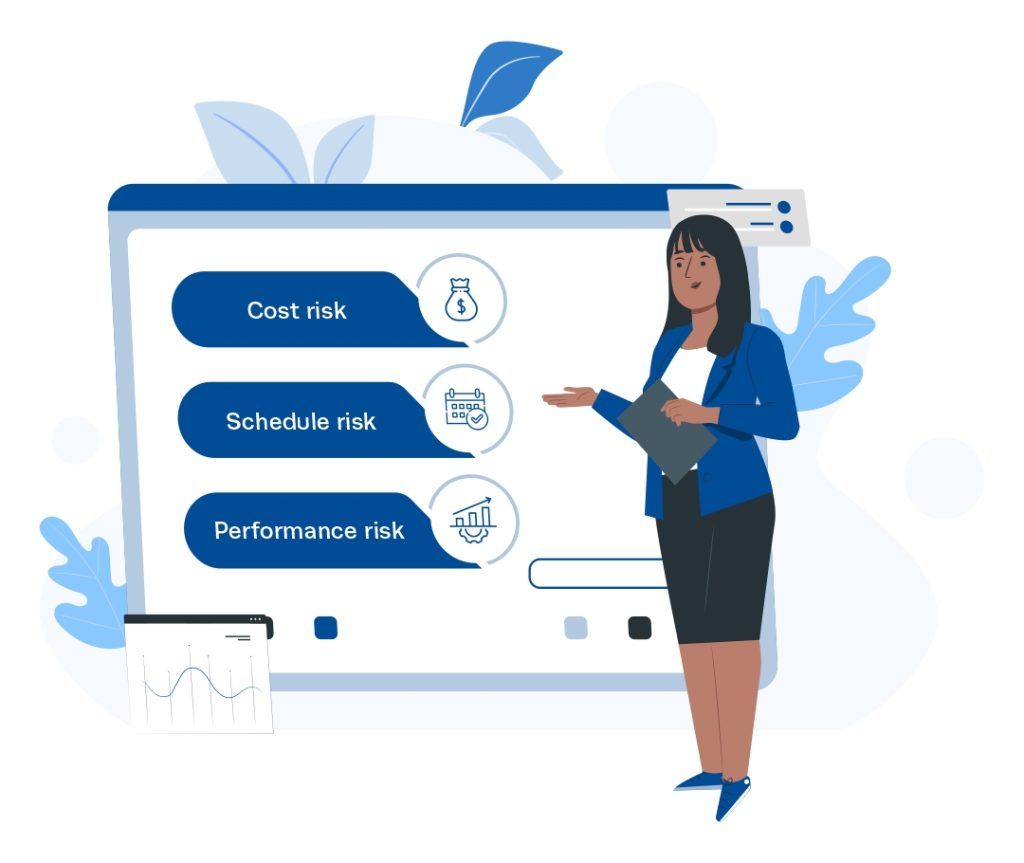
When a project doesn’t execute as well as initially anticipated, performance risk arises. The underlying cause of poor performance isn’t always easy to pinpoint, but you can identify project risks that could cause poor performance and look for strategies to mitigate those risks. Time pressure and poor team communication are two examples of these dangers.
How to prevent poor performance: You can be ready by anticipating potential performance risks early in the planning phase. You can keep track of your operations in real-time, plan your project thoroughly, and encourage open communication among team members by using project management software.
Time Limit
The chance that tasks in your project will take longer than anticipated is referred to as time risk or project schedule risk. Timelines that are delayed may have an effect on your budget, delivery date, or overall performance. As a project manager, you might encounter this regular risk. When there are many moving parts involved in a project, and you aren’t doing the job yourself, it is simple to underestimate how long it will take the team members to finish it.
How to avoid a time crunch: As a general guideline, when planning projects, overestimate the time required to finish them and include a time buffer. You’ll have the flexibility for scheduling later if you do it that way. A timeline or Gantt chart can be used to make a project timetable. Project managers can dynamically adjust to time risk as it arises by having clarity regarding the work, dependencies between the work, and any delays. You can estimate how long each task will take by understanding the project lifecycle.
Goal Creep
When the initial project objectives are not clearly specified, scope risk, also known as scope creep, occurs. It’s critical to share your project strategy with stakeholders early on and to adhere strictly to those guidelines. If you don’t successfully communicate your project scope, stakeholders can try to change the requirements in the middle of the project.
How to prevent scope creep: Make sure your project’s parameters are clear from the beginning. Scope creep can be prevented by determining the project’s goals up front and sharing them with all relevant parties. Regular progress check-ins might help to make sure the project maintains within the parameters of its initial scope.
Clarity Issues
Lack of clarity might manifest as unclear project scopes, ambiguous timeframes, or poor stakeholder communication. The outcome may be a lack of visibility as a result of segregated work, budget overruns, missed project deadlines, altered project requirements, the need to change the project’s course, or underwhelming project results.
How to reduce ambiguity: When designing your project, double-check your requirements to make sure they are all met. Are all parties involved in an agreement? For the following stage, are developers ready? Is the scope distinctly stated? Making sure that everyone can access project information is also crucial. As the project develops, you can make sure that everyone is informed by keeping the information in one place.
Exhausted Resources
If you don’t have enough resources to finish the project, resource risk will arise. Resources can be tools, money, time, or skills. In your capacity as a project manager, you are in charge of finding resources for your team and informing them of their status. Depending on the magnitude of the project, resource allocation should take place as early in the planning process as possible, usually 1-2 months before the project execution.
How to reduce the risk of overstretched resources: The best way to reduce resource risk is to develop a plan for resource allocation. A resource allocation plan maximizes resource impact, supports team objectives, and makes the best use of team resources. Knowing your resource requirements up front reduces the possibility of running out of resources later.
High Prices
When your project exceeds the initial budget you established, cost risk occurs. Unrealistic or incomplete budgeting during the project planning phase might lead to cost risk. For instance, you might have faith that your project will be finished on time and on budget. However, making a thorough list of every project component and its associated costs will help you foresee project requirements.
How to reduce high costs: To reduce cost risk, correctly estimate each project component and adhere strictly to your budget. Making a project plan template to align deliverables, scope, and schedule is the easiest approach to staying within your budget. When your project is in development, think about setting up frequent check-ins to assess your budget and pace.
Operational Adjustments
Operational risk is the result of adjustments that your team must make to new procedures, management changes, or unforeseen changes in team roles. These things may delay project completion dates, necessitate workflow modifications, and cause distractions.
How to reduce operational risks: Although you cannot forecast or eliminate all operational risks, you can reduce their consequences if you are aware that a team shift or process change is about to occur. Utilize team meetings, scheduling tools, or additional training to ensure that your staff is ready for the shift and has enough time to adjust.
Conclusion
Tools for project management make risk management simpler since they let you plan your projects from beginning to end. Additionally, you can cooperate across teams using work management software, which will reduce the likelihood of the most frequent dangers. Connect with SaaSworthy, to know everything about it.
