

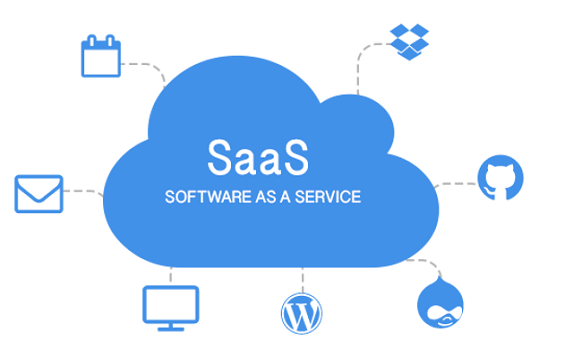
SaaS is an abbreviation for Software as a Service, also known as “on-demand software that delivers applications over the internet as a service.” A SaaS product is one of the best solutions to problems that a software developer or user may encounter.
Years ago, software solutions were designed, developed, and deployed on local machines as a single monolithic application. Because all of the features had to be crammed into a single application, this approach resulted in high development costs and even longer deployment cycles. SaaS Products, on the other hand, are self-contained microservices modeled after the standard business processes and functions of a monolithic application and hosted in the cloud. SaaS products are typically accessed via a web interface similar to a browser and are completely owned, supplied, and managed remotely by the service provider in exchange for a recurring payment.
In recent years, the SaaS industry has seen significant growth. It has grown five times as fast in the last seven years! This industry is expected to be worth 172 billion dollars by the end of 2023.
Table of Contents
How to Build a SaaS Product
SaaS products typically take six months to a year to develop. Frontend and backend development could take around 50 days (about a month and a half), while iOS and Android development could take around 80 days (about two and a half months).
This time varies depending on your challenges, such as achieving a zero-downtime deployment, ensuring complete security of all data stored in the cloud, or even forming a productive and credible team.
Do you want to create your own scalable, flexible, secure, customizable, and successful SaaS product in 2022 without being sleep-deprived, having restless days, and becoming broke and completely overwhelmed? If so, you’ll need these skills to ride the wave and create your own SaaS product.
With this road map, you can start your SaaS product development journey rightly.
7 Steps to Build a SaaS Product
Prepare your Groundwork Articulately
Analyze market trends and conduct research. Is your product going to be able to compete? Will it bring anything new and different to the table? Will it be a better version of something already on the market? Micro SaaS, Artificial Intelligence, Cyber Security, and other trends in SaaS product development are examples.
Establish a Solid Foundation with your Business Plan
If you want to embark on the journey, you must do so with caution, care, and determination to complete all of your objectives. Understand your target audience and what your product will stand for, and then deliver. Maintain your understanding of its infrastructure and prioritize its features. Select the most important features for your SaaS product, such as multi-tenancy, user login/logout, user control, flexibility, security, frequent updates, and a systematic billing model.
Assemble the Relevant Technology
Frontend (UI/UX), Backend, Database, Cloud, and Queuing System/Event Broker are the five main components of a SaaS product. The quality of these ingredients will be the determining factor in the development of your SaaS product. Let’s go through them:
- Database Efficiency
Use dependable databases such as MongoDB, Aurora PostgreSQL, or Amazon RDS to store all of the large data volumes on the backend and scale up and down based on ‘traffic.’
- Frontend Architecture
To create an engaging UI, you can use Angular, Semantic UI, or Tailwind CSS, and for mobiles, you can use the React Native framework (iOS and Android Development). Play around with API Integrations to create clean APIs, such as Bitly API, Google Fonts API, or GitHub Rest API, to name a few. Python can be used as the primary programming language, and many frontend web development frameworks, such as Django, Flask, and HTML/CSS, can be used.
- Backend Architecture
For your SaaS product, you can use any programming language you are comfortable with, such as Python, Node.js, MySQL, PostgreSQL, C#, or even JavaScript. You can use BaaS (Backend as a Service) to accelerate the backend development process.
- Event broker/queuing system
For communication, messaging in your application, and handling website traffic during peak hours, use RabbitMQ or Kafka.
- Select the best cloud provider for your needs, understand their pricing models, and stick to it. To expand your business and efficiently create your product, use Google Cloud, AWS, or a pre-configured CDN (Content Delivery Network).
Team structure and efficiency
Find a group of people who will be there for you through thick and thin. Hire a Project Manager, a Business Analyst, Frontend and Backend developers, and professionals who understand the design and technical aspects of web development. Your teammates are the ones who will be there for you throughout the journey and on whom you can rely. These knowledgeable developers will assist you in reaching your goal and will have your back. A highly engaged workforce boosts the estimated profitability of SaaS products by 21\%.
Develop your MVP and Test
MVP is an abbreviation for Minimum Viable Product. This step will assist you in understanding the customers and what is to come. You can collect and analyze feedback, monitor market reactions to your prototype, and make adjustments as needed.
The Finished Product
Now that all of the bugs discovered during testing have been resolved, release your final product and let the marketing team do its thing! Allow them to become acquainted with the product and highlight its strengths. Prepare your sales and customer service teams for the product’s future.
Always Stay on Guard
After the product is live, keep track of the revenue, customer acquisition cost, and customer churn to help you set future development goals. Because SaaS products are based on pay-as-you-go models or subscriptions, keep upgrading your product with new and refreshing features to keep your audience engaged (these billing models ensure regular, predictable revenue).
Conclusion
Put your hands-on experience with the tools needed to develop your SaaS product, and don’t forget to thrive, discover, and expand your knowledge because the only true wisdom is in knowing you don’t know anything, and this thought process will give you an advantage over your competitors and help you succeed. This article deals with the steps that you need to build a SaaS product. For more information, connect with SaaSworthy.
