

The majority of businesses approach prospects and clients from the inside out. They put internal effectiveness, processes, and systems ahead of how potential clients and customers make purchases. This frequently results in difficult purchasing procedures and, eventually, lost money.
However, businesses that “think outside in” or are customer-centric are 60\% more profitable.
Customer retention is another justification for prioritizing customers. If your company is not customer-centric, more than 80\% of customers are willing to switch to a rival.
Overall, establishing a business culture that prioritizes the needs of its clients has several advantages.
Table of Contents
5 ways CRM Technology Supports the Customer-First Business Culture
1. Obtain Client Feedback
Only 1 in 26 clients will contact you if something goes wrong. The others will simply quit doing business with you without ever explaining why. Feedback is crucial to your business because of this. If so few clients are willing to take the time to communicate their ideas, opinions, or issues with you, you had best treat their feedback as priceless. Typically, the customer service division receives client input. Additionally, if this feedback is transmitted through a platform that is not linked to a CRM system, it disappears soon.
When you have a CRM system, the customer feedback is gathered and saved in one location from a range of connected systems or communication channels. This indicates that other departments can also access it in addition to the customer service representatives, enabling you to act on client input immediately.
For instance, you could include a message with your feedback on the business card, and if it needs your coworkers’ immediate attention, you could automatically alert the R&D, marketing, or business development departments. It’s a quick and effective technique to prioritize the needs of the consumer.
There’s more, though.
Because information is recorded in a CRM platform, you can thank the consumer for their input and let them know when the problem has been resolved. It’s one thing to gather customer feedback; it’s quite another to obsess over it and make sure it’s acknowledged, addressed, and the client is kept informed.
The former is what most businesses do. It’s time to make a statement and concentrate on the latter.
2. Eliminate silos
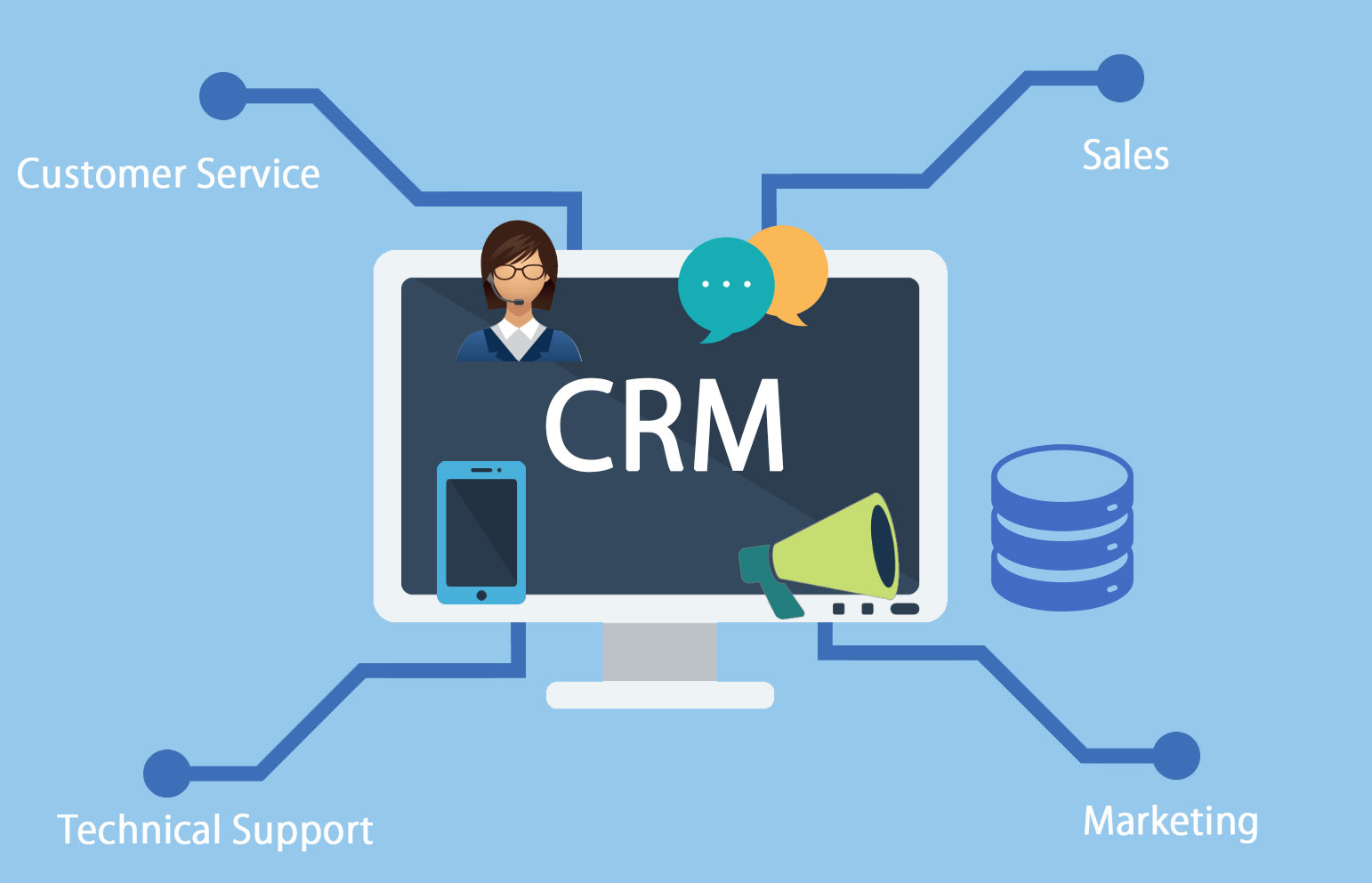
In a siloed firm, the customer-first business culture is impossible. And it is CRM technology that aids in the dismantling of silos. Your customer-facing teams, including sales, marketing, and customer support, should collaborate by placing the customer at the center of your business. The sole distinction is whether or not a CRM system is in use. This collaboration might fail without CRM technology, and customers might have a disjointed experience as a result.
With the use of CRM technology, all teams have immediate access to data, engagement, and insights gleaned from a customer and are saved in one location. In other words, CRM serves as the hub for efficient information sharing amongst teams.
A sales representative and a customer support representative can both at any moment, access the same information on a customer. All customer-facing personnel can now share information, work together, and—most importantly—solve problems more easily, thanks to CRM technology.
3. Personalize Communications in Sales and Marketing
In an email campaign, writing “Hi Steve” is NOT personalization. More is what your customers are looking for.
Through the use of CRM technology, contact cards are directly saved with comments and notes from sales meetings, service ticket messages, email marketing campaigns, and purchase histories.
Unfortunately, less than 70\% of B2B businesses personalize their communications using CRM technology. You can gain profound insights into a customer’s demands through CRM data.
How can you personalize communications using this data?
You can use this information in your email campaign to offer free webinars, consulting, and/or content related to customer service to a customer who has signed up for your sales and marketing subscription plans but has contacted your sales department with questions about your service subscription plan. It is pertinent, individualized, and proactive. Therefore, you prioritize the demands of the consumer over your own.
4. Facilitate Business Dealings with you
CRM software has many advantages. However, the integration-powered CRM system enables you to connect to other platforms and improve the client experience.
As an illustration, integrations like:
- NPS for SuperOffice
- Book My Calendar
- GetAccept for SuperOffice
Assist clients in:
- Easily plan meetings with your company around their schedule,
- Sign documents fast without exchanging pointless emails,
- Send direct product or service reviews to CX managers.
Instead of considering how much time you can save by adding a new step to the process, start focusing on how to make it simple for your consumer.
5. Engage Customers at Every Step of their Journey
The client is the one who suffers when information is out of sync. Let’s begin with a straightforward example:
As a result of a marketing department email campaign, a consumer registers for a webinar. Even though consumers have already signed up, sales teams contact them to invite them to the webinar after learning about it internally.
Okay, so there was only one client and one webinar. Nothing major. But what if you host hundreds of webinars and have thousands of customers? It’s simple to see how quickly this may develop into a problem. You may prevent such errors by using CRM technology, particularly SuperOffice CRM, which captures all interactions on a single platform.
Whether you’re trying to reach newsletter subscribers, customers in the middle of a sale, or clients looking to grow, you can interact with each of your target audiences at every stage of the customer journey without repeating your message. It demonstrates your concern and individual treatment of each person. In order to determine whether what you are about to say will be valuable, you are taking the time to consider what they have already received. Depending on the stage of their relationship with your brand, a consumer wants different forms of material. The CRM system enables you to see what your clients have already expressed interest in or engaged with, enabling you to offer them something fresh and pertinent.
Conclusion
There is no doubt that your company will expand more quickly the more you care about your clients. It’s not a question of “growing at all costs” but rather of putting the needs of the client first. The customer-first corporate culture produces growth. The results of investing in your consumers will be considerably better than those of investing in your company. To know everything about it, connect with SaaSworthy.
