

You’re not alone if you’ve had your eye on a new learning management system (LMS) to revitalize your staff training program. According to Gartner’s HR Trends Report, skills development will be one of the five top objectives for the majority of HR leaders in 2022, thus the LMS industry is definitely heating up. But if you look closely, you’ll notice that the learning experience platform, or LEP for short, has joined the race for your e-learning dollars. A similar question comes with all new technology: Do I need to pay attention to this, or can I disregard it?
The LEP alters the landscape. According to the aforementioned Gartner poll, the total number of skills needed for a single job is growing at a rate of 6.3\% yearly, and new talents are replacing old ones. By the end of this year, 29\% of the skills listed in the average job posting in 2018 would be obsolete, according to Gartner. Because of this, you should think about investing in an LMS as part of an HCM package and an additional LEP to meet learner experience requirements for retraining or upskilling your staff. In the long run, an LMS and LEP combination can save you money because upskilling is less expensive than recruiting and hiring and boosts morale.
It is nevertheless a hefty expenditure, especially for small and medium enterprises that are constrained for cash. An LEP is what, then? What distinguishes it from an LMS? To help you make decisions about your investments in training technology, continue reading to get the answers to these and other crucial issues.
Table of Contents
What is a Learning Experience Platform (LEP)?
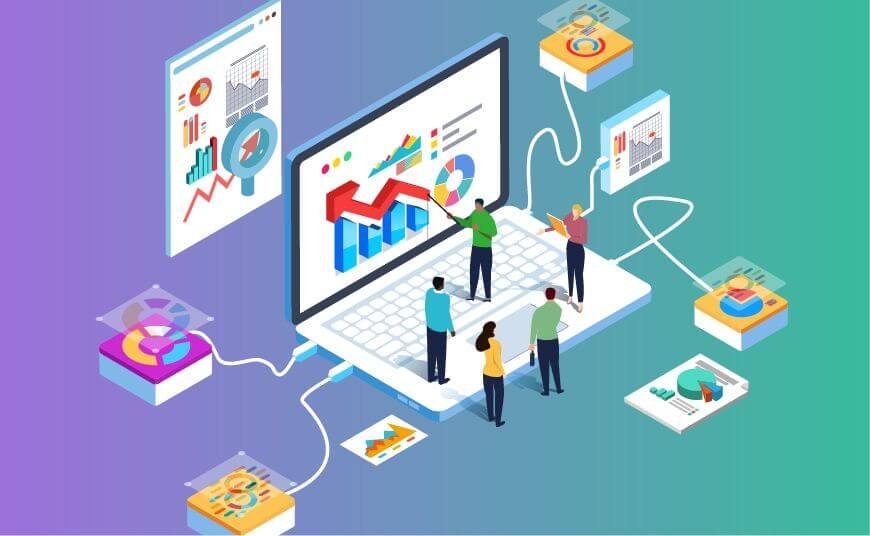
A learning experience platform (LEP) is a computer program that aims to give students access to a wider variety of training materials while also giving them a more tailored learning environment than they would generally receive from an LMS.
An LMS cannot be replaced by an LEP. In order to improve the overall learner experience, an LEP is an additional layer that sits on top of your LMS and the rest of your training technology stack.
This stack will be mostly or entirely invisible to many companies. A learning suite that combines an LEP, LMS, and LRS is available that doesn’t distinguish between the various layers. An LEP can also be purchased separately and integrated with any existing LMS or LRS systems you may have. Regardless, the objective of an LEP is the same: to enhance the learner experience while improving training outcomes.
What Characteristics do Learning Experience Platforms have?
The most common features found in an LEP are focused on the student with the purpose of increasing training content discovery and consumption, as opposed to the conventional administration functions found in an LMS.
Look for characteristics like:
- Content recommendations powered by AI. Employees can choose their own courses for an LEP without waiting for supervisors or HR to assign them. AI will automatically suggest the ideal courses for them based on the content they’ve already consumed or content that other students who share their learning preferences have consumed or rated highly.
- Personalized educational pathways. To provide workers with the best-preset path for their development, learning content is classified and grouped by skills, career progression, and a variety of other factors. Additionally, students have the choice to design their own unique path.
- A collection of media. LEPs can handle any content on its own, be it podcasts, articles, videos, or other types of content, instead of combining learning content into a whole course. Usually, learners can explore and consume this multimedia by having it displayed alongside courses in a Netflix-like interface.
- On-the-job, contextual learning An LEP can deliver learning information at the best times and locations when coupled with other systems like your CRM. Consider a salesperson who is performing that work and then sees a module on how to pitch in an email. With an LEP, that is feasible.
- User-generated material The gatekeepers of learning are no longer instructors and HR managers. Rank-and-file employees have access to simple tools in an LEP that enables them to produce learning materials that they may distribute to the rest of the firm.
Along with crucial capabilities like skill assessments and extensive learner analytics, LEPs can also incorporate well-known LMS features like gamification, social profiles, and mobile learning.
How should we get ready to put LEP into practice?
Take a step back and get ready if you’re certain that an LEP is your company’s best course of action. Because no one software suite has dominated this specialized market, organizations that intend to buy LEPs struggle to choose the best software selection. This is due to developments in augmented reality (AR) and virtual reality (VR) learning settings, which make what was effective in the past less so today. As soon as new technology is developed, someone wants to use it to help people learn, including while they are at work.
When determining which LEP is right for you, your firm must consider a wide range of options and factors because the platform you select will determine your whole learning and upskilling plan. Your committed team should therefore set aside some time to plan for this investment.
Here are some pointers to help you prepare for an LEP:
- Locate the test group. To iron out any bugs in personalization and track the system’s impact on learning and business outcomes, you should first try an LEP deployment with a selected set of learners for 6 to 12 months. Select a group or division that is very adaptable to change.
- Look into the horoscope. You require an LEP that can accommodate your company’s evolving needs. In order to find the skill sets required for your organization to flourish, conduct a skills gap analysis. Then, match those skill sets with an LEP supplier. You might require an LEP with a certainly prepared course library or a feature set that is more suited to filling in specific skills gaps, depending on your training needs.
- Concentrate on the variations. A personalized learning experience is the whole goal of an LEP. To identify areas where you might require extra learning content or formats, start segmenting your learners right away based on their needs, preferences, and goals.
Who should create a platform for learning experiences?
LEPs offer a significant disruption in the market for training technologies that many businesses are unprepared for. An LEP probably represents a bridge too far for some people, such as those still using manual techniques for their training requirements, so they don’t need to worry about it immediately.
The following individuals must be aware of this new technology:
- Large skills gaps in team-based businesses. If teams are expected to train and reskill one another, social and user-generated content capabilities of LEPs are essential.
- Anyone who is dissatisfied with their LMS’s user experience. LMS systems are well known for being cumbersome and upsetting to learners. Consider a LEP if your LMS’s user experience (UX) is so poor that it is impacting learning outcomes.
- Those who possess a wealth of knowledge. An LEP’s main objective is to make it easier to find and consume content. An LEP can help if your finest content is underutilized or lost in the content mix.
Larger enterprises have to give LEPs greater consideration than smaller ones simply because of scalability and efficiency benefits.
Conclusion
You can sort and filter dozens of systems based on your criteria on our learning experience platform (LEP) directory page to choose which LEP is best for you. Additionally, you can examine product descriptions and customer testimonials to discover where particular systems succeed or fall short. To know all about LEP, connect with SaaSworthy.
Read More
Best Ways to Enhance Your PPC System With Artificial Intelligence
A Guide on Marketing Intelligence and Analytics Platform in 2022
