

Modern business tools have entirely changed the way people invest in projects. Earlier investing was a big gamble; either you opted in or out. However, with modern techniques like the feasibility study, investors could examine the viability of their business ventures. A feasibility study can draw conclusions like:
- Worth of the business project
- The potential success rate of the project
Therefore, this preliminary report on a project’s viability can help investors recognize the project’s worth. This way, a business would never find itself stuck with a wrong or loss-filled project.
Table of Contents
What is a Feasibility Study?

Generally, a feasibility study is the analysis of a project’s relevant factors that primarily include:
- Economic factor
- Legal factor
- Technical factor
- Scheduling factor
All these factors, when taken into account, ascertain the viability and success rate of a project. Project managers use the concept of a feasibility study to deduce the pros and cons related to the project they are planning to take. This study assures a company that its money and time would not go down the drain. Thus, the feasibility study prevents a company from careless and risky investments.
The key features of a feasibility study are as follows:
- First, a feasibility study clearly indicates the practicality or feasibility of a particular project.
- Business plan on conducting a feasibility study when planning to undertake a new project, launch a new product, or open a different business line.
- Feasibility study ensures companies that they are entering into a new business safely and risk-free. Conversely, it averts companies from investing in wrong projects.
What does a Feasibility Study imply?
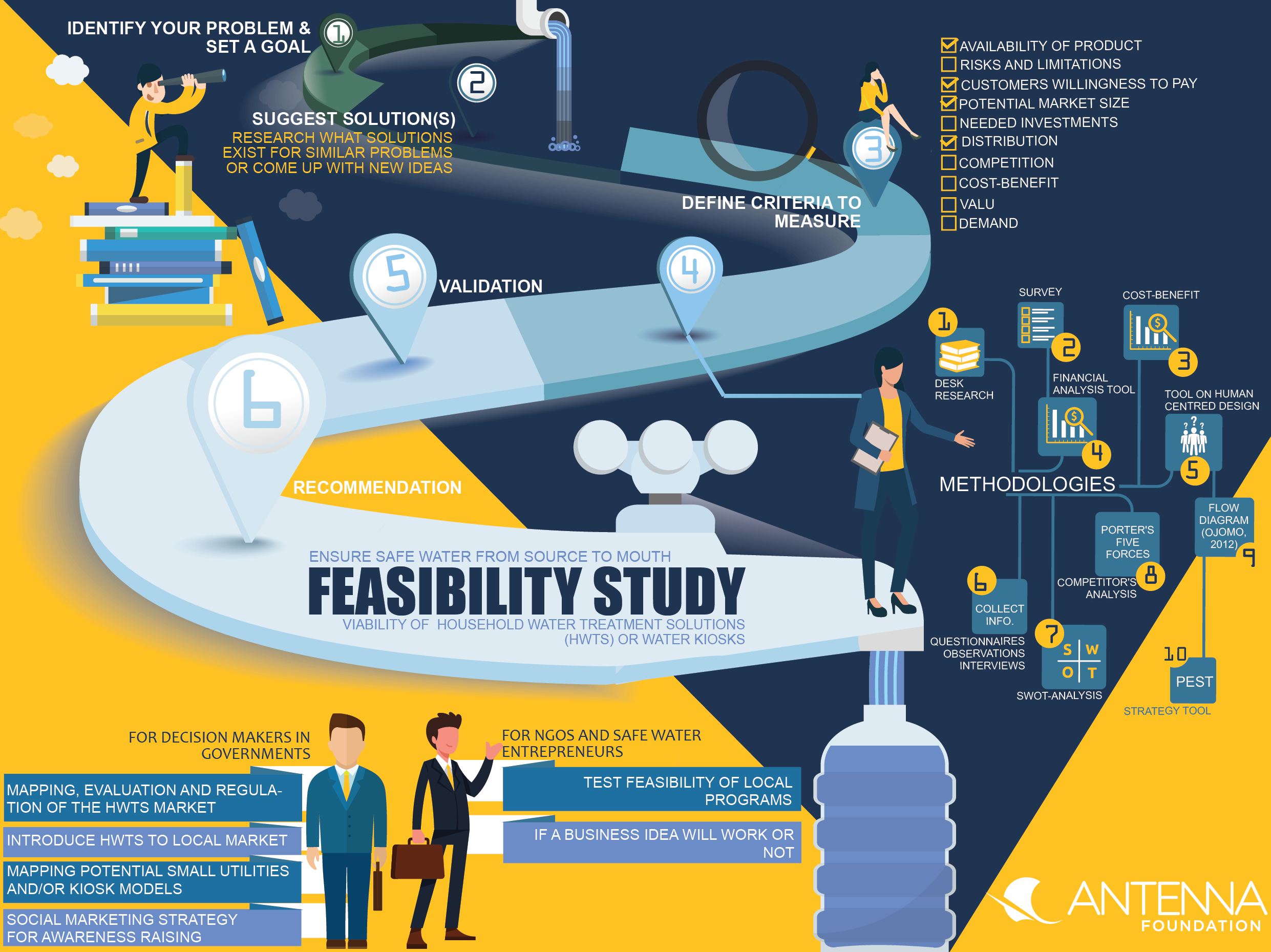
As the name suggests, the feasibility study answers the feasibility of a project before it is put to execution. So, when you receive a business idea, what is the first and foremost question in your mind? For most of you, it should be: Is the project feasible? Is it worth my time and money?
Well, these questions right here, that’s what a feasibility study answers. It clears out all your concerns and confusions regarding the project. Therefore it gives you a clear vision on whether to consider the project or not.
A feasibility study typically answers questions like:
- Is this project practically possible?
- Do we have the resources, staff, and technology required to execute the project?
- Will this project bring us returns (ROI) that we expect?
- Should we give this project our time and money?
In a nutshell, a feasibility study offers project managers a sneak peek into the future of the project they are planning to undertake.
The goals of a feasibility study are listed below:
- First, to thoroughly examine every side of the project.
- Warn the investors regarding the problems that might occur during project execution.
- All in all, clearing out the viability of the project.
- It even assists project managers in planning project operations.
- Marketing professionals use them to convince investors that they will not regret investing in their project.
Tips for conducting a Feasibility Study
A feasibility study is essential to businesses as it helps companies make the right decisions. In addition, a feasibility study is used to reflect the unique goals of different projects. So, here is a list of tips that will help you while conducting a feasibility study.
- Prepare an income statement.
- Calculate a balance sheet on an opening day.
- Collect feedback on the project from experienced stakeholders.
- Survey or research the market to draw appropriate conclusions.
- Create a full-fledged organizational structure.
- After this, reach the conclusion of accepting or rejecting the project.
There are some other components that strengthen your study. They are as follows:
- Considering all the technologies involved will lay down the project’s cost, resources, and technical requirements. It will clarify whether buying resources would be fruitful to the returns or just add to the cost of your business. Taking this factor into account will help you decide whether investing in the project is profitable or not.
- Planning a marketing strategy: Designing a marketing strategy can help you optimize project management.
- Sketch a narrative: Formulating a narrative or an executive summary that briefly explains each component of the new product, service, or business can ease up the study procedure.
- Examine where the market stands: Examining the existing marketplace can give you an idea regarding the sale structure of the new product, service, or business.
- Human capital: Before beginning any project, the first and foremost step is to extrapolate the human resources it will consume. This will give you an idea of whether your staff matches the project requirements or not.
- Computing finances: Calculating the finances that the project will intake will clarify if you are in a condition to undertake the project or not.
- Estimating the project timeline: Estimating the stretch of your project can help you devise a working structure for its completion.
Step by step guide to conducting a Feasibility Study
Now that we are thorough with the concept, application, and benefits of a feasibility study, let us move forward to its working. Here is a detailed description of how a feasibility study is conducted.
Step 1: Conducting a Preliminary Assessment of Resources
Before dedicating every ounce of strength, time, and money to a project, you should be wise enough to institute an analysis system. This preliminary analysis will help you screen the idea before it’s too late.
There are two sets of activities that happen during this procedure:
- Outline every aspect of the new product, service, or company by asking questions like:
- Does this project bring you a brew set of target audiences (the ones you are not currently targeting)?
- Will this project serve well with the existing staff, technology, and resources your organization possesses?
- Will this project create a scenario where the demand exceeds supply?
- Are there any obstacles that are challenging to overcome with current resources? Any of the following situations can create insurmountable hurdles for your project.
- Project operations demand extensive capital and resources that are unaffordable for the company.
- The marketing of that particular product or service is not very effective.
If the answer to both the above questions is ‘Yes,’ then stop right here because this project holds no feasibility to your organization. However, if the answer is ‘No,’ move forward.
If, up until now, the project idea offers zero resistance, move to the second step.
Step 2: Anticipate the overall cost of the Project
Extrapolating all the direct and indirect costs of the project can help you determine the ROI (Return of interest) that the project deployment would bring. You can estimate the cost by studying an expected income growth curve.
Before drawing the overall income statement, take the following factors into account:
- Service provided by the project
- Fees for the service your project provides
- The volume of the service that the project extends
- Adjustments made to the revenue cycle of the project, such as reimbursement levels
If the cost layout extracted from this study exceeds your budget, then take the wise decision of stepping out from that project.
Step 3: Carry out a Marketing Survey
If you have reached this step of the study, then it is clear that you possess the required capital to carry out this particular project. However, before blindly entering the process, it would be wise to carry out a marketing survey.
A marketing survey delivers a realistic projection of the revenues that the project might bring you. It is a crucial part of the feasibility study as it clarifies whether the project will be profitable enough to go for or not.
The steps to carry out a marketing survey is as follows:
- Defining the influence of your product or service on the geography of the market.
- Reviewing marketing trends like population growth, demographic features, cultural influences, and purchasing preferences of a particular community.
- Analyzing rival brands with the same product or service ideas. Consider their service or product’s prices, quality, social standing, consumer loyalty, consumer popularity, satisfaction levels, and sales.
- Extrapolate the market share that the project might bring you.
- Determine marker volume.
- Explore the options for market expansion and whether they are feasible in your case or not.
Step 4: Plan out the Project’s Execution, Operation, and Organization
This is a critical step in determining what you need to do before you begin working on this project. This step involves a series of deep research in order to determine the resources, operations, and costs involved in the project’s execution.
In order to successfully complete the study research the following information:
- Merchandising methods
- Equipment required for the project
- Cost and availability of materials involved
- Layout and location of facilities
- Overhead costs
- Supply chains
Step 5: Design an opening Day Balance Sheet
Outlining an opening day balance sheet can accurately and precisely lay down your project’s assets and liabilities. This will help you decide how the project is going to affect your organization in the future.
Therefore before putting any project into practice, list down its assets like:
- Cost
- Item
- Source
- Feasible finances
- Working capital
- Human resources
The list of liabilities can include the following:
- Are finances receivable
- Methods to financing asset purchase
- Deciding on whether to buy, rent or lease land resources and operating equipment.
Step 6: Reviewing everything up until now
This step corresponds to the actual execution plan. Here you are needed to review every data you have collected so far and reflect back.
This is a surety test that will help you make your decision based on facts and figures.
Step 7: Reach a Conclusion
This is the step where you make the Go or No decision. Every preceding step that you took was to reach a conclusion. And after the implementation of a complex study, it should be clear to you whether you want to undertake the project or not.
Conclusion
If the study reveals that the project has potential, then make a go for it. On the other hand, if the project fails to reach the bare minimum growth revenue, the “no” option would be wise. For more such informative articles, visit SaaSworthy Blog!
