

This is a query that’s quite common among SaaS founders. And it’s understandable why founders care about pricing. After all, only a very few things matter for a SaaS business as much as pricing.
Table of Contents
How Should We Price Our SaaS Product?

SaaS Pricing represents the ultimate referendum on how valuable your SaaS product is for your users. Like every other business, SaaS businesses also need regular cash flow to survive and sustain themselves. Therefore, a good pricing strategy needs to be the core part of your business model.
And yet, on average, SaaS companies have been found to spend just 6 hours on their pricing strategy. That’s not 6 hours in a year or a quarter. That’s 6 hours in total.
A big reason this happens is that the pricing strategies and models can be overwhelming for businesses. It might get difficult to know where or how to start.
So, to simplify SaaS pricing and help you figure out how to price your SaaS product, here we present you with the ultimate guide on SaaS pricing. This guide not only discusses the various SaaS pricing models but also talks about key pricing strategies that SaaS businesses can use to improve revenue and profitability.
How is SaaS pricing different from traditional pricing?
SaaS pricing is based on a subscription-based model. It means that SaaS customers pay companies on a regular basis for using a particular service or product.
Therefore, the strategies for setting up the prices for a SaaS product are quite different from traditional pricing strategies. Due to regular customer payments and complex product packages, SaaS companies need to put more thought into their pricing.
Why is it important to set the right pricing for your SaaS business?
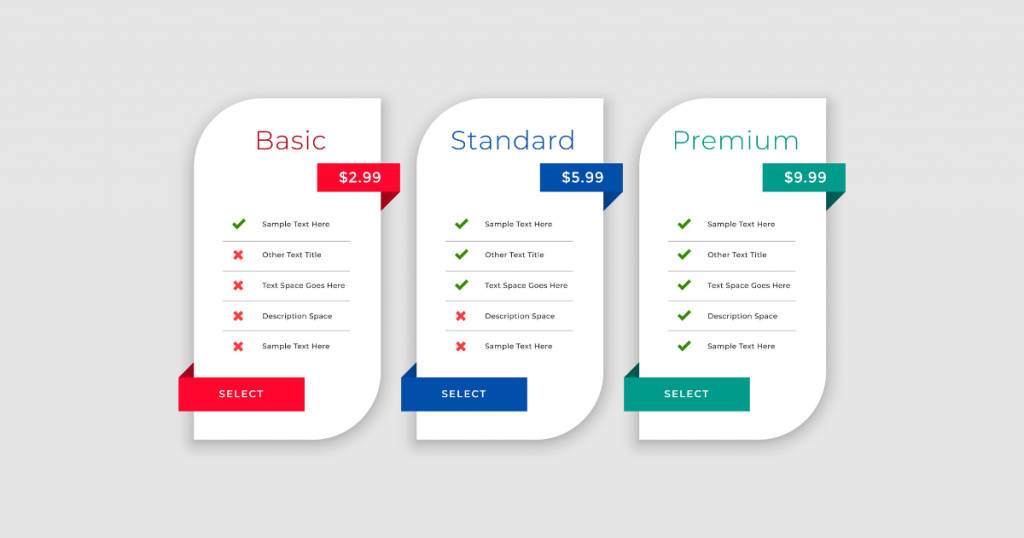
Many SaaS businesses either set their prices on instinct or are too afraid of making changes to their pricing so as to avoid scaring potential customers. But if you want to run a successful business and gain a competitive edge over your competitors then it’s essential that you nail your SaaS pricing.
Let’s look at some other benefits of having optimized SaaS pricing –
- Build a loyal customer base & provide value – Customers want products that feel like value-for-money. They want to look back and think that it was a great decision to spend money on your product. So, when you price your SaaS product in a way that it delivers value to customers, you build a loyal customer base.
- Improve growth – How you monetize your SaaS product has a great impact on the growth of your business. By optimizing your SaaS pricing, you give yourself a much better chance of success.
- Gain a competitive advantage – By optimizing your pricing, you give yourself a chance to succeed in a highly competitive market. Even a difference of a few dollars can cause your customers to choose your competitors over you.
Types of SaaS pricing models

There are 7 major pricing models used by SaaS companies. Let’s discuss them all –
1. Flat Rate Pricing
Flat rate pricing, as the name suggests, is the simplest pricing strategy. It involves offering a single product with a single set of features at a single price.
The key benefit of this pricing model is that it makes the product easier to sell. Moreover, flat-rate pricing is easier to communicate. The major con of this pricing model is the difficulties the business may face in extracting value from different users.
An example of a company using flat-rate pricing includes CartHook.
2. Usage-Based Pricing
Usage-based pricing or the ‘Pay As You Go’ model depends on the use of a service or product. The more someone uses it, the more their bill goes up. This pricing strategy is often used by infrastructure- and platform-related companies like AWS.
The key benefits offered by this pricing model include the ability to scale prices with usage and reduce the entry barrier for potential customers. The cons associated with usage-based pricing include difficulty forecasting revenue and predicting customer cost.
An example of a company using usage-based pricing includes Chargify.
3. Tiered Pricing Strategy
Tiered pricing is the most common and de facto pricing model used by mainstream SaaS companies. Tiered pricing allows businesses to offer multiple value propositions with different feature combinations at different price points.
This pricing model’s key benefits include targeting multiple buyer personas, maximizing revenue, and creating upselling opportunities. The potential cons associated with tiered pricing include potential confusion due to multiple choices and heavy user risk.
An example of a company using tiered pricing includes Hubspot.
4. Per-User Pricing
Per-user pricing or ‘Per Seat Pricing’ is a popular pricing model in the SaaS industry. It involves allowing a single user to pay a fixed monthly price. In case the number of users increases, the price increases as well. This pricing makes it easy for SaaS companies to manage and predict their revenue.
The key benefits offered by this pricing model include its simplicity, revenue scaling, and predictable revenue generation. The potential cons include adoption limitations and easy customer churn.
An example of a company using per-user pricing includes ProductPlan.
5. Per Active User Pricing
It is a variant of per-user pricing where a SaaS product can sign up as many users as possible but the final billing is done only based on the number of active users.
The key benefit of this pricing model is that it allows customers to only pay for active users and encourages wider adoption of the product while reducing the associated risk. The potential con with this pricing model is that it may not work so well for SMBs.
An example of a company using per active user pricing includes Slack.
6. Per Feature Pricing
The per feature pricing model is a variant of tiered pricing where different pricing tears are based on functionalities available in each. The higher-priced packages are thus associated with more features.
The key benefit of this pricing model is that it offers a strong incentive for upgrades while also compensating for delivery-heavy features. The con associated with this pricing model is that it can be difficult to get right. Users may want certain features if they are paying money for a service.
An example of a company using per feature pricing includes Evernote.
7. Freemium Model
The freemium model is among the most popular pricing strategies in SaaS. It offers a free-to-use product that can be supplemented by paying money for extra features. It is typically a part of a tiered pricing strategy.
The key benefit of this pricing model is that it allows easy adoption among customers because of its low entry barrier. The con associated with freemium pricing is that it’s a revenue killer for businesses. It also increases the churn rate among customers and can also devalue a company’s core service.
An example of a company using the freemium model includes Canva.
Popular SaaS Pricing Strategies

Before adopting a pricing strategy for your business, you must first evaluate your business goals. Based on this understanding, you can go with any of the following pricing strategies that best align with your goals. The 3 most popular SaaS pricing strategies are –
1. Cost-Plus Pricing
Cost-plus pricing is the most basic form of pricing that involves adding up all your costs along with a profit margin and then setting your price accordingly.
For a SaaS business, the costs may include expenses like product development, product design, cost of tools required, and salaries of all employees.
Although it’s quite simple and easy to calculate, cost-plus pricing is not the best solution if you want to maximize your revenue.
2. Competitor-Based Pricing
As opposed to cost-plus pricing, competitor-based pricing involves setting your prices depending on what your competitors are already charging. This pricing strategy may help you get closer to your ideal pricing. It also works particularly well for SaaS companies that are new in the market and are unsure of the value of their product.
The drawback of competitor-based pricing is that it will make your product a similar price to your competitors. This means that you are undercharging for a better value product and not distinguishing yourself from competitors.
3. Value-Based Pricing
Value-based pricing can be ideal for your business since it’s based on the perceived value of the product rather than the cost or competitors. Finalizing value-based pricing involves looking at your customers’ needs and then coming up with a pricing that they feel comfortable with.
However, it can take a lot of time and effort to get it right. It requires companies to do extensive market research. It encourages them to view their SaaS product in terms of the value it provides to customers.
SaaS Pricing Best Practices

Before Let’s now finally look at a few best practices that you can adopt to optimize your SaaS pricing –
• Create upselling opportunities – A key advantage of SaaS is the ability to offer upgrades and services that can bring additional revenue. You can get customers’ foot in the door through a freemium model and then put efforts to upsell within your pricing model. Upselling existing customers can make a substantial difference in product revenue.
• Offer free trials – Providing a limited free trial can be a great way to increase sales conversions. As a common practice, you can offer a 15- or 30-day trial to your customers to give them a hands-on experience of your product.
• Focus on service – Since SaaS is a subscription-based model, your customers are always at a risk of churning. That is why you need to put a lot of focus on service and support. A quick and efficient support team can help reduce your customer churn rate.
• LTV should be greater than CAC – To be a successful SaaS business, your customer lifetime value (LTV) should be significantly higher than the customer acquisition cost (CAC). Successful SaaS companies like Salesforce have LTV almost 3-5 times higher than the CAC.
• Use price anchoring – Price anchoring is a relative concept that involves taking advantage of our natural bias for the first number we read. We then use this number as a reference point to work out the value of something.
For example, if you see something expensive first, the other products would look cheaper in front of it. You can use this same concept in your SaaS pricing by putting the most expensive package first. When users see the most expensive option first, other packages would feel affordable in comparison.
• Highlight your popular package – This is called the center stage effect. It is based on the notion that the most popular package is the one that offers the best value for money. You can highlight the package you want to sell the most by highlighting it as the most popular package.
• Use annual purchase discounts with caution – Although this strategy of offering discounts on the annual purchase often works well, you must use it with caution. That’s because it may leave significant revenue on the table over the long term.
Conclusion
For your SaaS business, pricing is the most important aspect. It’s essential that you optimize your SaaS pricing to boost your business.
However, it’s easier said than done. Setting the right pricing can be tricky. That’s why we talked in detail about the different aspects of SaaS pricing in this guide. We hope this guide will answer most of your questions.
Remember, it may seem complicated initially but once you understand your customers, it will be easier for you to find the ideal pricing for your SaaS product.
