

Although the cloud was first just a simple place to store files, it has now developed into a complex computing environment that can support the core of your computing infrastructure. Your infrastructure exists in the cloud thanks to infrastructure-as-a-service (IaaS), which offers a number of special IaaS advantages, from simplicity to security and scalability.
Table of Contents
IaaS: Why use it?
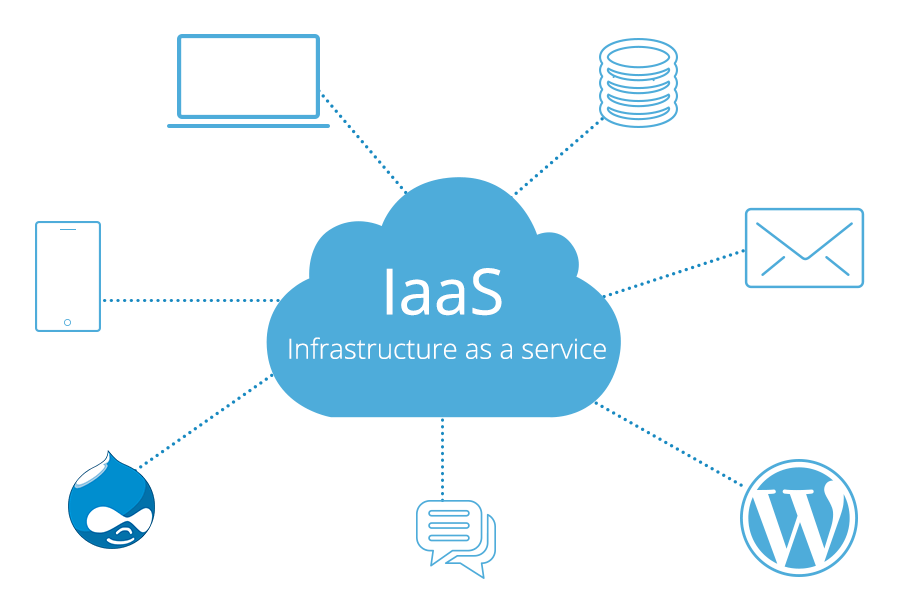
IaaS enables you to put the most important components of your computer system in the cloud, giving your company the dependability and usability that cloud solutions have come to be recognized for. IaaS also frees you from having to depend on hardware elements, which can be expensive to buy and maintain. IaaS is a strong choice for businesses that:
- A future expansion or contraction might be required.
- Need the flexibility to quickly onboard new employees, especially when setting them up with IT resources
- Use the cloud to run business-critical applications.
- Have remote employees and must operate internationally, either now or in the future
Consider the scenario where you are the manager of an American engineering and design company that encourages remote work. You employ an Israeli engineer, and you require them to have the same computing capabilities as the rest of your staff. In a matter of minutes, you can install IaaS to install their computer, storage infrastructure, and the applications required to design solutions and communicate with the rest of the team. Additionally, you may choose how they connect to the computer network or even send them a cheap thin client that makes it simple for them to log in and start working.
Advantages of IaaS
The benefits of IaaS are numerous, not least of which is the elimination of many of the drawbacks associated with hardware-based computing infrastructures.
1. Lowers Expenses
Even for relatively simple organizations, buying the necessary gear can quickly become expensive. For instance, many businesses require computers with a specific level of RAM, processing speed, and storage to ensure workers can continue to be productive. Even if a server is an excellent tool to link users from different parts of your campus or the world, finding the correct one can be expensive.
In contrast, IaaS allows you to access all the computing power you require for a manageable monthly subscription charge.
You also don’t need to worry about system maintenance costs because your monthly membership covers them. This implies that your computing infrastructure is being upgraded and maintained by committed IT personnel. Finding and paying for a professional with extremely specific knowledge who is needed to solve a particularly tricky problem won’t be your concern—your IaaS provider takes care of it.
2. Encourages Flexibility and Scalability
Scaling is made simpler and quicker with IaaS because all you need to do is ask for more infrastructure, and your supplier will give it. Because you’re utilizing virtual machines, this is doable (VMs). A virtual machine can be thought of as software that can carry out many of the same operations that your desktop or laptop does, including running an operating system, apps, and networking tasks. You can scale very quickly with IaaS because it allows you to add these as you need them.
Imagine, for instance, that your business wishes to upgrade its infrastructure for sales, adding online eCommerce sales in addition to direct orders placed by phone and in person. You should do this for the sake of security and stability.
In a conventional computer system, selecting the ideal server, evaluating prices, determining the volume of requests it can process, and ensuring that it works effectively with the rest of your IT environment could require weeks and significant investments in internal staff and outside consultants.
However, with IaaS, you only need to specify your needs to your provider, and they will put everything up. Then, your IaaS solution may set up it for you if you want to expand further or even alter your infrastructure entirely.
3. Supports Business Continuity and Catastrophe Recovery
Flexible business continuity and disaster recovery support are standard for an IaaS system, in part because flexible storage is one of the most tried-and-true applications of cloud computing.
Several factors that fall squarely within the purview of IaaS are necessary for an adequate disaster recovery and business continuity system:
- Programmable backup systems regularly check to make sure your vital systems have the duplicate data they need to recover from an incident.
- Consistent backup systems with the storage capacity you need to host large amounts of data.
- components with redundancy and parallelism that can be swiftly restarted in the case of a loss or other interruption
Starting a recovery process using IaaS is quick and largely painless. Consider the scenario where your main server was compromised and the data was being held hostage by ransomware criminals. Everyone could be back up and running very fast if frequent backups of both your data and essential software systems had been planned. And most crucially, you wouldn’t be pressured into having to pay a pricey ransom.
Similarly, you could decide to run an IaaS solution side by side with an on-premises system that continuously sends data and configurations to the IaaS solution. Your staff would then just need to log into the IaaS service to continue working regardless of what happens to your on-prem system.
4. Freedom to Concentrate on Business Growth
Your most important resource—your people—must expend a tremendous amount of mental, physical, and emotional energy on IT administration and business expansion. You may free up some of your organization’s most effective thinkers and doers to concentrate on bringing it to the next level by choosing an IaaS solution.
Imagine, for example, that you use a sizable percentage of your IT budget to hire experts to resolve hardware problems that have a bad reputation for decreasing productivity. With an IaaS solution, you can frequently say goodbye to some of the most harmful hardware snags. Your IT team can then concentrate on tasks that will advance your company.
5. Permits Increased Security
You can benefit from tighter security with many IaaS providers simply because the business prioritizes offering the safest computing environment. This makes it one of the most significant advantages of infrastructure-as-a-service because it immediately benefits their clients and solidifies the provider’s standing in the market as a trustworthy source.
Imagine, for instance, that you had a vehicle storage company that specialized in keeping expensive sports cars safe for protracted periods of time. You would go to great lengths to prevent as many break-ins, vandalism occurrences, and other interruptions as you could.
IaaS vendors follow a comparable strategy. Customer loyalty is a significant return on a significant investment in the newest security. In addition, because IaaS providers oversee virtualized computing elements, an attack might have an effect on the provider’s own service delivery infrastructure in addition to clients. So maintaining order is crucial.
Conclusion
IaaS can be a solution worth considering if you want a more robust security posture, improved continuity, and resilience, or simpler IT provisioning processes. You can spare precious money and human resources that you can reinvest in expanding your business, time, and energy.
