

Emails continue to be the preferred medium of communication, especially as organizations have transitioned to remote work in the past few months. However, one aspect that’s often overlooked is that they aren’t meant for team collaboration. In other words, while emails manage one-to-one communication needs well, they aren’t very efficient in enabling teams to work in a collaborative manner. Enter Hiver, one of the earliest companies in the shared inbox category, which is taking this problem head-on. We recently caught up with Hiver’s Co-founder and CEO, Niraj Ranjan Rout over email. We discuss the company’s evolution over the years, what sets it apart from the rivals, and where does he see India’s SaaS industry in the future among other things.
PS: the interview has been edited for the sake of brevity.

Table of Contents
1) Before we begin talking about Hiver, can you share your journey into the world of SaaS?
After graduating from IIT Kharagpur, I began my career as a programmer. I worked at Mentor Graphics for five years and then started my first business. We attempted to build a local search product for mobile devices, which failed, and we started building apps and websites for customers in the US. We turned it into a successful business over the next few years.
It was at my last company that I and my co-founder Nitesh Nandy figured out that while email was a reliable communication channel, it was incapable of catering to the collaboration needs of an organization. My team and I would often communicate about tech challenges through email, but we saw that every few months, people would ask the same questions again, oblivious to the fact that the issue had been discussed in the past on email. That was when we realized that most of the information exchanged in companies is siloed in personal inboxes.
We envisioned Email 2.0 where teams could use email to share knowledge as well as collaborate seamlessly. And that’s how Hiver was formed.
2) Can you walk us through Hiver’s evolution over the years since its inception as Grexit almost 10 years ago?
Developed by GrexIt Inc., our first product was called GrexIt and was officially launched in 2012. Over the years, we continued to evolve and improve the product, and in 2017, we launched what you see today as Hiver. We raised an initial round of angel funding to the tune of $130,000 in 2011-2012 from the Citrix Startup Accelerator and Paytm Founder Vijay Shekhar Sharma. We bootstrapped ourselves to 1,100+ paying customers. In late 2018, we raised $4 million in Series A funding led by venture capital firms Kalaari Capital and Kae Capital.
3) What’s the current user base of Hiver? Which are your biggest markets?
Hiver currently caters to over 1,500 customers across 30 countries, including Lonely Planet, Hubspot, Canva, Wikimedia, Harvard University, Vacasa, and Flexport. Some of Hiver’s biggest markets include the US, UK, Australia, and Germany among other countries.
4) While shared inbox is an intriguing idea, a lot of players are competing in the space, so how does Hiver stand out from its rivals?
If you look at email, it’s fundamentally broken for teams. It’s meant to be a one-to-one channel, but we have been using it for team communication. The usual way to communicate with a team is to use mailing lists that don’t support teamwork – but are just a way for the team to receive emails on a shared id.
Hiver solves this by helping teams collaborate efficiently over emails. Hiver helps teams achieve clear accountability and ownership of tasks sent over the email. You can assign emails as tasks, track their status, and write notes to team members – all within Gmail, unlike other solutions that require to use them specifically. Besides these, you can also use Hiver to save time by setting up smart automation that can take a lot of burden off teams.
5) You’re dependent upon Gmail / G Suite, which sets you apart from others, but also restricts as there would be several companies that won’t be using G Suite. So are you planning to expand to more email service providers or tackle this restriction in some other way?
There are millions of companies using G Suite and this number is only increasing by the day. So we don’t consider this to be a restriction at all, for there’s such a massive market to tap into.
Having said that, we might expand to other email providers in the future, but it’s not on the cards in the next year.
6) Expounding upon that, what are your thoughts on platform vs product debate? Since Hiver is completely dependent upon G Suite, what if Google changes its model or offer something like Hiver natively?
This is one of my favorite questions and the first thing we must understand is that Hiver is a Google partner and there are thousands of tech products like us that are part of the Google ecosystem.
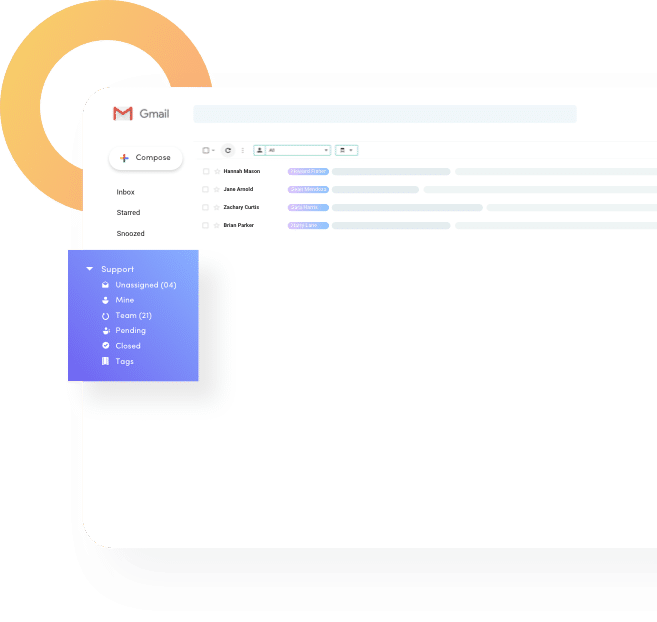
Secondly, the problem we’re solving is a deep one. Google already has some approaches to solving this which might work for some users, but we go deep into the problem, and solve it well. We don’t just take care of usual workflows, but help users automate a lot of actions, and provide very deep reporting. While G Suite, the platform, sells for around $6 per user, we sell at around $25 per user on an average. That would give you an idea about how valuable our solution is to our users.
We will continue going deeper and wider with the use cases we address, and we’re sure Google would continue to see us as an ecosystem partner rather than a potential competitor.
7) Can you shed some light on your marketing strategy and how are you reaching out to potential customers?
One of the things I’m proud of at Hiver is that we have built a powerful inbound marketing engine. Our website and blog is at the centerpiece of our marketing strategy. From educating visitors about challenges with email collaboration to showing them real value in how Hiver can make their lives easy, we cover all aspects of a visitor journey. Most of our traffic is organic, thanks to our strong presence on Google.
Recently, we started our outbound efforts and are seeing quite a bit of traction on that front in the US market. We identify specific verticals we might want to go after, and build out a multi-touchpoint marketing strategy.
8) We’re living in challenging times. So what’s Hiver doing during this time?
The COVID-19 pandemic forced us to rethink and re-evaluate our strategy and focus on what is tremendously important in the situation.
We rolled out a free plan for organizations providing essential services with the aim to help them collaborate easily and work efficiently. We offered our highest-tier plan free for two months to any small organization helping control the spread of the virus or offering essential services – be it research institutions, grocery services, groups involved in the supply chain of protective gear, among other businesses on the frontline.
Related read: COVID-19: The Ultimate List of Free Software and Resources
9) Has Hiver seen an increase in customer base due to the remote work era?
Since Hiver helps teams collaborate over email, we are seeing higher demand from schools and educational institutions during this time. We have also seen that a lot of our customers that depended on people visiting their premises, like stores, restaurants, and spas, are going through a difficult period. We have been trying to do our best to support them with friendly payment terms.

There’s also more emphasis on team collaboration, now more than ever before. It’s important for teams working remotely to be able to collaborate effectively to help their customers, and that is what Hiver helps them with.
10) You’ve been operating in the Indian SaaS industry for a decade. Can you share your thoughts on the evolution of the industry, and do you think it has what it takes to become a leading country in the SaaS space?
India is realizing the need for software that helps with ease of doing business. Startups and large corporates together are moving towards subscription-based revenue models which are enhancing business growth across industries. In fact, the number of SaaS startups in India have almost tripled in the last five years and this number is only expected to grow.
However, India currently accounts for only 2.6 percent of the global SaaS share. The country has a few inherent advantages when it comes to SaaS in the form of great engineering talent, lower hiring cost, and a large, readily available talent pool of customer support representatives. This allows us to provide quick, high-quality, multi-channel support to customers and gives us an edge over other countries.
Additionally, the first generation of Indian SaaS companies like Freshworks, Zoho, and Wingify has already proved that we can effectively sell software to the world remotely from India. This shows that geographical barriers aren’t a constraint, provided the products and buying experience are good. All that sets up the stage for India to stake a strong claim in the global SaaS market.
11) What does the future look like for Hiver? Are you adding some new features to Hiver or focusing on getting more users or something else?
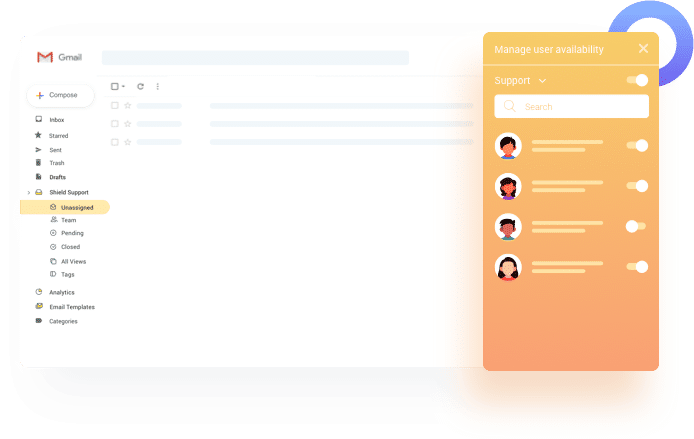
Most of our customers use Hiver to manage and collaborate around emails they receive from their customers. Email is the most important channel for customer engagement for a very wide variety of businesses, and what we have achieved in terms of our product and market presence in this area is a very small part of what is possible. We’ll continue to go deeper into this problem as a product, and would also address adjacent problem areas like sales and customer success in the future. Along with this, there would continue to be a significant focus on expanding our market through marketing and sales.
12) What are your favorite SaaS products out there, apart from Hiver?
One of my favorite SaaS products is Hubspot. Our sales and marketing teams use it every day to track new trial sign-ups, and to see where existing leads are in the funnel. I like the product because of how comprehensive it is in terms of features and yet, is extremely simple to use. They started off as a marketing automation tool, and then went on to build a CRM. They are constantly reinventing themselves.
