

Shopify has been one of the most important companies over the last decade, and it became even more important amidst the pandemic helping offline retailers go online. However, Shopify isn’t for everyone. And that’s what many new-age companies are aiming to build by specifically focusing on certain markets or use-cases. One such company is YC-backed Bikayi, which makes it easy for even small shops to create a digital storefront in minutes. We managed to interact with its CEO and co-founder Ms. Sonakshi Nathani to talk about its inception, evolution, and the road ahead.

PS: The interview has been edited for the sake of brevity.
Table of Contents
1. Can you share your journey into the world of SaaS?
She replied “it came very naturally; it was not something we intended to with the company. When we started Bikayi, it was a free app for one and a half months. But, we soon realized that people like the features that we are building in our application, since they’re adding a lot of value to these people’s businesses. That’s when we thought why not we start charging them? Why not charge small amount of money from these businesses as that will also help us understand if our app is adding enough value or not. So that’s what we did.”
“Two months after our launch, we introduced a subscription plan where in businesses can get lot more features as compared to free. And then we looked into how other people design their pricing strategies, etc. And that’s how we designed our subscription model, which was monthly or yearly basis,” she added further.
2. What gaps did you see in the market for launching Bikayi?
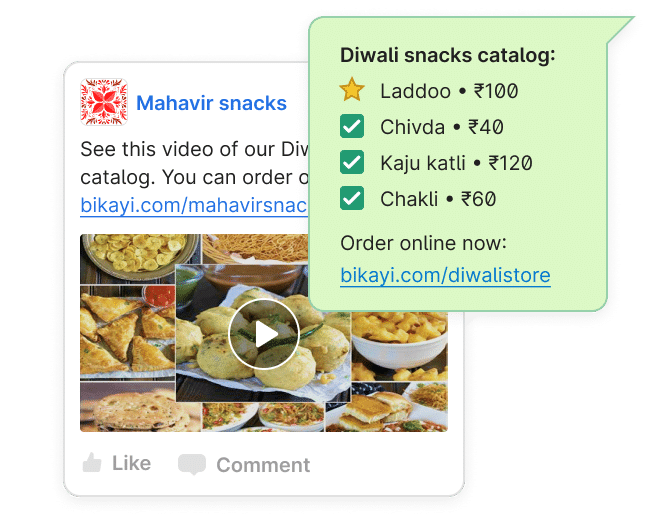
She mentioned that “there were two things. One was that my family was running a grocery store and they were taking orders on WhatsApp. And, it was very challenging for them. What was happening was our customers used to send the list of items they want. And we were agreeing to the fact that we’ll get them delivered to their doorstep, but the problem was that there wasn’t an inventory of items for customers and that used to create confusion. For example, if the customer said that they want half a liter of milk, but we just have one liter and that too of a different brand. Then we used to end up calling them asking if it is okay if I sent you this one.”
Elaborating further, she said “Hence it was time-consuming with 50 percent of our time going into managing this stuff and consolidating the list, etc. That’s when we thought that we need a product where people can place their order directly. And at the back end, we are able to manage the nicely. Then I started searching for different solutions that can solve this problem. Shopify came into my research and, but that was suitable for the US market, but not suitable for the Indian market because, for my family (and most Indians), the internet is just WhatsApp and YouTube. They don’t know anything else. So, for them to use something as complex as Shopify was like a nightmare.”
“That’s when we thought that why not we build it ourselves. In March 2019 we thought of this, and within 14 days on April 1st, we launched Bikayi on Play Store. And we not only gave it to my family because we understood that we need more feedback in terms of how people will use it, etc. So there were different Facebook groups for wholesale distributors where there were as many as 0.5million members. So, we started posting app link asking them that if you want to increase your sales on WhatsApp, then comment yes. And when they were commenting, yes, we were telling them to use this app, it’ll increase their efficiency. Within a month, we saw 1,000 stores got onboarded on Bikayi. That’s when we realized that it’s actually a very big problem today in India to manage commerce on WhatsApp,” she stated while sharing the story behind the origins of Bikayi.
3. If someone comes onboard on Bikayi, what all they have to do? How easy or complex it is for someone to start using it?
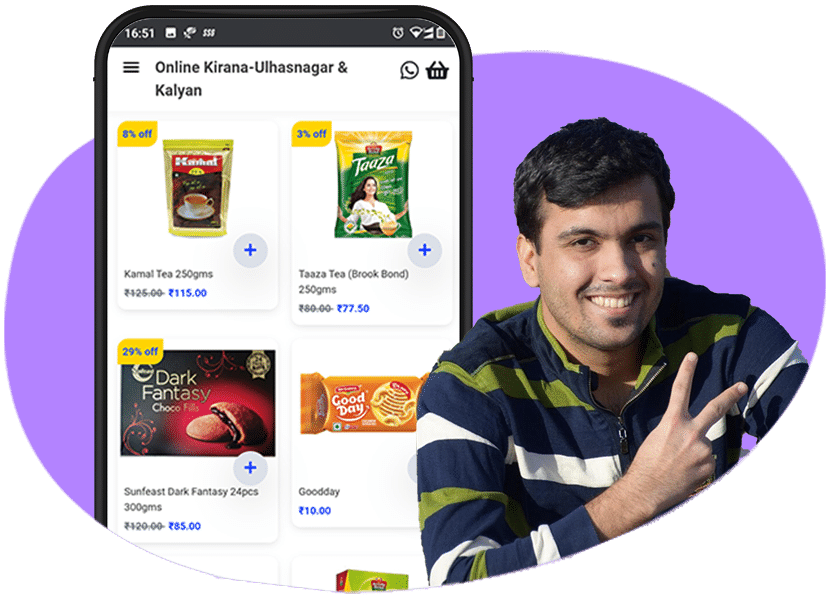
She answered that “it’s extremely easy. The customers just have to download the app. They just have to click pictures of their products in the store or use the ready-made available images in the app. For groceries, etc, we have already provided images, because those are the same across India. So, they can use that, upload them into the app, and their catalog gets created. Once the store is created, they just have to put name, description, and price and they get a link that can be shared on WhatsApp to their consumers. Their consumers can then open that link, place their order and all the management stuff comes back in the app.”
4. Can you walk us through Bikayi’s evolution since 2019?
Ms Sonakshi Nathani stated that “it has been an exciting evolution because when we started, we felt that it required a simple solution. But we also saw and started realizing that people have aspirations – to become BigBasket of their town or become Amazon of their town. To fulfil that aspiration, you have to outgrow them. So if they start getting 100 orders today, they start expecting more from Bikayi. For example, they want a payment report, analytics, etc. Then we realized that Bikayi needs to be a full fledged e-commerce platform, and not just a small cataloguing or storefront app.”
“To put it on the timeline perspective, when we launched, Bikayi was just upload product, share link – as simple as that. Then two months after that, people started demanding that they should be able to put their logo. Then we started bringing branding elements like the ability to add your own custom domain. Then people started saying that now I have a good website, I want to analyze how many people are viewing my product, how many people came to my store, but didn’t order, etc. And that’s when we started working on the analytics front. Afterwards, people started demanding for different variety of storefronts. They wanted something for grocery, and something else for fashion. So these are the kind of evolutions happening and I expect us to be very much equivalent to what features are being offered in the outside, in the western world,” she added further.
5. Could you share how many customers do you have and what kind of merchants use Bikayi?
She told us that “we started off with grocery because it was like the immediate use case we saw. And when we were posting on Facebook, it was fashion stores, electronic stores, and the likes started coming in. Pre-COVID, our numbers became 60 percent people pan-India doing their businesses like electronics, B2B, fashion, etc. and 40 percent were hyper-local be it be a cloud kitchen or grocery stores. Then COVID hit, and 90 percent of our users became hyperlocal businesses serving different kinds of needs, restaurants, etc., and 10 percent were pan-India businesses. Now numbers are again going back to the normal state, although they are the reverse from before – i.e. 40 percent businesses are now pan-India or serving people across country, but 60 percent are hyperlocal.”
6. How does Bikayi stand out from its rivals?
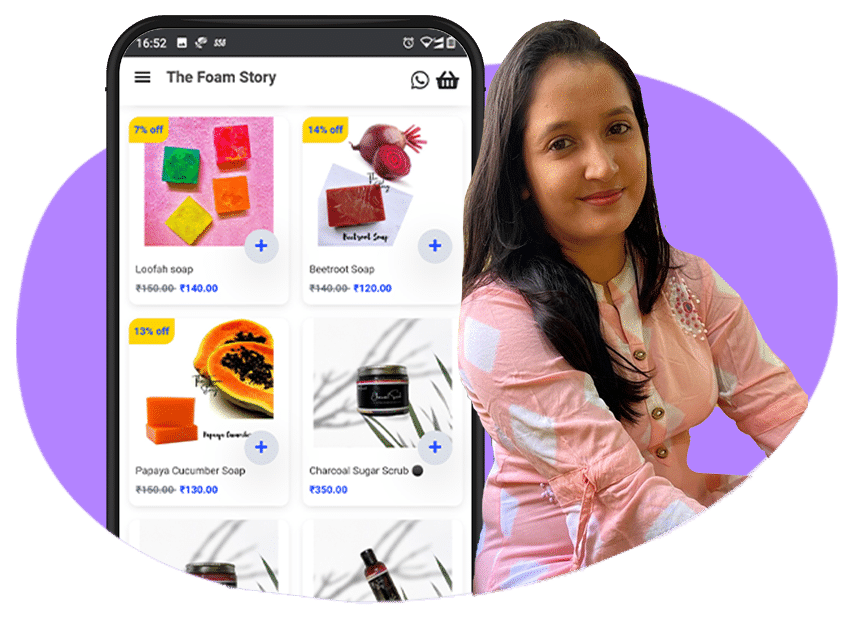
She stated that “there are many players and especially after we got into Y Combinator, as a lot of people started copying us, but what made a difference initially, and even today is like customer insights. In fact, we first hired a customer support guy because we knew that whatever we are building should come from customers, and not the other way around. Not only we have a good set of features, but the new players in the market are also free apps, and they don’t even have a subscription model. The reason behind that is they don’t have full-fledged features. They don’t have a good support team, and they lack a lot of insights. All of this helps us stand out.”
7. Could you shed a light on your marketing strategy to reach out to businesses?
She answered “Because of COVID, everything got accelerated. Before, our marketing strategy focused more on pull than push. Like people who were searching for such kinds of solutions, rather than we pushing Bikayi to them. So, it was just to have good internet marketing, digital marketing, so that people are seeing what Bikayi is and they are using it. In fact, if you ask about subscription selling, it’s all organic today, and we don’t have a sales team. The only thing we do is to run a campaign on Facebook or Google saying install this app, if you want to create your online store. Going forward also, we want to keep it the same, in terms of organic traction. However, because we have a SaaS model, there’s a sales effort that comes into the picture and we are going to try that out as well.”
8. How has the ongoing pandemic affected Bikayi – both in terms of businesses and no of users?
She told that “COVID helped a lot. There were a set of people who wanted it on an immediate basis, for example, people who lost a job. So now there is no other option than to run a small business, supporting their family. So, they started opening grocery stores, getting supplies from nearby wholesalers. Then there were those who wanted to become Swiggy of their towns using Bikayi. They tied up with different restaurants, create one on the store on the Bikayi app, and started taking orders. So, this is what is happening with the young generation, who either had a family business or didn’t have, now they have started exploring entrepreneurship. This kind of mindset wasn’t there pre-COVID. People gained confidence that they can do an online business. And I think this was going to come in five or six years, but it has been accelerated.”
9. How was your fundraising experience like?
Ms Nathani replied that “fundraising was pretty smooth for us. There was a lot of inbound interest. We were supposed to do a fundraise in August end, which was YC demo day. But we were getting a lot of inbound interest in the first week of August itself. So, we started talking to them and within a week, we closed around. It was because of our growth, which was 100 percent month over month that time, in terms of revenue, users, etc. So that was pretty smooth for us. We have got a really good set of investors in terms of how they’re helping us, and the support they’re giving.”
10. What’s next for Bikayi? Would you focus on more features, expand to new regions or something else altogether?
“Well, both these things are in the plan. The first is of course, the feature. To give you an example, there’s a brand in Bangalore that sells organic flour and other such things. So, they started when Bikayi had started, and they are growing consistently with us. And we have to make sure that they don’t outgrow us and hence give them the features they ask for. For instance, they were just selling in Bangalore, but now they are selling in the outskirts of Bangalore. So, they need a feature where they can put different shipping prices based on location. We’re soon going to launch a new feature in Bikayi, and that would make us a full-fledged suite in terms of the features. As far as expanding to other countries is concerned, we’re planning that in May or June. As such, we are already open in international markets and while we don’t do any marketing, we are open, and we are getting a good lot of organic revenue from international markets as well. These countries include Singapore and a few places in Africa,” she mentioned.
11. What are your favorite SaaS products out there?
She said “internally, we use a lot of SaaS products such as MoEngage, AppsFlyer, and Freshdesk. While all of them are my favorite, I’d specifically highlight MoEngage because of the value it adds. It has made our life easier in terms of sending notifications and measuring conversions, etc.”
