

A layoff is a termination of an employee from the job. The employer initiates this action, and the ex-employee no longer works in the company or collects wages. Sometimes, a layoff maybe only a momentary suspension of employment, and at other times it is permanent.
After getting laid off, the workers cease to earn salaries and benefits from the company but qualify for unemployment insurance or compensation.
There is always paranoia about being laid off, and losing your job is scary.
Layoffs impact groups of workers from several to thousands due to an employer’s effort to cut costs. Layoffs are always undesirable whether the employers call them “downsizing,” “rightsizing,” or “smart sizing.” Layoffs are a “workforce reduction” or a “reduction in force.”
Employees in a late-career layoff in “early retirement,” or VRS (Voluntary Retirement Scheme), substitute a paycheck with retirement benefits. In simpler terms: A layoff is a suspension or permanent termination from the job of workers by their employer. Remember, a layoff does not happen because workers committed something wrong, and the firing happens because of many reasons:
Table of Contents
Top 10 Reasons for Layoff
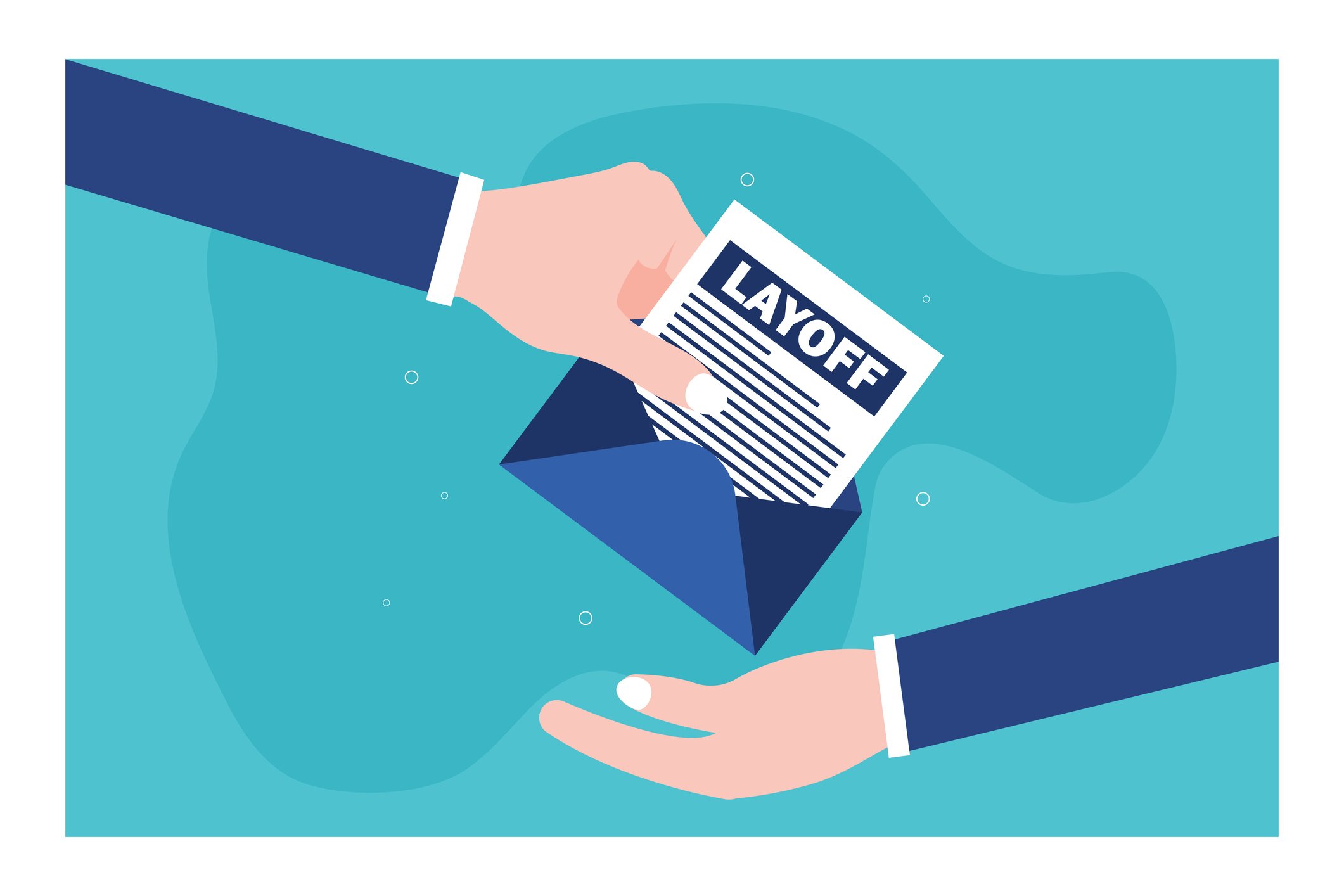
- The commercial enterprise’s sales have declined.
- The company is in a monetary crisis and has become bankrupt.
- The production of goods has stopped because of the non-availability of crucial elements or raw materials.
- When companies aim for cost-cutting due to a fall in demand for their products or services
- A seasonal closure.
- It is affected by an economic downturn.
- The industry has overhired for the economic recovery post-COVID-19.
- Real estate workers faced layoffs because of less inventory, increased home prices, and rising interest rates. Thousands of those hired post-pandemic are now facing layoffs.
- An economic downturn or corporate reshuffle.
- Bankruptcy or a leveraged buyout by private equity companies.
Layoff vis-a-vis Furlough and Firing
A layoff is different from a furlough. Workers get furloughs for some time due to factory repairs or any circumstance that need a temporary work halt. Furloughed workers retain their job titles and employee benefits and ultimately return to work.
Furloughs may also affect government employees. During a government shutdown, non-essential workers get furloughs, while workers in critical services work with pay deferments.
Depending on their state’s eligibility requirements, furloughed workers sometimes get unemployment insurance benefits.
An employee may be fired or terminated for inadequate performance, misconduct, or breach of duty. An employee is not entitled to unemployment insurance if terminated for inappropriate workplace behavior.
Example of Mass Layoffs
U.S. employers went ahead with mass layoffs at the onset of the COVID-19 pandemic. The restrictions and transmission fears stopped travel, closed eateries, and idled most service industries. In April 2020, according to the U.S. Bureau of Labor Statistics data, U.S. employers laid off more than 20 million workers and 22.4 million in two months.
To maintain jobs, the U.S. government suggested the Paycheck Protection Program and brought in the Consolidated Appropriations Act of 2021 (CAA) law on Dec. 27, 2020.
The U.S. program called PPP for a loan to small businesses impacted by the economic slowdown because of the COVID pandemic to pay employees’ wages and other expenses. CARES Act created this and initially included $349 billion in funding; however, the money was exhausted within two weeks, with the second funding totaling $310 billion.
The PPP prompted companies not to remove workers during the pandemic.
After round two loans ended in August 2020, the CAA authorized the third round of PPP loans. The third round of funding of $84 billion helped the PPP goals to contain layoffs and other costs to help businesses remain viable and allow their workers to pay their bills. But, funds were depleted, and the PPP became extinct by May 31, 2021.
Layoff Statistics
Layoffs are common in the U.S. and also around the world. Here, we will discuss the general statistics and demographics of American layoffs.
- Seventeen million U.S. layoffs happened in 2021.
- 40\% of Americans get laid off or sacked from a job at least once.
- 48\% of Americans suffer from layoff anxiety.
- 28\% of Americans faced layoffs in the past two years.
Layoff Statistics By Demographics
The effect of layoffs is different in different regions and can also alter based on demographics. The following statistics are vital to know:
- Layoff anxiety is expected in 61\% of adults between 18-34 years.
Layoff anxiety has become extremely common in young adults, with the majority undergoing it. 41\% of adults aged 35 years or older have suffered from layoff anxiety; a smaller percentage still constitutes a large portion of the population.
- 51\% of workers between 18-34 remain unprepared for a layoff. Those over 55 years are unprepared for a layoff. Above the average of 47\%, and far above the 30\% of the youngest workers, find themselves most affected by layoffs.
- Men are 25\% more likely to be laid off than women.
45\% of men get laid off compared to 36\% of women. Only 4\% of women get laid off compared to 12\% of men.
- Only 36\% with a college degree have faced layoffs.
There is less possibility of being laid off if the workers have college degrees. Statistics reveal that 52\% with some college degrees have been laid off compared to 53\% with only a High School degree.
Special References
Layoffs are not easy to handle. The workers who get laid off lose wages, benefits, sense of security, and those who don’t lose their jobs also have the sword hanging on their heads. Communities, societies, economies, and even employers bear the brunt of layoffs.
Reduced employee productivity because of layoffs can affect the cost savings from a discharge.
Significant layoffs impose economic damage also to the community where laid-off workers live. The complete social fabric gets affected if the laid-off workers don’t find alternate jobs or engage in some other occupations.
The signs of layoffs
Ten signs to look out for if you’re worried about layoffs. These include:
- Not being included in projects
- Unwarranted budget cuts or budget cuts entirely
- Companies suddenly deferred or canceled New products, projects, and developments.
- The company’s merger is in the offing
- Your boss seems more worried than usual
- Freezing hiring
- Executives resign in great numbers, or a mass exodus happens
- The company plans to restructure
- Your boss or HR questions your productivity
- The company struggles financially
Takeaways
- A layoff is laid off from work without the employees’ fault but because of economic reasons to cut costs.
- A firing is different from a dismissal since firing happens because of improper workplace conduct. The fired worker does not get unemployment insurance.
- A mass layoff can damage communities’ economies and social fabric in a single employer or industry.
- Some employers may serve severance deals to laid-off workers.
Conclusion
Layoffs are an unfortunate but anticipated fact in a market economy driven by competition and trade. Layoffs have harmed psychologically and brought financial disasters to the affected workers and their families, communities, colleagues, and other linked businesses—government policies providing unemployment insurance and respite and retraining help the newly unemployed.
Read More
A Comprehensive Guide to Low-Code Development (LCDP) Software for 2022
What are the Top 10 Ways To Build Credibility As A New SaaS Startup in 2022?
