

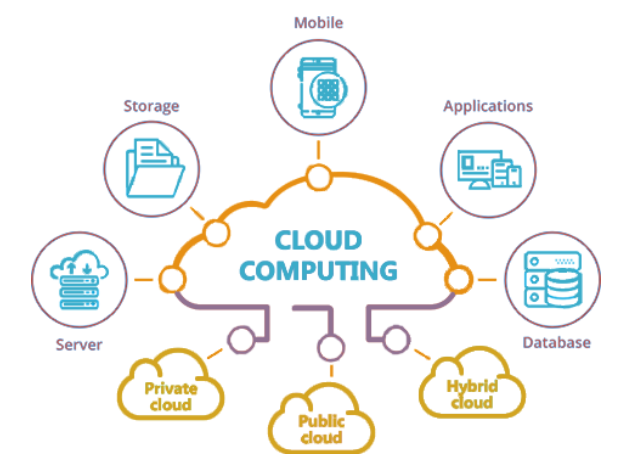
The distribution of computing resources on demand over the internet is known as cloud computing. Data storage, computing power, virtual servers, development tools, networking capabilities, and other services are all provided by cloud service providers. Businesses can use cloud computing services to distribute their IT infrastructure across the internet rather than developing their entire computing system inside.
It’s not new to use the cloud. Since it has been around for almost 20 years, many companies have discovered that implementing a cloud computing solution has several benefits.
We’ll go over some of those benefits in this post to help you understand why cloud computing is important and why you should consider deploying it for your company or organization.
Table of Contents
Top 7 Benefits of Cloud Computing
Wherever your business is on its cloud computing adoption journey, it can be hard to determine precisely what benefits you’ll realize from this shift simply by reading a technology or software solution description or a list of a cloud provider’s features.
Here are seven ways cloud computing can benefit your business.
Cost Savings
Many companies are worried about how much migrating to the cloud will cost. While any type of technology change will carry an upfront cost, it is important to look at the long-term ROI of moving to the cloud.
Ninety-four percent of companies that migrate to the cloud expect it to reduce infrastructure setup and maintenance costs, and 47\% say cost savings is the primary benefit of cloud computing. There are a few reasons for this.
With traditional on-site data centers, a business has to buy the servers, networking cables, switches, and other technology, as well as pay for the space to house it and the price of installation.
With cloud computing, a cloud provider divides physical hardware into smaller units via virtualization, and a company only pays for the resources they really utilize. Even if a company only utilizes a tiny portion of the servers, it must pay for the power needed to run the entire system when it hosts its own infrastructure.
When a company hosts its IT infrastructure in the cloud, the provider handles all upkeep and upgrades. As a result, the business won’t need to engage more full-time IT personnel to handle this work.
Security
Businesses frequently have security concerns while debating using cloud computing. You might be perplexed as to how all of your documents, information, and software can be safe, given that they can be accessed online. Doesn’t that make them more susceptible to data breaches and hackers?
No, actually. This results from ignorance of how cloud security functions.
The security of consumer data is a priority for cloud service providers.
Their reputation hinges on them not allowing a security breach, for which SLAs hold them financially liable. The majority of service providers follow the strictest security guidelines and employ seasoned cybersecurity professionals to uphold these guidelines.
Scalability
Another significant advantage of cloud computing is scalability, which is made possible by sharing computer resources among a variety of users. In a cloud environment, servers, CPUs, hard drives, and other resources are virtualized. This implies that they are effectively made into software, which has a few useful functions.
The first is the possibility of segmenting physical hardware into smaller parts. Every company does not require a whole physical server to operate their apps. Businesses can rent a section of the server thanks to virtualization to suit their needs.
The second advantage is that upgrading a company’s infrastructure to accommodate greater resources won’t necessitate buying new hardware.
Enhanced Cooperation
Collaboration might be challenging when using software and a traditional data center. Documents must be transmitted by email, and it might be challenging to determine who has the most recent version of a document when several individuals are changing it. This makes it difficult for workers to collaborate as a team.
The same apps can be accessed and used by employees online with a cloud solution and cloud-based software. When a document is modified, all parties involved may instantly view the changes and collaborate to create the final version. When files are shared, everyone who requires access to them may do so in a single area, ensuring that they are never misplaced or out of date.
Sustainability
For businesses that care about sustainability, moving to the cloud is a top priority. A significant amount of energy is lost in a conventional on-site data center. Even when not in use, servers continue to run. Additionally, servers might be inefficiently utilized when they are in use while having spare resources ready to address unexpected consumption spikes.
With a cloud provider, organizations may utilize only the resources they require at the time they are required, thanks to virtualization and auto-scaling features. Cloud service providers are likewise focused on sustainability; for instance, Google claims that their data centers are twice as efficient as a normal corporate data center.
Flexibility
Another benefit of cloud computing is increased flexibility. An upgrade or change is difficult in the traditional data center’s physical hardware environment.
A company must purchase more gear, rent space to hold it, have IT employees install it, and then ultimately get to the stage where they can configure the servers and install the required software in order to deploy more applications. After that, networking and security configuration may still be required.
They can accomplish all of this on the cloud with just a few commands using an API or a cloud management dashboard. A business can move swiftly, scale quickly, and test new prototypes effectively when changes only take a few minutes.
Quality Assurance
Poor quality and inconsistent reporting are among the factors that have the biggest negative impact on a company’s success. To prevent this, a cloud-based storage solution keeps all documents in the same format and place.
You can assure data consistency, prevent human error, and retain a clear record of any changes or edits for auditing purposes when everyone has access to the same data. Employees may mistakenly save numerous copies of documents when information is kept in silos (such as in an on-site data center), which can confuse users and muddle data.
Conclusion
The following ways that the advantages of cloud computing can provide you a competitive edge. You will have more money available to invest in and expand your business because it saves you money. You avoid data breaches that cost you time and money because it is secure. As a result of its scalability, you always have access to the tools, programs, and processing power you require, and your operations are never slowed by bottlenecks. So what are you waiting for? Get cloud today.
