

Change is inevitable, and it stands true for various aspects of your business as well. Today, the focus and approach are moving towards providing consumer-grade UX experiences. Various research has proved that about 89\% of customers prefer taking their business elsewhere if they have a bad experience with a company. With such high stakes involved, there is no doubt why companies and their management need to look at ways to ignite a consume-grade UX revolution within their organization. Business applications, such as those for HR, marketing, sales, etc., have already adopted the consumer-grade UX; however, enterprise applications like APIM, ESB, iPaaS, etc., are yet to get on board.
In this post, find out what consumer-grade UX is, why it is becoming important day by day, and how you can realize the potential of consumer-grade UX for your organization.
Table of Contents
What is Consumer-Grade UX?
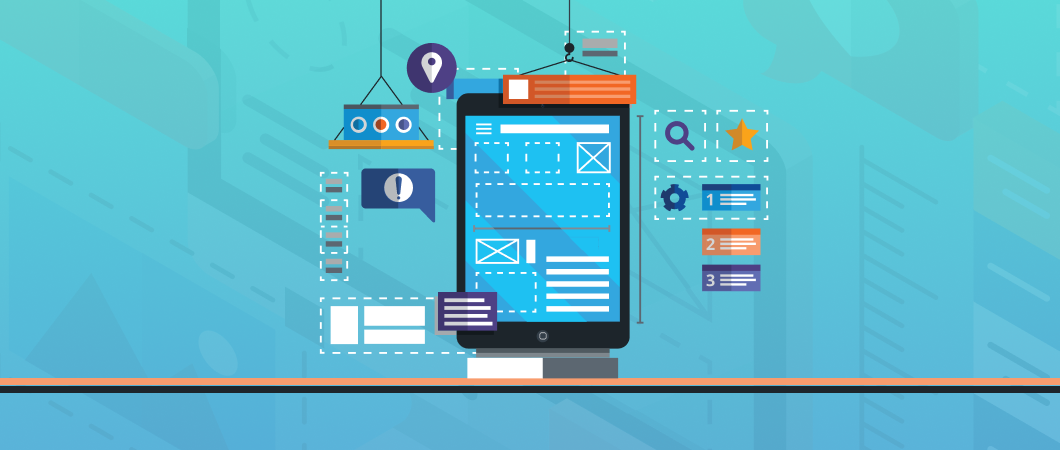
Consumer-grade UX can be defined as a standard of design that enables enterprise software to become more intuitive, flexible, visually appealing, and accessible. In short, it adopts the standard of design that is typically used in consumer products. In recent times, enterprise applications like Slack, Dropbox, Google Drive, etc., have embraced the consumer-grade UX, thus, making it easier for end users to adopt and use these applications.
Importance of Consumer-Grade UX
Today, digital transformation has become one of the most popular catchphrases across different types of business. With digitization making its mark everywhere, it is natural that businesses are working towards using various digital technologies to improve their current products and services, processes, and experiences. There are several reasons why the importance of consumer-grade UX is increasing day by day. Some of these reasons include the following:
- Reduce reliability on developers and IT team
- Overcoming data silos
- Offers a productivity boost from development tools
- Better collaboration due to simplified integration of data
- Modern approach for designing apps
- Better embedded security
How to Ignite a Consumer-Grade UX Revolution?
Moving towards a consumer-grade UX for existing products is not an easy task as it involves heavy resourcing, is time-consuming, and comes with a considerable amount of risk. It also requires support from the top management, investment, etc. These are some reasons why many stakeholders are not too keen on such investments. However, it is possible to bring out a UX revolution spread across four different phases. These four phases are:
1. Learning and Understanding
Before you think of how to implement a consumer-grade UX for your product, you need to understand several aspects of the business, the application, what are the current challenges, and an in-depth understanding of the end-user. Apart from identifying the end-user, you need to determine what you are selling to them, how much they are paying you, what are the various elements involved in the cost, etc. One of the major reasons why many of these consumer-grade UX revolutions don’t pan out is that they fail to move forward from this initial stage of learning and understanding.
Since the primary focus here is on serving the customers in a better and more efficient manner, you need to assure them that you understand their needs and discuss the changes with respect to OKRs, ROIs, KPIs, etc. Some key questions that you need to ask include:
- What are you selling, and who is buying?
- Why are they buying?
- How much will it cost to provide the service?
- What is the price structure?
- Who is the end-user?
- What are some of the key tasks that they need to perform?
The best option is to discuss these questions with all the key stakeholders like product managers, developers, engineers, customer support managers, founders in the case of startups, etc.
2. Design and Sell
The second phase focuses on designing a workable solution. Use your business knowledge to identify key challenges which come with high-impact potential. For example, you can choose the challenge which has the highest ROI and focus on how to achieve it. Make sure that you choose a challenge that will make an impact, and also it should be such that you can go back to the previous way of working without any significant impact on the business in case things don’t go as planned.
In order to design a new solution, once you have decided on the challenge, the next step is to determine who are the end-users, what are the challenges they face while using the product/service, and what are the KPIs you need to improve. The best way to ensure quick adoption is to follow the Build-Measure-Learn iterative cycle. This means you build something, see how well it works in real life, learn from the experience, and then repeat it. With UX being the core aspect here, make sure that you go the extra mile to make the product not just viable but also loveable. Once you have the design ready, your next step is to get the buy-in from stakeholders.
3. Pilot Test
The third phase is to execute the consumer-grade UX change as a pilot program. Before executing it, ensure that you have ready all the tracking for core metrics. You can either automate the tracking step using Google Analytics, Data Dog, Kissmetrics, etc., or even manually do it using Excel. Although the tracking numbers are vital, it would be great if you could also get timely feedback from end-users to gain a better perspective.
A good option would be to opt for A/B testing, which will help you understand problems or determine what improvements need to be made for the new design. You will also need to be prepared to make changes as and when you receive feedback from the end-users. The feedback provided may result in either minor or major changes, which is why you need to be prepared with your time and budget, keep all the stakeholders informed, make quick decisions, and keep an up-to-date log of what changes are being made and why.
4. Repeat and Continue
Once the pilot is done, collate all your learnings from the feedback provided by the end-users, details from your changelog, what worked and what didn’t, why something worked and why some of them failed, etc. The data gathered from all this will give you a clear picture of whether your customer-grade UX change was successful and whether you are on the right path.
You should also present these learnings and the pilot results with all the key stakeholders and the various teams involved in the project. Remember that the pilot is just the beginning. You must make use of all the learnings from the pilot, cash in one on the momentum, and pick a new high ROI challenge to work on next.
Conclusion
Igniting a consumer-grade UX revolution in your company may sound like a daunting task, but it doesn’t have to be. The above-mentioned phases can get the job done for you in a seamless and effective manner. So make sure that you focus on these phases and kickstart your revolution in a phased manner to achieve the desired outcome.
If you would like to learn about some of the best UX software available in the market today, do check out SaaSworthy.
