

In the current customer service landscape, data-driven decision-making is extremely important. To support strategic planning and technology investments, SaaSworthy experts have analyzed leading industry reports, vendor data, and market research to compile the most authoritative set of helpdesk software statistics for 2026. These insights will help you stay ahead of trends, understand technological shifts, and measure the real impact of helpdesk solutions across industries. Before diving into the full report, here’s a quick look at our top-rated helpdesk software platforms for 2026:
Table of Contents
Market Growth and Adoption
The helpdesk software landscape is expanding rapidly, fueled by digital transformation, rising customer expectations, and an increasing reliance on automation.
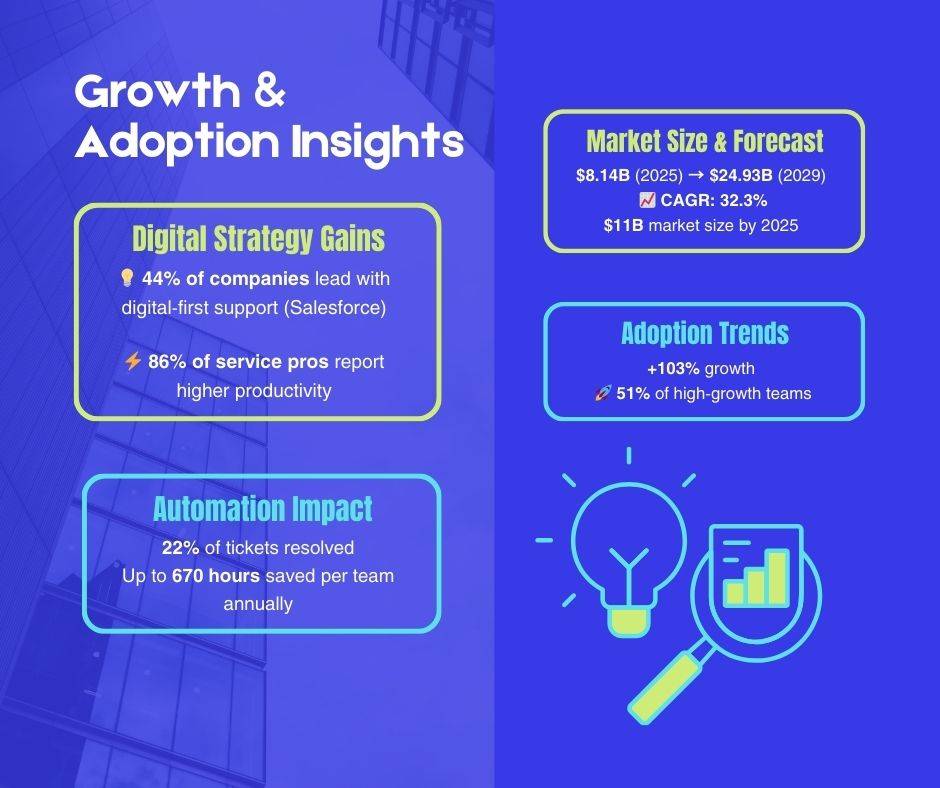
1. The global helpdesk automation market is projected to reach 8.14 billion dollars in 2026.
(Source: Fortune Business Insights)
2. By 2029, the market is expected to grow to 24.93 billion dollars, with a compound annual growth rate (CAGR) of 32.3 percent.
(Source: Fortune Business Insights)
3. The overall help desk software market is estimated to reach 11 billion dollars by the end of 2026.
(Source: MarketsandMarkets)
4. Since 2020, help desk software adoption has increased by 103 percent, reflecting widespread digital adoption.
(Source: Freshdesk Customer Service Benchmark Report)
5. Forty-four percent of companies now prioritize a digital-first customer service strategy, emphasizing speed, efficiency, and accessibility.
(Source: Salesforce State of Service Report 2024)
6. Fifty-one percent of high-growth service teams use help desk platforms as a central part of their support infrastructure.
(Source: HubSpot Service Trends Report)
7. Only nine percent of businesses currently utilize live chat on their websites, showing an opportunity for real-time engagement improvements.
(Source: SuperOffice, 2024 Customer Experience Benchmark)
8. Eighty-six percent of service professionals report improved productivity after implementing helpdesk software.
(Source: Zendesk CX Trends 2024)
9. Twenty-two percent of all support tickets are now resolved without human involvement, due to automation and AI tools.
(Source: Freshworks Automation Insight Report)
10. Companies using helpdesk automation can save up to 670 hours annually per team.
(Source: IBM AI in Support Report)
Technology and Automation Trends
AI, machine learning, and omnichannel capabilities are redefining what modern helpdesk systems can accomplish.
11. Over 40 percent of initial support interactions are now handled by AI.
(Source: Gartner)
12. Machine learning technologies can boost IT service desk capacity by up to 30 percent.
(Source: Forrester)
13. Sixty-four percent of advanced helpdesk platforms use predictive analytics to proactively manage issues.
(Source: Deloitte Tech Trends 2026)
14. Hyper-personalization powered by sentiment analysis is becoming a standard feature in top-tier platforms.
(Source: Salesforce Trends in AI Service)
15. Integration with platforms like WhatsApp and TikTok is becoming common in omnichannel customer support strategies.
(Source: Freshdesk Omnichannel Support Survey 2026)
16. Automated workflows are now capable of handling complex tasks such as escalations, triaging, and load balancing.
(Source: ServiceNow Report)
17. AI-driven self-service tools are deflecting an average of 35 percent of incoming support tickets.
(Source: Zendesk CX Trends 2026)
18. Help desk automation saves approximately 25 percent of agents’ time on repetitive tasks.
(Source: McKinsey on Support Automation)
19. Big data integration has led to a 10 percent reduction in phone support volume.
(Source: Salesforce Service Analytics)
20. Major platforms like Zendesk, Zoho Desk, and YoroDesk now offer AI bots as a default feature.
Cost and Efficiency Metrics
Cost-saving is a core driver behind automation and software adoption in helpdesk operations.
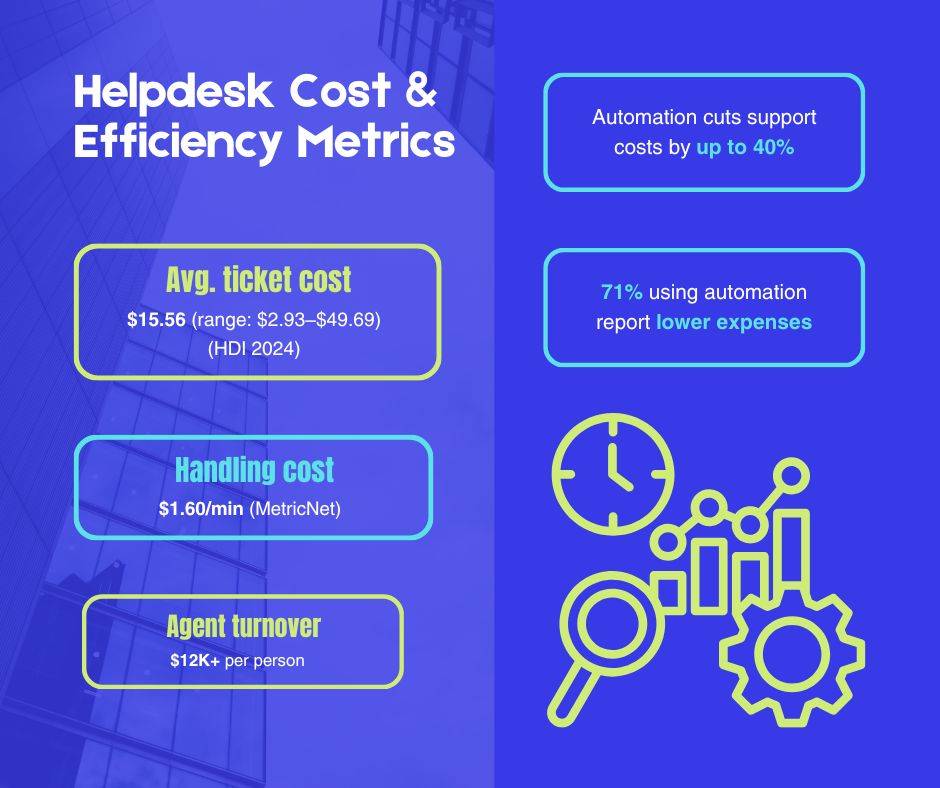
21. The average support ticket costs 15.56 dollars to resolve, with a range from 2.93 to 49.69 dollars depending on complexity.
(Source: HDI 2024 Benchmark Report)
22. On average, support handling costs 1.60 dollars per minute.
(Source: MetricNet)
23. Replacing a single North American support agent costs over 12,000 dollars in turnover and training expenses.
(Source: SHRM Employee Turnover Cost Analysis)
24. Automation can reduce support costs by as much as 40 percent.
(Source: Deloitte AI in Business Survey)
25. Seventy-one percent of companies using automation report reduced operational expenses.
(Source: ServiceNow 2024 Study)
Customer Experience and Satisfaction
Customer expectations for fast, efficient, and personalized support are reshaping service strategies.
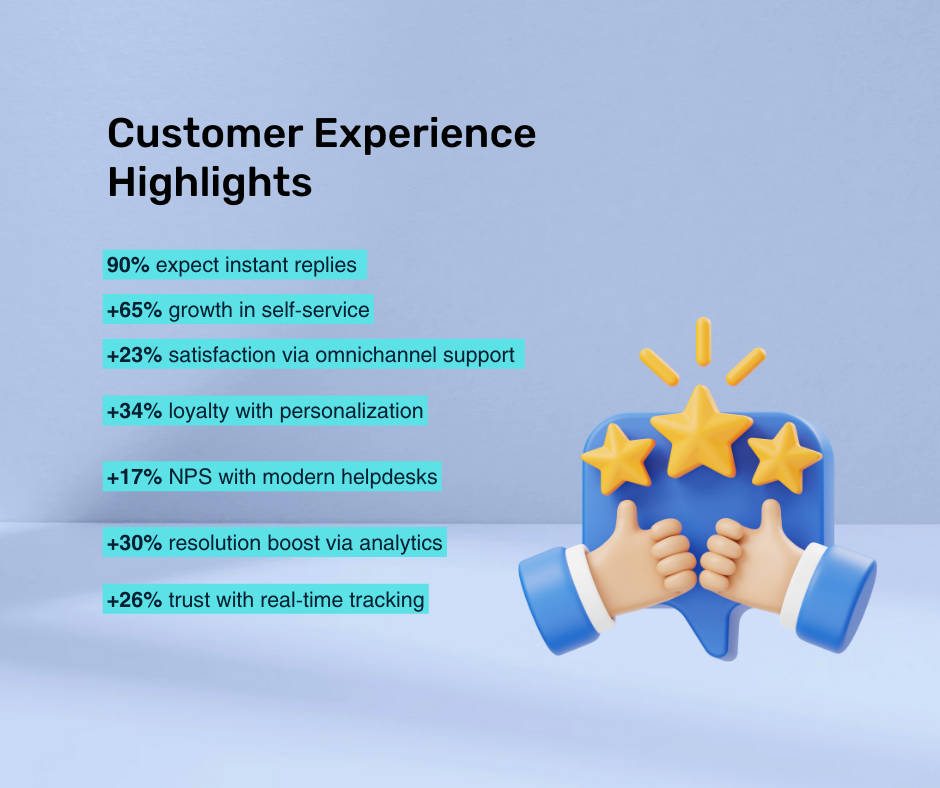
26. Ninety percent of customers expect immediate responses from support teams.
(Source: HubSpot)
27. Since 2022, self-service usage has grown by more than 65 percent, driven by AI and knowledge bases.
(Source: Gartner)
28. Implementing omnichannel helpdesk solutions leads to a 23 percent increase in customer satisfaction.
(Source: Aberdeen Group)
29. Personalization increases customer loyalty by 34 percent.
(Source: Accenture Personalization Report)
30. Seventy-seven percent of customers say quick response time is the most important aspect of a good service experience.
(Source: Salesforce State of Service)
31. Companies that use modern helpdesk tools report 17 percent higher Net Promoter Scores (NPS).
(Source: Zendesk NPS Benchmark)
32. Analytics from helpdesk platforms can improve issue resolution rates by 30 percent.
(Source: McKinsey)
33. Real-time tracking and transparency increase customer trust by 26 percent.
(Source: PwC Customer Experience Study)
34. Eighty-nine percent of consumers are more likely to return after a positive service experience.
(Source: Salesforce)
35. AI support tools reduce customer wait times by an average of five minutes.
(Source: IBM)
Top Helpdesk Software Platforms in 2026


Key Features in Leading Helpdesk Platforms
-
AI-powered chatbots for around-the-clock customer engagement
-
Automated ticket classification and routing systems
-
Integration capabilities with Slack, Microsoft Teams, and CRM platforms
-
Custom Service Level Agreements (SLAs) and priority triggers
-
Drag-and-drop workflow automation tools
-
Centralized omnichannel inbox for all communication
-
Real-time analytics dashboards for performance monitoring
-
Self-service portals and knowledge bases
-
Sentiment tracking for emotional intelligence in service
-
Internal notes and agent collaboration features
Industry Usage and Segmentation
Helpdesk software adoption varies across industries but remains high in sectors with complex service operations.
36. One hundred percent of IT enterprises utilize helpdesk platforms.
37. Eighty-two percent of healthcare organizations have implemented helpdesk automation.
38. Seventy-three percent of government agencies now use ticketing systems.
39. Sixty-seven percent of educational institutions rely on helpdesk software for internal support.
40. More than eighty percent of companies in telecommunications and BFSI (Banking, Financial Services, and Insurance) use helpdesk tools.
(Source: Statista and Help Desk Institute)
41. Ninety-three percent of support leaders believe automation will define the future of customer service.
(Source: Deloitte Future of Work Survey)
42. Seventy-eight percent of customer service teams increased their helpdesk budgets in the past 12 months.
(Source: ServiceNow Trends Report 2025)
43. Over 60 percent of small and medium businesses now use cloud-based helpdesk software.
44. Ninety percent of tech startups implement helpdesk software within their first year.
(Source: Crunchbase SaaS Growth Analysis)
45. Seventy-four percent of B2B companies consider helpdesk integration essential for CRM success.
(Source: Salesforce Partner Insights)
46. Fifty-two percent of businesses evaluate helpdesk ROI within six months of deployment.
(Source: HubSpot Research)
47. Eighty-five percent of CIOs rank customer support automation in their top three priorities.
(Source: Gartner Executive Priorities Report 2025)
48. The average mid-sized company uses 4 to 5 support tools alongside their helpdesk platform.
(Source: Blissfully SaaS Trends)
49. Eighty-one percent of companies state that customer support is a key competitive differentiator.
(Source: Accenture Customer Strategy Report)
50. Only 6 percent of companies still rely solely on email support without automation or ticketing tools.
(Source: Zendesk State of Service 2025)
Sources for Helpdesk Software Statistics (2026)
-
Fortune Business Insights
-
Salesforce (State of Service Reports & Customer Experience Studies)
-
Zendesk (CX Trends & NPS Benchmarks)
-
Freshdesk/Freshworks Reports
-
Deloitte (Tech Trends & AI in Business Surveys)
-
HubSpot Service Trends Report
-
ServiceNow Reports
